
The smart guest room is no longer a novelty—it's a revenue engine. This article analyzes how guest room automation, voice control, and connected systems are reshaping hospitality operations and guest loyalty.
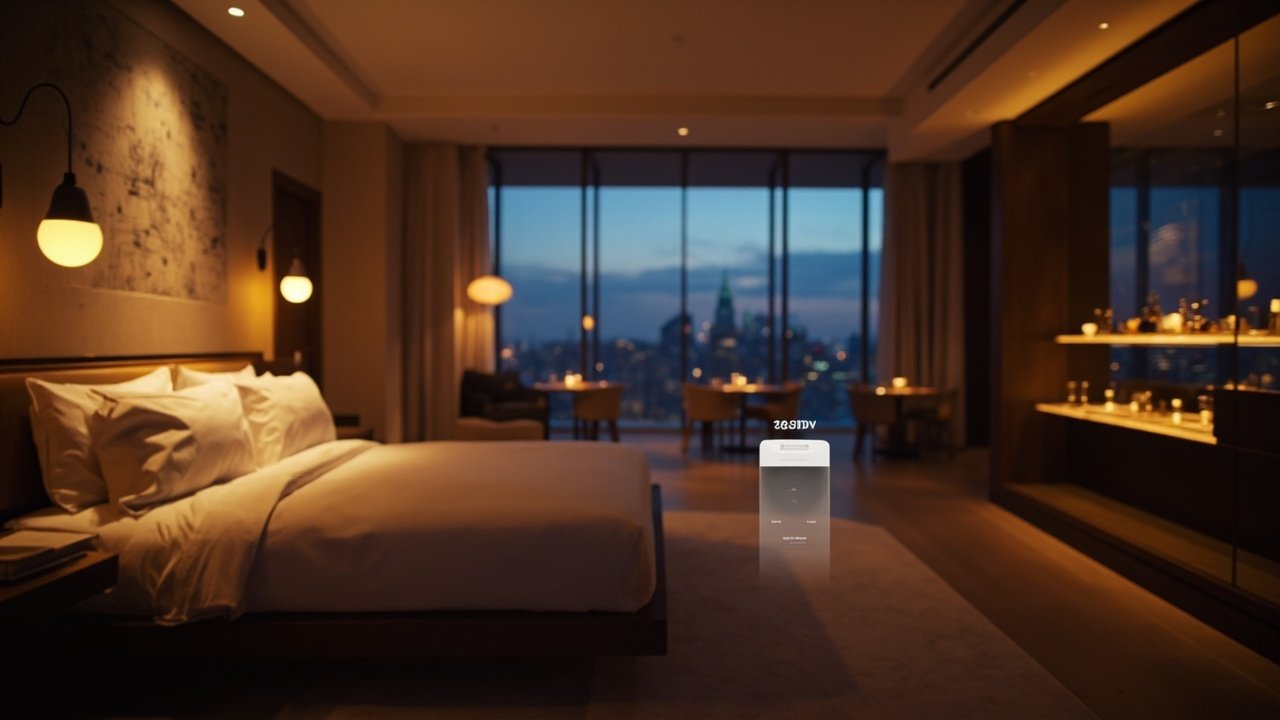
Imagine stepping into a hotel room where the lights adjust to your preferred ambiance, the curtains part to reveal a skyline view, and a gentle voice welcomes you by name. A tablet on the desk offers intuitive control over every amenity, while the smart TV displays not just channels but a personalized menu of dining, spa, and local experiences. This is not a futuristic concept—it is today's connected guest room, an intelligent environment that blends hospitality with digital innovation. The term 'automat' once described vending machines that dispensed meals without human interaction. Today, the hotel room automat takes that idea to a new level: an automated yet deeply personalized space that enhances guest satisfaction and unlocks revenue streams.
For hotel owners, operators, and technology integrators, the connected guest room represents a pivotal shift. No longer a cost center or a simple amenity, the room has become a digital platform—a revenue and experience lever that can differentiate a property, increase RevPAR, and foster loyalty. This article explores the strategic implications of guest room automation, voice control, and room intelligence, and provides actionable insights for hospitality leaders navigating this transformation.
The traditional hotel room was a standardized box: bed, desk, TV, minibar. Guests interacted with physical switches, paper menus, and remote controls. The shift toward digital began with in-room tablets and basic automation, but the current wave of hospitality technology goes far beyond convenience. Today's smart hotel room is a connected ecosystem that learns from guest behavior, anticipates needs, and delivers a seamless experience.
At the core of this evolution is the guest room automation system. These platforms integrate lighting, climate, drapery, entertainment, and service requests into a single intuitive interface—often via a tablet, smartphone app, or voice command. The result is a room that adapts in real time: a business traveler finds a well-lit workspace with charging stations, while a leisure guest enjoys mood lighting and curated playlists.
But the true value lies in the data. Each interaction generates insights—preferred temperature, peak usage times, response to upsell offers. When aggregated, this data allows hotels to fine-tune operations and personalize the stay for future guests. The room becomes a learning environment, evolving with each check-in.
Voice assistants have moved from the home to the hotel room, and they are proving to be a game-changer. Amazon Alexa for Hospitality, Google Nest Hub, and custom solutions allow guests to control everything with simple commands: 'Set the temperature to 72 degrees,' 'Order a late checkout,' or 'Book the spa at 4 PM.' Voice control reduces friction, particularly for guests who prefer hands-free interaction after a long journey.
For hoteliers, voice control is more than a convenience feature—it is a tool for upselling and engagement. A guest who asks for extra towels can be prompted to add a bottle of wine or a platter of local cheeses. When integrated with the property management system (PMS), voice interactions become a direct channel for service requests and ancillary revenue. The key is to balance automation with human touch; voice assistants should handle routine tasks while seamlessly routing complex requests to staff.
The connected guest room is not just an operational upgrade—it is a revenue center. Hotels have long relied on room service, minibars, and pay-per-view as incremental income sources. However, these channels often underperform due to limited visibility and guest friction. The smart room transforms this by making offers contextual, targeted, and immediate.
Consider the in-room tablet or TV interface. Instead of a static menu, the system can present dining options based on time of day, weather, or the guest's past preferences. A business traveler at 7 AM sees a breakfast menu with healthy options; a family at 6 PM receives dinner suggestions and kids' activities. The same platform can promote spa packages, local tours, or late checkout—all with a single tap or voice command.
In-room entertainment is a particularly ripe area for monetization. Modern IPTV and video-on-demand systems allow hotels to offer premium content, including movies, live sports, and streaming apps. By integrating with guest profiles, the hotel can recommend content based on viewing history or offer bundled packages. This not only enhances the guest experience but also generates direct revenue through pay-per-view or subscription models.
To learn more about optimizing in-room entertainment, explore our entertainment solutions designed for smart hotels.
Guest room automation also enables dynamic pricing and packaged offers. For example, a hotel can offer a 'workspace upgrade' that includes a larger desk, ergonomic chair, and enhanced lighting for an additional fee. Or a 'romance package' that pre-sets the room with dim lighting, soft music, and a bottle of champagne. These configurations can be presented to guests at check-in or via the in-room interface, creating incremental revenue without requiring physical changes to the room inventory.
Moreover, the system can learn which offers resonate with specific guest segments. A frequent business traveler may decline a romance package but accept a premium internet upgrade. Over time, the analytics refine the targeting, increasing conversion rates and guest satisfaction.
Transitioning to a smart hotel room ecosystem requires careful planning. While the benefits are compelling, hoteliers must address infrastructure, integration, privacy, and staff training to ensure a successful rollout.
The foundation of a connected room is a robust network. Wi-Fi coverage must be seamless, with sufficient bandwidth to support multiple devices per room plus back-end systems. IoT devices—sensors, thermostats, smart TVs, voice assistants—need to communicate reliably. This often requires upgrading to a mesh network or dedicated IoT infrastructure.
Integration with existing property management, customer relationship management, and point-of-sale systems is critical. The room automation platform should pull guest data (such as loyalty status and preferences) to personalize the experience, and push service requests to the right staff. APIs and middleware solutions can bridge legacy systems with modern smart hotel technology.
Guests are increasingly aware of data collection, and hotels must handle personal information with utmost care. Voice recordings, thermostat patterns, and TV watching habits are sensitive. Hotels should adopt transparent privacy policies, allow guests to opt out of certain data collection, and ensure compliance with regulations like GDPR and CCPA. Data encryption, secure APIs, and regular audits are non-negotiable.
Moreover, the room must not feel intrusive. Automation should be subtle and respectful—lights that adjust based on occupancy, but not cameras that monitor movement. Trust is the currency of hospitality, and connected rooms must earn it.
Technology is only as good as the people who support it. Front desk staff, housekeeping, and maintenance teams need training on how the smart room works and how to troubleshoot common issues. Additionally, staff should understand how to use data insights to personalize service—for example, a housekeeper might know that a guest prefers extra towels at a specific time.
Change management is equally important. Some employees may resist automation, fearing it replaces human interaction. The narrative should emphasize that smart rooms free staff from routine tasks, allowing them to focus on high-value hospitality moments.
To justify investment in guest room automation, hoteliers must track key performance indicators that go beyond traditional RevPAR. Consider these metrics:
Data from these KPIs can be used to refine the guest experience further and build a business case for expanding smart room deployment across the property.
Beyond basic automation, the next frontier is true room intelligence—where the system uses machine learning to predict and adapt. For example, a repeat guest's preferred settings are automatically loaded as soon as they check in. The room might learn that a guest always orders chamomile tea before bed and proactively offer it. This level of personalization requires integration with loyalty profiles and history, but it creates a 'wow' factor that drives repeat bookings.
Room intelligence also extends to maintenance. Sensors can detect when a toilet is running, a light bulb is out, or HVAC filters need changing. Predictive maintenance alerts prevent guest complaints and reduce downtime.
These terms are often used interchangeably, but 'smart room' typically implies a higher level of automation and intelligence (e.g., learning behaviour), while 'connected room' focuses on the integration of devices and services. Both fall under guest room automation.
Costs vary widely based on the existing infrastructure, number of rooms, and features selected. A basic tablet-based system with lighting and thermostat control may start at a few hundred dollars per room. Full voice control, IPTV, and advanced analytics can cost significantly more. However, ROI is often realized within 12-24 months through energy savings, increased ancillary revenue, and higher guest satisfaction.
No—successful smart hotels use automation to augment staff, not replace them. By handling routine requests and data analysis, staff can focus on personalized service, problem-solving, and creating memorable experiences. The human element remains essential.
Hotels should use devices with built-in privacy features like mute buttons, data anonymization, and local processing. Guests should be informed about data collection and given control over their settings. Compliance with local regulations is mandatory.
The hotel room automat is here, and it is reshaping the hospitality landscape. For owners and operators, the choice is not whether to adopt smart room technology, but how quickly and strategically to do so. Those who invest in guest room automation today will gain a competitive edge through enhanced guest experiences, new revenue streams, and operational efficiencies.
But technology alone is not the answer. Success requires a holistic approach: rigorous planning, staff buy-in, guest-centric design, and continuous optimization. The rooms that will stand out are those that feel intuitive, unobtrusive, and genuinely helpful—not gimmicky.
As you evaluate your digital transformation roadmap, consider starting with a pilot program. Measure the impact, gather feedback, and iterate. Then scale with confidence. For more resources and insights on smart hotel implementations, visit our downloads section for whitepapers, case studies, and ROI calculators. Or contact our team to discuss your property's unique needs.
The automat of yesterday dispensed predictable meals. Tomorrow's room automat delivers personalized experiences, loyalty, and growth—one connected stay at a time.
A Hotel Room Automat: How Connected Guest Rooms Are Becoming Revenue and Experience Levers connects directly with the broader solution stack and current hospitality industry guidance.
 Superadmin ZHANG
May 04, 2025
 Superadmin ZHANG
May 04, 2025


By clicking the button, you are agreeing with our Term & Conditions


