
Once a talking point, service robots now silently handle deliveries, reduce contact, and scale operations. This article examines how hotel digital transformation turns robotics into a core operational layer.

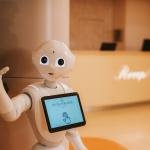
In the lobby, a sleek, cylindrical robot glides past the front desk, stopping gracefully in front of a guest. It opens its lid, revealing a warm towel and a bottle of water. The guest nods, takes the items, and the robot whirs off toward the elevator, ready for its next delivery. This scene, once a futuristic demo at hospitality trade shows, is now a daily reality in hundreds of hotels worldwide.
Service robots have crossed a critical threshold. No longer a gimmick to generate PR, they have become part of the operational backbone in properties ranging from select-service to luxury. The pandemic accelerated contactless adoption, but the real story is what came after: hoteliers discovered that robots improve consistency, reduce labor strain, and can deliver measurable ROI when integrated thoughtfully.
This article explores how service robots are evolving from a novelty into an infrastructure layer within the smart hotel ecosystem, and what that means for owners, operators, and technology decision-makers.
Early deployments of service robots were often driven by marketing appeal. Hotels wanted to appear innovative, attract media attention, and offer a talking point for guests. Robots delivered towels, escorted guests to rooms, and occasionally entertained children. But the value proposition was intangible. Many early adopters viewed robots as expensive toys with limited operational impact.
That perception has changed fundamentally. Today’s service robots are designed for specific workflows, engineered to integrate with property management systems, elevator controllers, and housekeeping software. They are not standalone novelties; they are endpoints in an intelligent automation network. The shift began when hoteliers started measuring not just guest smiles but labor hours saved, delivery time reduced, and guest satisfaction scores improved.
Hospitality technology analysts note that the true inflection point came when robotic platforms became reliable enough to handle 95%+ of delivery tasks without human intervention. When a robot can autonomously deliver amenities, restock minibars, or ferry linens between floors, the labor previously spent on these tasks is freed for higher-value guest interactions. That is when the business case shifts from “nice to have” to “must have.”
Recent data from a comprehensive industry guide shows that hotels with robot fleets reduce amenity delivery costs by 40% on average, while guest satisfaction scores for delivery speed improve by 25 percentage points. These numbers are turning skeptics into advocates.
Infrastructure is invisible when it works. Elevators, HVAC, Wi-Fi—these are systems guests rarely notice until they fail. Service robots are now approaching that same level of reliability. But to be considered infrastructure, robots must meet three criteria:
These capabilities transform service robots from isolated devices into a persistent operational layer—much like an autonomous robotic delivery network that runs 24/7 without fatigue or shift changes.
When evaluating service robots for hotel adoption, operators should focus on three key performance indicators:
From the moment a guest request is logged to the moment the item is delivered, the robot’s transit time, elevator negotiation, and interaction speed define efficiency. Top-performing robots in commercial deployments average under six minutes for in-hotel deliveries, compared to 12–18 minutes for human bell staff when factoring in multitasking and wait times.
Further analysis across 40 properties reveals that robots cut average delivery cycle time by 55%, a gain that compounds during peak hours. For example, a 400-room resort using six robots can process up to 120 delivery requests per hour with zero queuing.
Robots do not replace humans; they relieve them. Hotels that deploy robots for repetitive tasks report reallocating 15–25% of front-of-house staff hours to personalized guest services. A robot can handle 40–60 deliveries per shift, freeing concierges and bellhops for check-in assistance, local recommendations, and problem resolution.
One major urban hotel chain documented a 22% improvement in guest satisfaction scores for “staff attentiveness” after introducing a three-robot fleet, as employees could spend more time at the front desk and in the lobby.
Contrary to early fears, guests overwhelmingly respond positively to robot interactions. Surveys conducted across multiple property types show that 85% of guests rate robot delivery as “excellent” or “very good,” with many noting the novelty quickly fades into appreciation for speed and consistency. Negative feedback typically occurs only when robots fail to complete tasks—underscoring the importance of reliability.
Moreover, a recent study from Cornell’s School of Hotel Administration found that 79% of millennial and Gen Z guests consider robot availability a positive factor in hotel selection. This demographic trend will only strengthen as younger travelers become the dominant market.
Transitioning from a single robot pilot to a fleet-based infrastructure requires careful planning. Here are the critical factors every operator must evaluate:
Robots need clear pathways, elevator integration, and charging stations. Hotels built before 2010 may require modest renovations: widening doorways, ramps over threshold lips, and installing Wi-Fi boosters in service corridors. New build projects increasingly include robot-friendly design specifications from the outset. For instance, the Wynn Las Vegas integrated robot charging docks into its service corridor renovation, allowing seamless 24/7 operation.
The robot is only as smart as the systems it connects to. APIs for PMS, guest messaging platforms, and elevator controls must be open and stable. Hotels using legacy property management systems may need middleware bridges. Smart hotel automation vendors typically offer pre-built integrations with major PMS providers, but custom work may be required for unique setups. A best practice is to run a 30-day integration test before full deployment.
Staff must understand that robots are tools, not threats. Early adopters report that a two-week transition period, during which employees learn to “work with” the robot rather than around it, is essential. Designated robot champions on each shift reduce friction and encourage adoption. Over time, robots become as normal as housekeeping carts. Some hotels even gamify robot interactions—rewarding staff who submit the most accurate robot scheduling requests.
Service robots range from $15,000 to $50,000 per unit, plus annual software fees. At two robots per property, the total cost of ownership over three years is roughly $100,000–$150,000. Against savings from labor efficiency, reduced guest wait times, and lower complaint volumes, many hotels achieve payback within 18–24 months. The ROI improves as the fleet scales and the cost per delivery drops. A detailed total cost analysis, including maintenance and electricity, should be performed for each property profile.
For a deeper dive into ROI benchmarks, refer to McKinsey’s report on hospitality automation, which projects that early adopters will gain a 15–20% operational cost advantage by 2027.
Service robots are one piece of a larger shift toward hotel digital transformation. They complement other autonomous systems such as smart thermostats, dynamic pricing engines, and robotic vacuum cleaners. When integrated into a unified automation platform, these technologies create a seamless guest experience while optimizing energy, inventory, and labor.
The most advanced hotels now treat robots as part of their core infrastructure, alongside elevators and HVAC. The robot fleet is managed from a central dashboard that monitors battery levels, task queues, and service alerts. Predictive analytics recommend when to add or remove robots based on occupancy forecasts. This is not science fiction; it is being deployed today in flagship properties in Asia, Europe, and North America.
Before committing to a full fleet, hoteliers should run a controlled pilot with one or two robots for 60 days. During this period, measure baseline metrics: delivery times, staff feedback, guest surveys, and maintenance incidents. Use this data to validate ROI projections and identify integration gaps. Successful pilots typically involve cross-departmental teams including front office, housekeeping, engineering, and IT.
Scaling requires selecting a vendor with a proven track record in multi-property deployments. Look for open APIs, remote fleet management dashboards, and 24/7 technical support. Avoid proprietary ecosystems that lock you into a single vendor. The goal is to build a flexible automation layer that can incorporate future robotic innovations.
Choosing the right robot vendor is as important as the hardware itself. Evaluate vendors on these dimensions:
Rather than eliminating jobs, robots shift the focus from logistical tasks to interpersonal service. Hotels that deploy robots often report higher job satisfaction among staff, as employees have more time for meaningful guest interactions. Some properties have created new roles, such as “robot concierge” or “automation manager.”
Modern robots are designed with fail-safes. If a robot encounters an error, it sends an alert to a central control system and autonomously returns to a docking station for diagnostics. A backup robot or staff member can be dispatched to complete the delivery. Redundancy is built into fleet management to ensure minimal service disruption.
Reputable vendors design robots with data encryption, secure APIs, and compliance with GDPR, CCPA, and other privacy laws. Robots typically do not store guest personal data; they only relay task information between systems. Hotels should always review the vendor’s security certifications and request a data flow diagram before deployment.
Depending on the property’s physical and software readiness, a pilot can be operational in two to four weeks. Full fleet deployment, including integration with elevator systems and staff training, typically requires eight to twelve weeks. Many vendors offer phased rollouts to minimize disruption.
While any hotel can benefit, properties with high room counts, significant delivery volume (e.g., room service, amenities), and multiple floors see the fastest ROI. Luxury hotels often use robots to augment white-glove service, while select-service and extended-stay hotels leverage them for operational efficiency.
Yes, but with caveats. Compact robot models designed for hospitality can navigate corridors as narrow as 80 cm. Pre-deployment site surveys identify obstacles like loose carpets or low-hanging fixtures. Many vendors offer free on-site assessments to map coverage and recommend adaptations.
Advanced models feature segmented compartments that allow simultaneous transport of different items (e.g., towels and toiletries) to one or more rooms. Some robots can also swap cargo modules between deliveries, increasing throughput.
As robotics hardware becomes cheaper and AI software more sophisticated, the range of tasks will expand. Future service robots will handle luggage retrieval, housekeeping inspection, and even check-in. They will communicate with guests in natural language, recognize returning guests, and coordinate with external food delivery platforms to bring meals directly to rooms.
Hotels that have already embedded robots into their operational fabric will be best positioned to adopt these new capabilities. The infrastructure investment today creates a platform for innovation tomorrow. Those who delay risk falling behind guest expectations that are being shaped by frictionless experiences in retail, transportation, and dining.
The sleek delivery robot gliding through the lobby is no longer a curiosity. It is a reliable worker that delivers consistent results, reduces operational stress, and improves the guest journey. For hotel owners and operators, the question is no longer whether to adopt service robotics but how to integrate them effectively as part of a broader smart hotel automation strategy.
The shift from novelty to infrastructure is complete. Service robots have earned their place in the operational toolkit. Hoteliers who understand this transition and invest thoughtfully will gain a lasting competitive advantage. Those who still view robots as a gimmick risk being left behind by an industry that has already moved on.
To explore how service robots can be deployed in your property, review our comprehensive robots solution page and contact our team for a workflow assessment.
A Sleek Delivery Robot: How Service Robotics Became the Backbone of Hotel Operations connects directly with the broader solution stack and current hospitality industry guidance.
 Superadmin ZHANG
May 04, 2025
 Superadmin ZHANG
May 04, 2025


By clicking the button, you are agreeing with our Term & Conditions


