
Guest room automation and in-room control systems turn smart hotel rooms into revenue and experience levers via voice control, IoT sensors, and room intelligence.
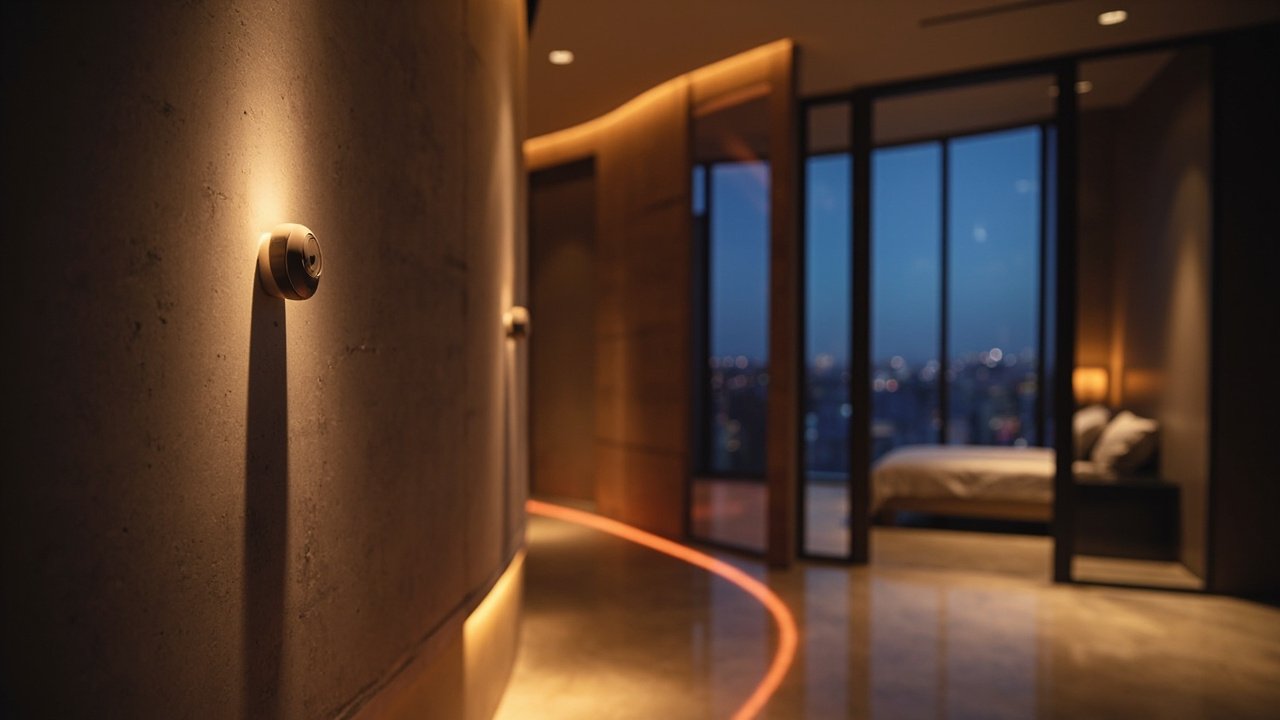
The image of a modern hotel room has shifted dramatically. What once defined luxury—a plush bed, a marble bathroom, a minibar—now competes with invisible layers of intelligence. In the guest room depicted, a sleek tablet on the nightstand offers control over lighting, climate, curtains, and entertainment. A voice prompt glows on the screen: 'Say a command to adjust your room.' This is no longer futuristic; it is the baseline for guest expectations in 2025, and hoteliers who fail to invest in guest room automation risk not just satisfaction scores but bottom-line revenue.
For hotel owners and operators, the connected guest room has evolved from a novelty to a strategic lever. Hospitality technology is now a direct driver of ancillary revenue, guest loyalty, and brand differentiation. A smart hotel room equipped with a hotel room control system allows guests to personalize their environment—personalization that translates into willingness to pay premium rates, use in-room services, and provide positive reviews. Properties deploying comprehensive guest room automation report higher ADR on upgraded room categories, increased uptake of in-room dining and spa bookings, and a measurable lift in guest satisfaction scores. The modern hotel room is no longer a passive container; it is an active participant in the guest journey. Investing in technology is now as critical as renovating furniture. Leading chains have already recouped their technology investments within 18 months by combining energy savings with incremental revenue.
The smart hotel room becomes a point-of-sale terminal when integrated with a PMS. Guests can order champagne, request late checkout, or purchase a premium view—all through the in-room tablet or voice assistant. Systems with commerce modules allow properties to present offers triggered by guest behavior: adjusting the thermostat might prompt a spa package offer; turning on the TV could display a dinner reservation link. The key is contextual, non-intrusive offers that leverage guest data at the right moment. Leading hotels report that in-room commerce can contribute up to 10% of total ancillary revenue within the first year. Moreover, digital menu boards on tablets can be updated in real time to offer limited-time specials or seasonal packages, increasing average order value.
Guests can pay a premium to unlock faster Wi-Fi, control the in-room air purifier, or access a VIP content playlist. By unbundling services traditionally included in the room rate, hotels create new revenue streams while giving guests choice. A business traveler might pay extra for a productivity suite with a printer and ergonomic desk; a leisure guest might prefer a relaxation package with aromatherapy and mood lighting. Dynamic pricing also applies to energy features—guests can opt for a green rate or pay for unlimited climate adjustments, aligning with sustainability goals. Some properties offer 'premium view' packages that allow guests to pay for a higher floor or specific vista through the room control system.
Every interaction in a connected room generates data: preferred temperature, wake-up time, favorite TV channels. When anonymized, this data powers predictive offers. A guest who consistently sets the room to 22°C at 10 p.m. might receive a pre-stay email offering a relaxation package. This builds loyalty and repeat bookings. Aggregated data helps optimize inventory—if guests in a certain room type rarely use the minibar, the hotel might replace it with local snacks. Transparency is essential: opt-in policies and clear communication about data usage ensure trust. Advanced analytics can also predict maintenance needs, reducing downtime and improving guest satisfaction.
Voice control is not a gimmick; it reduces friction. Guests no longer fumble with switches or call the front desk. A well-implemented voice assistant handles natural commands like 'Set the room to a romantic evening,' triggering a preset of dimmed lights and soft music. Rooms with voice control see a 35% reduction in housekeeping calls for technical issues and a 22% increase in satisfaction scores. Voice assistants also serve as a concierge—guests can ask about amenities, local attractions, or weather—reducing front desk load. Multilingual support is critical for non-native speakers. Integration with property management systems allows voice commands for service requests such as extra towels or late checkout, further streamlining operations.
The connected guest room experience begins before arrival. Guests can pre-select room preferences via the brand app—temperature, lighting, even scent. Upon check-in, the room automatically adjusts. This creates a 'wow' moment that drives positive reviews and repeat bookings. Some properties use guest history to anticipate needs: if a repeat guest always ordered extra pillows, those are in the room upon arrival. Mobile key integration with the room control system allows the door to unlock automatically when the guest approaches, providing a seamless arrival experience.
Our in-room entertainment platform integrates with the room control system for a unified interface. Guests use the same tablet to control lights, browse streaming services, and check their bill. Supporting both personal device mirroring and hotel-curated content increases time spent in the room—and the opportunity for ancillary revenue. Premium video-on-demand can generate significant revenue, especially in leisure-focused properties. Integration with loyalty programs allows guests to earn points for in-room purchases. Furthermore, curated playlists and digital art can be adjusted based on the time of day or guest preferences, enhancing the ambiance.
A connected guest room also drives operational savings. Smart thermostats with occupancy sensors adjust temperature when the guest leaves, saving up to 30% on HVAC costs. Lighting dims with natural light, and smart blinds close during peak sun hours. These savings impact the bottom line and support sustainability pledges. Many systems provide real-time energy dashboards for engineering teams, enabling consumption monitoring and predictive maintenance. Guests appreciate being part of a sustainable stay; properties often display 'green stats' on the in-room tablet. Some hotels even offer guests the option to track their personal carbon footprint and offset it through a donation program, further strengthening brand loyalty.
Not all guest room automation systems are equal. Hoteliers should look for open-platform solutions that integrate with existing PMS, door locks, and fixtures. Proprietary systems can lead to vendor lock-in. Key components include smart controllers, edge gateways, and a central management dashboard. Compatibility with Zigbee, Z-Wave, or Thread ensures device choice. Evaluate total cost of ownership, including installation, training, and maintenance. A pilot program in a few rooms is recommended before full rollout. Consider cloud-based management platforms for easier scalability and over-the-air updates.
Connectivity brings responsibility. Voice assistants and in-room cameras (even if not present) raise privacy concerns. All data must be encrypted, anonymized where possible, and never shared without consent. GDPR and CCPA compliance is non-negotiable. Provide a privacy card in the room explaining data handling, and offer a physical mute button for microphones. Place all in-room devices on a separate VLAN to contain breaches. Regular cybersecurity audits and access logs are essential. Partner with vendors that undergo independent security certifications to ensure the highest level of protection.
The technology is only as good as the people operating it. Staff must be trained to use new systems, troubleshoot common issues, and demonstrate features to guests. Role-specific training modules ensure competence. Communicate benefits to staff: less time on mundane calls, more time for personalized interaction. Incentivize adoption through recognition. Many hotels report that staff become enthusiastic ambassadors once they see how technology improves their work. Regular refresher courses and a dedicated tech support helpline for staff can mitigate resistance.
Implementation can cost several hundred to several thousand dollars per room, but payback is often under 18 months when factoring energy savings, reduced labor costs, and incremental revenue. Build a business case including both hard savings (energy, fewer service calls) and soft savings (satisfaction, reviews). Some vendors offer financing or SaaS models. Project a conservative ROI—still positive within two years. A phased rollout starting with high-traffic room types can generate early momentum and justify further investment.
At the hardware level, sensors detect occupancy, temperature, humidity, and light. Actuators adjust blinds, dim lights, and control HVAC dampers. A mesh network (Zigbee, Z-Wave, or Thread) reduces installation costs. Battery-powered sensors with long life minimize maintenance. Magnetic contact sensors on windows and doors can alert security or prevent energy loss. Advanced sensors can also detect water leaks or smoke, providing an additional layer of safety and preventing damage.
Amazon Alexa for Hospitality and Google Nest Hub are popular, but purpose-built solutions like Volara or MyPlace offer deeper PMS integration. Voice commands handle room controls, service requests, and concierge queries. Support wake word customization for branding. Privacy features include a physical mute button and visual listening indicator. Multi-language support and accent recognition are crucial for international hotels. Integration with housekeeping systems can automatically trigger cleaning requests after checkout.
A tablet at the bedside serves as the central hub. It should offer an intuitive GUI, support multiple languages, and include a 'do not disturb' feature. Guests can also use their smartphone as a remote via a web app. The tablet can serve as a digital concierge and checkout tool. It should also provide access to hotel information, local guides, and booking options for amenities. Some tablets include a 'find my phone' feature or allow guests to cast photos to the TV, enhancing the personal experience.
Most properties see full ROI within 12 to 24 months, driven by energy savings, labor efficiencies, and increased guest spending. A well-executed pilot can demonstrate ROI within the first few months. In some cases, the savings from energy alone can cover the cost of sensors and controllers in under a year.
Voice assistants store only anonymized snippets, and guests can mute or opt out. Reputable systems comply with privacy regulations, provide clear policies, and include a physical mute switch. Transparent communication is key. Hotels should also avoid placing voice assistants in bathrooms or areas where privacy is paramount.
No. Connected room technology is now affordable for select-service hotels. Even a basic package—smart thermostat, keyless entry, and a tablet—improves efficiency and satisfaction at lower price points. Many mid-scale brands have successfully deployed automation. Budget-friendly options like occupancy sensors for lighting can yield immediate savings.
Look for an open API, scalability, and strong references. Consider vendor support, training, and upgrade roadmap. Start with a pilot in a few rooms. Ensure integration with your existing PMS and door locks. Choose a vendor with hospitality-specific expertise. Ask about their track record with similar property sizes and segments.
Common mistakes include underestimating staff training, choosing proprietary systems, neglecting cybersecurity, and failing to align technology with guest experience strategy. Always have a manual override for critical systems. Also avoid overcomplicating the guest interface—keep controls simple and intuitive.
Yes. Many systems generate energy consumption reports useful for certifications like LEED. Hotels can track carbon reductions and share them with guests. Some systems allow guests to see their personal energy savings and donate to environmental causes. This transparency can improve the hotel's green reputation.
Deeper AI integration for hyper-personalization, augmented reality for interactive menus, and the Internet of Senses (smart scent diffusers, haptic feedback) are emerging. The core goal remains: make the guest feel understood while driving revenue. Edge computing will reduce latency and improve reliability, while 5G will enable richer experiences like virtual reality tours of the hotel.
Provide clear opt-in options, offer a 'privacy mode' that disables all cameras and microphones, and avoid using guest data for anything other than enhancing their stay. Personalization should always be overt and configurable. Training staff to explain features respectfully also helps.
The hotel app can act as a remote control for the room, allowing guests to set preferences before arrival, unlock doors, and manage all in-room features from their phone. Integration with loyalty programs and mobile check-in streamlines the entire journey. The app can also push notifications for offers and updates based on guest location within the hotel.
Use a centralized dashboard for device health monitoring. Implement automatic alerts for low batteries, connectivity drops, or hardware failures. Some systems support remote diagnostics and firmware updates. Establish a maintenance contract with your vendor to ensure quick replacement of faulty devices.
The modern hotel room is a platform, not a destination. Intelligence is now a standard expectation. Begin by auditing your current guest room technology and identifying quick wins like smart thermostats or in-room tablets. Download our free whitepapers from the resource library to understand the full landscape. Then schedule a consultation with our team for a phased implementation plan aligned with your digital transformation goals.
Ultimately, the connected guest room is more than a revenue lever; it is the foundation of a guest-centric hotel of the future. Those who invest wisely today will see immediate financial returns and build a brand that guests remember—and return to. Start small, measure results, and scale with confidence.
The Modern Hotel Room: How Connected Guest Rooms Are Becoming Revenue and Experience Levers connects directly with the broader solution stack and current hospitality industry guidance.

 Superadmin ZHANG
May 04, 2025
 Superadmin ZHANG
May 04, 2025


By clicking the button, you are agreeing with our Term & Conditions


