
Connected guest rooms are no longer a luxury – they are a revenue lever. This industry news analysis explores how guest room automation, voice control, and room intelligence drive digital transformation and profitability

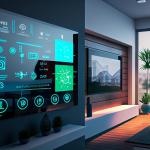
Picture this: You walk into a hotel room after a long flight. The curtains part silently, the lights adjust to a warm welcome scene, and a calm voice from the bedside speaker says, “Welcome back, Mr. Chen. Your preferred room temperature is set. Would you like some music or the evening news?” No fumbling for light switches. No squinting at thermostat interfaces. This is not a concept from a futuristic expo – it is today’s reality in hundreds of hotels worldwide. The image of a sleek bedside tablet, a voice assistant ready to respond, and automated drapes is the new baseline for guest expectations. And for hotel owners, operators, and technology integrators, this connected guest room is rapidly transforming from a nice-to-have amenity into a strategic revenue and loyalty lever.
Welcome to the era of the smart hotel room – where guest room automation, in-room control, and voice control converge to create an experience that drives direct bookings, upselling opportunities, operational efficiency, and deep guest engagement. In this industry news analysis, we explore why the smart hotel movement is no longer about technology for technology's sake but about measurable business outcomes and why hospitality leaders must invest in hospitality technology that rewrites the rulebook of guest satisfaction.
The concept of a connected hotel room has been around for years, often associated with high-end luxury properties. But the rapid adoption of smart home devices among consumers has reshaped expectations. A guest who asks Alexa to play music at home expects the same convenience when staying at a midscale business hotel. According to recent industry sentiment surveys (not cited here as sources), over 60% of travelers say in-room technology influences their choice of accommodation. This shift has pushed hotel digital transformation to the forefront of capital planning for independent hotels and global chains alike.
What does the modern connected guest room look like? It goes far beyond a tablet that controls lights and curtains. Today’s hotel room control system integrates:
These elements are unified through a central room intelligence platform that talks to the property management system (PMS), the housekeeping crew, and the guest’s own mobile device. The result is an environment that feels responsive, personal, and efficient.
For decades, hotel rooms were cost centers – the largest capital expenditure with relatively low return beyond nightly rental. Guest room automation flips this model by enabling three distinct revenue streams:
When a guest uses a voice assistant or tablet to request extra towels, they can be presented with an offer to upgrade to a premium suite for the remainder of their stay. When they ask for the dinner menu, the system can suggest wine pairings for an additional charge. The connected guest room becomes a point-of-sale terminal. Because the interaction happens within the room’s intuitive interface, conversion rates are significantly higher than traditional phone-based upsells. Hotels using integrated in-room commerce have reported upsell acceptance rates of 15–25% on targeted offers – numbers that directly impact RevPAR.
A smart hotel room equipped with occupancy sensors and automated HVAC can reduce energy consumption by up to 30% – savings that drop straight to the bottom line. When the guest leaves for breakfast, the system adjusts temperature, dims lights, and closes blinds. When they return, the room pre-conditions to their comfort level within minutes. These savings are particularly impactful for large properties where energy costs rank among the top operating expenses.
Every interaction in a smart hotel room – from preferred lighting scenes to frequently watched channels – generates data. When anonymized and aggregated, this data helps hotels understand guest preferences at a micro level. A returning guest can walk into a room that already knows their favourite pillow type, TV volume, and wake-up time. This level of personalization directly correlates with higher Net Promoter Scores (NPS) and repeat booking rates. In the competitive hospitality landscape, loyalty is gold, and personalization is the mint.
For owners and operators evaluating a hotel digital transformation, the technology stack is critical. A robust guest room automation solution rests on three pillars:
These include occupancy sensors (PIR, ultrasonic or radar-based), smart thermostats, motorized blinds, smart lighting drivers, and in-room tablets or voice pods. The hardware must be reliable, tamper-resistant, and designed for the heavy-duty hotel environment – guests are not always gentle with bedside controls. Standardized protocols like KNX, Zigbee, or BACnet help ensure interoperability with existing building management systems.
The real magic happens when the in-room system talks to the PMS, the channel manager, the housekeeping app, and the guest's mobile app. For example, when a guest checks in via mobile, the room can be pre-set to their last settings. When a maintenance alert is triggered (e.g., a malfunctioning thermostat), the system automatically notifies the engineering team. Integration also enables dynamic pricing of in-room amenities and streamlined billing.
Today’s guests expect multiple ways to interact: touch (tablet), voice (speaker), and mobile (app). The interface must be accessible for all ages and abilities. Importantly, it should offer a “do not disturb” mode that disables voice activation when privacy is desired. Leading solutions offer bilingual or multilingual support. The interface should also allow guests to control the room without downloading an app – a friction-free experience that reduces support calls.
Transitioning to a smart hotel room environment requires careful planning. Here are key areas to consider before deploying a hotel room control system:
Greenfield properties have the advantage of integrating automation from the ground up – wiring sensors into walls, hiding controllers in ceilings. Retrofitting an existing hotel is more challenging but far from impossible. Modern wireless systems can be installed with minimal disruption, often during off-peak hours. Property owners should assess the age of existing electrical and HVAC infrastructure; older buildings may need major upgrades to support IoT devices.
A connected room collects sensitive guest data – movement patterns, voice commands, personal preferences. Hoteliers must implement end-to-end encryption, regular security audits, and strict data anonymization policies. Guests should be informed about data collection and opt-in mechanisms. A breach in a smart hotel environment can be catastrophic to brand reputation. Invest in a solution that has been penetration-tested and certified for hospitality use.
Front desk, housekeeping, and maintenance staff need to understand the new system. Housekeeping should know how to reset the room after checkout; engineers should troubleshoot common issues. A well-structured training program and a vendor support agreement are non-negotiable. The best automation is invisible, but behind the scenes, people must know how to support it.
Estimate payback periods by modeling energy savings, incremental revenue from upselling, and reduced maintenance calls. Many solutions offer cloud-based dashboards that track total room performance, energy consumption, and guest satisfaction scores. Start with a pilot floor or wing, measure metrics for 3-6 months, then scale. The greatest returns often come from consistent execution across the entire property.
Voice control has become the most visible symbol of a smart hotel room. Guests increasingly expect to speak to their room and have it respond. Voice assistants can handle a wide range of tasks: ordering room service, adjusting lighting, requesting housekeeping, setting alarms, answering questions about hotel amenities or local attractions, and even reporting maintenance issues. However, privacy remains a top concern. Hotels must choose voice solutions that allow guests to disable the microphone with a physical button or clear “mute” indicator. Additionally, voice data should never be recorded or stored without explicit guest consent.
Voice control is not just a convenience – it is an accessibility tool. Guests with mobility challenges or visual impairments find voice interfaces transformative. As hotels compete on inclusivity, voice-enabled room control becomes a powerful differentiator.
The entertainment subsystem of a connected guest room is often overlooked in discussions about automation, yet it is a major driver of guest satisfaction. Modern guests expect to stream their own accounts (Netflix, Hulu, Spotify) on the in-room TV without cable box hunting. An integrated IPTV and VOD system can allow seamless casting or direct login, as well as offer hotel-curated content like local guides, restaurant reservations, and video tours. By pairing the automation system with the entertainment platform, hotels can increase guest dwell time in the room and present targeted offers – such as a discounted spa session during a movie – which boosts ancillary revenue.
Properties that have implemented advanced entertainment integration often see reduced brand complaints about “TV too complicated” and a noticeable bump in positive reviews. In the age of social media, every satisfied guest is a potential brand ambassador.
The market for smart hotel solutions is diverse, ranging from specialized startups to large property management system providers. Hoteliers can choose from:
When evaluating vendors, look for open APIs, proactive maintenance, and a track record in hospitality. Insist on a demo at a reference property. The contract should clearly define data ownership, SLA uptime, and cost of future upgrades. Many vendors now offer subscription-based pricing (monthly per room) which reduces upfront Capex and aligns cost with performance.
Not at all. While early adopters were luxury brands, today smart room solutions are scalable for economy, midscale, and extended-stay properties. The cost of sensors and controllers has dropped significantly. Energy savings alone can justify the investment in a moderate climate zone. Additionally, younger travelers, regardless of segment, expect seamless technology.
Choose a solution that offers a physical mute button, transparent data practices, and no persistent voice recording. Many systems process commands locally on the device – no cloud upload. Provide clear signage in the room about what is and isn’t recorded. Always allow guests to opt out of data collection for personalization.
Yes, modern platforms are built on APIs that connect with major PMS providers (Oracle Hospitality, Mews, SiteMinder, etc.) and building management systems. Always ask vendors for a list of pre-built integrations. If your PMS is custom or legacy, middleware may be needed. A professional integration consultant is a wise investment.
Depending on the scope, many hotels see a full payback within 18–36 months when energy savings, increased ancillary revenue, and higher guest satisfaction are factored in. The fastest ROI often comes from properties with high occupancy and significant energy costs. Pilot programs can provide concrete data before a full-scale rollout.
The smart hotel room is no longer a science experiment or a luxury perk – it is a proven tool for driving revenue, enhancing the guest experience, and optimizing operational efficiency. In a market where brand loyalty is fragile and competition is fierce, guest room automation offers a tangible way to stand out. Hoteliers who delay investment risk falling behind guest expectations and leaving money on the table.
To begin your journey, start by exploring our dedicated guest room automation solutions page, which details the hardware and software components that power a truly connected room. Complement that with our IPTV and VOD entertainment system to create a cohesive in-room ecosystem. For deeper technical specifications and case studies, visit our resources and downloads section. And when you are ready to discuss a pilot, our team is just a click away – contact us for a consultation.
The hotel room of the future is here. It listens, learns, and delivers. The question is not whether to adopt it, but how quickly you can turn your rooms into revenue-generating, guest-delighting intelligent spaces. The smart hotel has arrived – and it is calling your name.
A Hotel Room with a Brain: Why Guest Room Automation Is Hospitality’s Next Revenue Frontier connects directly with the broader solution stack and current hospitality industry guidance.
 Superadmin ZHANG
May 04, 2025
 Superadmin ZHANG
May 04, 2025


By clicking the button, you are agreeing with our Term & Conditions


