
Parking garages to server rooms: hotel security and building systems converge for operational visibility. Learn how integrated networks enhance efficiency and safety.
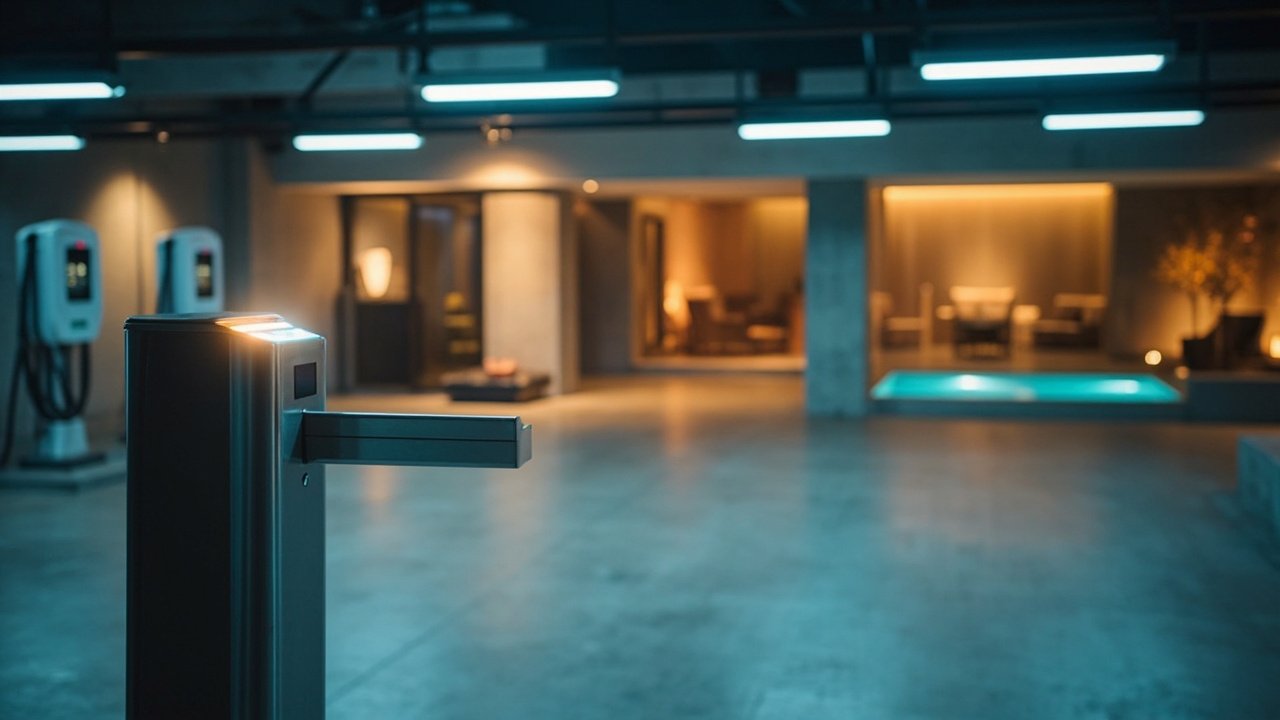
It starts as a simple drive down a concrete ramp. Fluorescent lights flicker overhead, pipes and conduits run along the ceiling, and security cameras observe from utilitarian mounts. The hotel parking garage is rarely celebrated, yet it is increasingly becoming a microcosm of a larger transformation sweeping the hospitality industry: the convergence of security, network, and building systems into a unified operational backbone.
For hotel owners, operators, and technology integrators, this convergence is no longer a futuristic ambition—it is a pressing operational priority. The parking garage, with its mix of access control, video surveillance, environmental sensors, and wireless network demands, exemplifies the complexity and opportunity of integrating infrastructure that has historically operated in silos. By treating the garage as a model for campus-wide integration, hotels can unlock enhanced security, operational efficiency, and guest satisfaction.
Modern hotel garages are not just concrete structures for vehicle storage. They are active environments requiring real-time monitoring of lighting, ventilation, fire safety, and occupancy. They must also accommodate guest payment systems, electric vehicle charging stations, and, increasingly, smart parking guidance technology. Meanwhile, security demands are high: surveillance cameras must cover every blind spot, access control must manage entry and exit, and all data must be transmitted reliably over a robust network.
Traditionally, each of these functions operated independently, with separate cabling, controllers, and management dashboards. A hotel security system might be maintained by one team, building management by another, and network infrastructure by a third. This fragmentation results in operational blind spots, increased maintenance costs, and slower incident response. The parking garage, because it encapsulates nearly every subsystem in a constrained physical area, becomes an ideal proving ground for integration.
Video surveillance in a parking garage is hardly new, but the way it integrates with other systems is evolving. License plate recognition can trigger gate access, but it can also send alerts when a known vehicle enters the property. Motion sensors can adjust lighting levels for energy savings while simultaneously improving security coverage. When a fire alarm is triggered, cameras can automatically pan to relevant zones, and building management systems can adjust ventilation to clear smoke paths. This level of orchestration requires a converged network that carries both video and control data.
The parking garage’s environmental needs are surprisingly sophisticated. Carbon monoxide sensors must tie directly into exhaust fans. Lighting schedules must align with occupancy patterns to save energy without compromising safety. Water leak detection must be monitored to prevent damage to vehicles and structural elements. These building management functions are increasingly moving from standalone controllers to IP-based platforms, running on the same hotel network integration that serves guest Wi-Fi and point-of-sale terminals.
For hospitality decision-makers, the convergence of security, network, and building systems offers three primary strategic benefits: operational visibility, cost efficiency, and enhanced guest experience. Each is critical in an industry where margins are tight and expectations are high.
When systems remain siloed, management must toggle between multiple dashboards to understand what is happening across the property. A security incident in the garage may require cross-referencing video feeds with access logs and lighting status—tasks that take valuable minutes. Integration provides a single pane of glass, where data from all subsystems is unified, correlated, and actionable. This visibility extends beyond the garage to encompass the entire hotel, enabling proactive maintenance, faster incident response, and better resource allocation.
Separate networks for security, building management, and guest services are expensive to install and maintain. Convergence onto a shared, high-performance IP infrastructure reduces cabling costs, simplifies vendor management, and lowers total cost of ownership. Moreover, integrated systems enable automated energy optimization—lighting and HVAC can respond in real-time to occupancy data, reducing waste. Over the lifecycle of a hotel, these savings can be substantial.
Guests rarely think about a hotel’s infrastructure until something goes wrong. A slow elevator, a poorly lit parking area, or a long wait at the gate due to a malfunctioning access reader can quickly sour an experience. Convergence ensures that these systems operate reliably and are maintained proactively. When a guest uses a mobile app to reserve parking, the same network that processes their payment also monitors the garage’s security feeds and environmental controls. The seamless operation is the result of thoughtful infrastructure integration.
Transitioning to a converged infrastructure requires careful planning. Hotels that are undergoing renovation or new construction have an ideal opportunity to design for integration from the ground up. However, existing properties can also benefit from phased upgrades that progressively unify systems.
A converged network must support diverse traffic types—high-definition video, real-time control commands, IoT sensor data, and guest bandwidth demands. This requires a well-architected LAN with adequate segmentation via VLANs, quality of service policies, and robust cybersecurity measures. The parking garage, often on the periphery of the property, needs dedicated networking infrastructure with outside plant cabling, hardened switches, and backup power. Partnering with a technology integrator who understands hospitality-specific needs is essential.
Not all security cameras, building controllers, and access systems speak the same language. Hotels should prioritize open standards such as ONVIF for video, BACnet for building automation, and RESTful APIs for software integration. Choosing a platform that can aggregate data from multiple vendors reduces long-term lock-in and simplifies future upgrades. The services offered by technology partners often include integration assessments and custom development to bridge legacy systems.
As systems converge, the attack surface expands. A vulnerability in a building controller could potentially affect the guest network. Hotels must implement network segmentation, regular firmware updates, and intrusion detection. Security teams should conduct penetration testing that includes building management interfaces, not just IT systems. Ensuring that the convergence does not compromise security requires a holistic cybersecurity strategy.
A 1,200-room convention hotel in downtown Chicago recently undertook a full retro-commissioning of its parking garage infrastructure. Previously, the garage operated with analog cameras, separate access control, and a standalone building automation system for ventilation and lighting. The hotel faced frequent complaints about long wait times at peak hours, poor lighting in certain zones, and high energy bills. By converging all systems onto a single IP backbone, the property achieved a 30% reduction in energy costs, a 40% faster incident response time, and a measurable increase in guest satisfaction scores related to parking. Key to success was the deployment of a unified management platform that provided real-time dashboards for security, facilities, and front office teams. Additionally, the hotel integrated license plate recognition with the property management system to streamline billing and enhance security. This single project delivered a return on investment within 18 months, proving that convergence is not just a technology upgrade but a financial one.
The financial justification for convergence goes beyond energy savings. Unified infrastructure reduces the number of vendors to manage, cutting administrative overhead and contract complexity. It also extends the useful life of existing equipment by enabling centralized diagnostics and predictive maintenance. For example, a single dashboard can alert facility managers to a failing camera or a temperature anomaly in a server room before a guest experiences any impact. Hotels that deploy converged systems also report fewer work orders and reduced overtime for maintenance staff. These operational savings, combined with energy efficiency gains, typically yield a payback period of two to three years.
Hotels considering convergence should evaluate solutions that are purpose-built for hospitality environments. Look for:
The convergence trend will accelerate with the adoption of 5G and edge computing, enabling real-time processing of video and sensor data directly in the garage rather than sending everything to a central server. Digital twins—virtual replicas of physical hotel assets—will allow operators to simulate scenarios like fire evacuations or peak traffic flow. Sustainability mandates will also drive convergence, as integrated systems can more precisely track and reduce carbon footprints. Meanwhile, the rise of contactless technology (mobile keys, touchless elevator controls, automated payments) will demand even tighter integration between security, network, and building systems.
The primary benefits are improved operational visibility, cost savings through shared infrastructure, and enhanced guest experience. Converged systems allow for automated responses (e.g., lighting and ventilation changes triggered by security events) and reduce the complexity of managing multiple vendors.
Begin with a network audit to assess current bandwidth, segmentation, and reliability. Identify which systems are already IP-capable. Prioritize projects that offer quick wins, such as unifying parking garage access control with video surveillance. Work with a technology partner who can create a phased integration roadmap.
Not necessarily. Many modern devices support standard protocols that enable integration without replacement. Gateways and middleware can bridge legacy systems. A cost-benefit analysis for each subsystem will guide decisions to upgrade or retrofit.
Integrated building management can optimize lighting, HVAC, and ventilation based on real-time occupancy and environmental data. In a parking garage, for example, lights can dim when no vehicles are present, and fans can run only when carbon monoxide levels exceed thresholds. These savings compound across the property.
Convergence expands the attack surface because previously isolated systems become network-connected. However, proper segmentation, patch management, and monitoring can mitigate risks. A converged infrastructure also enables faster detection of anomalies—for instance, correlating a door forced-open alarm with video footage in real time.
Most hotels report a payback period of two to three years, driven by energy savings, reduced vendor management costs, and lower maintenance expenses. The Chicago convention hotel case study achieved ROI in 18 months due to rapid energy and labor savings.
Convergence scales to any size. Small hotels with limited staff particularly benefit from unified dashboards that reduce manual monitoring. Even a single-building property can save on cabling and maintenance by consolidating networks. The key is to choose modular solutions that grow with the hotel.
The hotel parking garage is more than a place to leave a car—it is a proving ground for the next generation of smart hotel infrastructure. As security, network, and building systems converge, hotels gain the operational visibility needed to run more efficiently, respond faster to incidents, and deliver seamless experiences. Owners and operators who invest in this convergence today will be better positioned to adapt to evolving technology and guest expectations tomorrow.
Whether you are planning a new build or modernizing an existing property, the path forward is clear: break down the silos, unify the network, and treat every corner of the hotel—from the parking garage to the penthouse—as part of an integrated, intelligent ecosystem. The systems that support secure operations are no longer separate; they are the backbone of modern hospitality.
From Parking Garage to Operations Hub: The Convergence of Hotel Security, Network, and Building Systems connects directly with the broader solution stack and current hospitality industry guidance.

 Superadmin ZHANG
May 04, 2025
 Superadmin ZHANG
May 04, 2025


By clicking the button, you are agreeing with our Term & Conditions


