
The luxury hotel bathroom has become a testing ground for smart hospitality technology, blending service design with digital transformation to enhance guest journeys and operational excellence.
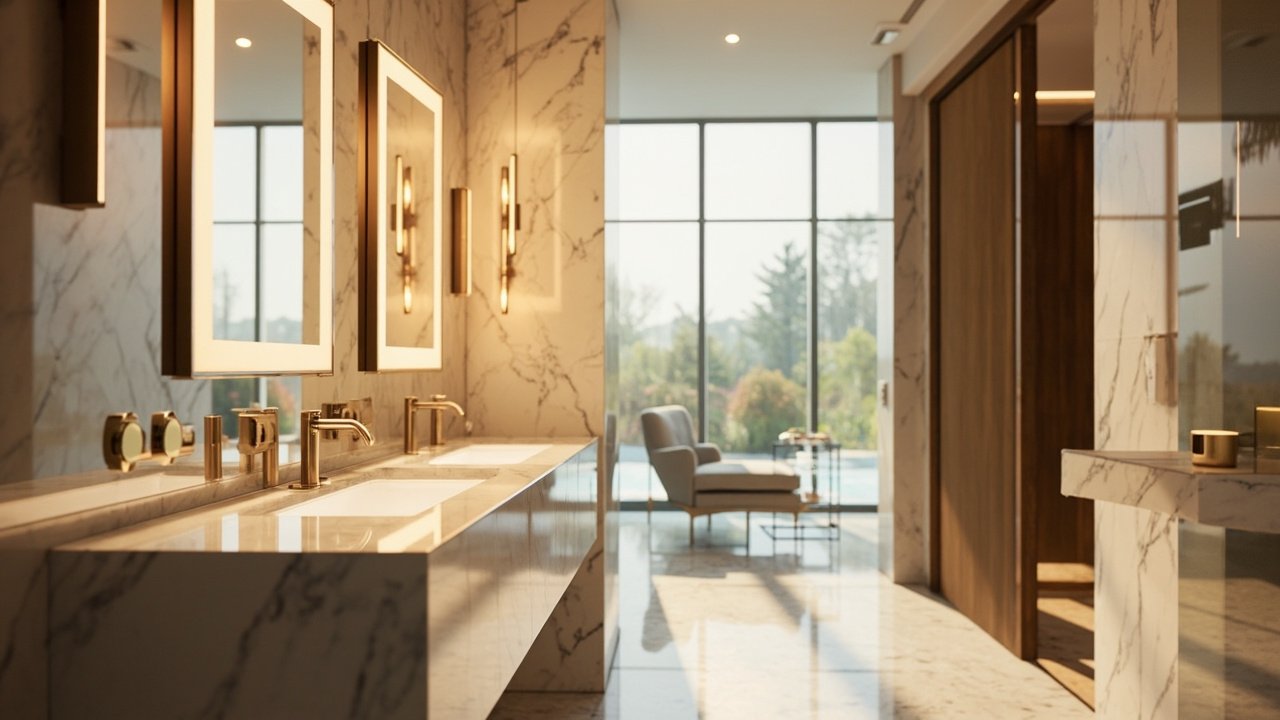
In the world of high-end hospitality, the bathroom has long been a sanctuary—a private space where design, comfort, and indulgence converge. Today, that sanctuary is undergoing a radical transformation. The image of a luxury hotel bathroom, once defined by marble and gold fixtures, now includes a layer of invisible intelligence: sensors that adjust lighting based on circadian rhythms, mirrors that display weather and news, shower systems that remember temperature preferences, and taps that measure water usage in real time. This shift is not merely cosmetic; it signals a broader change in how hotels approach the guest experience and operational efficiency.
For hotel owners, operators, and technology integrators, this evolution raises critical questions. How can smart bathroom solutions elevate the guest journey while driving measurable ROI? What are the implementation pitfalls? And how does this micro-environment reflect the larger wave of smart hotel transformation across the property? This feature explores the strategic intersection of hospitality technology, service design, and digital transformation within the luxury bathroom—and what it means for the industry at large.
Digital transformation in hospitality is no longer limited to mobile check-in and keyless entry. The entire guest journey—from pre-arrival to departure—is being rewired through connected systems. The bathroom, ironically one of the most private areas, has become a surprising hub for innovation. Hotels are deploying smart hotel solutions that collect data on guest preferences, automate routine tasks, and create personalized moments of delight. For example, a guest who frequently stays at a brand may find the bathroom mirror greeting them by name, with the shower preset to their ideal temperature—all without any manual intervention.
This level of personalization is made possible by integrating the bathroom's systems with the property's central guest profile database. When a guest books a room, their preferences are pushed to the room's IoT ecosystem. The bathroom's smart mirror, connected via a low-power network, retrieves that profile and adjusts settings accordingly. Such seamless connectivity is a hallmark of hotel digital transformation, but it requires careful planning and robust infrastructure.
Beyond guest-facing features, smart bathrooms deliver substantial operational benefits. Sensors can detect leaks before they cause damage, monitor toilet flush cycles to predict maintenance needs, and automatically report low soap or towel levels to housekeeping via a dashboard. This reduces waste, cuts labor costs, and improves sustainability metrics. For luxury properties that pride themselves on flawless service, predictive maintenance ensures that guest disruptions are minimized. One major chain reported that smart water-monitoring systems in bathrooms reduced water consumption by 20 percent across their portfolio—a significant saving that also supports environmental goals.
These efficiencies are central to hospitality digital transformation, where technology is leveraged not only to wow guests but to optimise operations. Hotel technology trends increasingly point toward systems that bridge the gap between guest satisfaction and operational excellence.
Several technologies are converging to create the smart bathroom experience. Here are the most relevant for luxury hotels:
Implementing these technologies requires a service design mindset. The goal is not to overwhelm guests with gadgets but to create an intuitive, frictionless experience. For example, a smart mirror should offer clear, optional interactions—not require a tutorial. Voice commands must work reliably even with different accents and in noisy environments (e.g., running water). And crucially, any data collected must be handled with transparency and security, as privacy is a top concern for luxury travelers.
Operators should consider the guest journey within the bathroom: entering, grooming, bathing, and relaxing. Each phase presents opportunities for smart enhancements. The shower could suggest a spa playlist based on the time of day; the toilet could adjust its seat temperature at a specific hour; the lighting could transition from bright morning mode to dim evening relaxation. Such details, when executed well, become invisible luxuries that earn loyalty.
One of the most compelling hotel technology trends is the move toward adaptive environments that learn from guest behavior. Rather than relying solely on preset preferences entered at check-in, systems can use motion sensors, occupancy patterns, and even biometric data to automatically adjust settings. Imagine a bathroom that learns you prefer the shower at 39°C and the mirror at a certain height, and then applies these preferences the moment you enter. Over a multi-night stay, the system becomes more accurate, creating a sense of familiarity and care.
Another trend is the integration of sustainability metrics into the guest experience. Hotels are using smart water meters and energy optimisers not only to cut costs but to tell a story. A display in the bathroom might show real-time water savings compared to a standard hotel, gamifying conservation. This resonates with eco-conscious travelers who seek luxury without guilt. Smart faucets that reduce flow without compromising pressure are becoming standard, and some luxury brands are eliminating single-use plastic amenities by using refillable dispensers tracked by inventory sensors.
A truly smart bathroom does not operate in isolation. It must communicate with the room management system, the housekeeping platform, and the hotel's CRM. For instance, if a guest uses the bathroom voice assistant to request extra towels, that request should automatically appear in the housekeeping app. If a leak is detected, the system should not only trigger an alarm but also shut off the water supply to that zone and send a maintenance ticket. This level of integration requires a robust middleware layer and a commitment to interoperability—challenges that many legacy properties face.
At Smart Hotel, we offer comprehensive services to help properties navigate this complex integration landscape, from initial audit to full system deployment.
Implementing smart bathroom solutions in an existing luxury hotel is not a plug-and-play endeavor. Many buildings have outdated electrical, plumbing, or network systems. Retrofitting often requires running new low-voltage wiring, installing wireless access points that can penetrate thick walls, and ensuring that all devices speak the same protocol (e.g., MQTT, BACnet, or proprietary APIs). Hotel digital transformation projects often stall at this stage because of unforeseen compatibility issues.
Best practice is to conduct a thorough site audit before selecting technologies. Prioritize solutions that offer open APIs and support industry standards like ASHRAE or KNX. Cloud-based management platforms can simplify updates and monitoring, but ensure that the property has reliable internet connectivity and failover plans. For critical functions like water shut-off valves, local control should be retained even if the cloud connection is lost.
Guests in luxury hotels expect discretion. A bathroom that collects data about their habits—when they shower, how long they stay, what temperature they prefer—is a sensitive proposition. Operators must be transparent about data collection and provide opt-in/opt-out options. Data should be anonymized and encrypted both in transit and at rest. It is also wise to store guest preferences in a tokenized profile that does not expose personally identifiable information unless absolutely necessary.
From a regulatory perspective, hotels must comply with GDPR, CCPA, and other local privacy laws. Engaging legal counsel early in the procurement process is advisable. Providers should be vetted for their security certifications (e.g., SOC 2, ISO 27001).
Smart systems are only as effective as the people who support them. Housekeeping and engineering teams must be trained to troubleshoot common issues, such as a voice assistant that fails to respond or a smart toilet with a sensor error. Front desk staff need to understand the capabilities so they can confidently answer guest questions. Moreover, a culture shift is required: staff must see technology as a tool that enhances their work, not a threat to their roles. When implemented with care, smart bathroom solutions can reduce repetitive tasks and allow employees to focus on high-value interactions.
The business case for smart bathrooms rests on three pillars: guest satisfaction, operational savings, and revenue generation. Guest satisfaction can be measured through post-stay surveys and online reviews; properties that invest in meaningful tech often see higher Net Promoter Scores. Operational savings come from reduced water and energy consumption, fewer emergency repairs, and lower housekeeping costs. Revenue generation is more indirect: a differentiated smart bathroom can command a premium room rate or attract corporate accounts that value innovation.
To build a convincing ROI model, operators should track baseline metrics before and after implementation. Include hard savings (utility bills, maintenance call frequency) and soft benefits (staff efficiency, guest retention). For many luxury properties, a three- to five-year payback period is acceptable if the technology also aligns with brand positioning.
For a deeper dive into how our team at Smart Hotel approaches ROI analysis and project scoping, visit our about page to learn about our methodology and past client engagements.
The key technologies include smart mirrors with touch/voice interaction, digital shower controls with recallable presets, leak detection sensors, and voice assistants integrated with property systems. Smart toilets and automated lighting are also popular. The choice depends on property goals: guest delight, operational efficiency, or sustainability.
They eliminate friction (e.g., no need to fiddle with unfamiliar fixtures), offer personalization (e.g., remembered preferences), and provide useful information (e.g., weather, news). When done well, these features create a feeling of being cared for, which translates to higher satisfaction and repeat visits.
Guests may worry about cameras or microphones in private spaces. Mitigation includes using only pass-through data (no recording), providing clear signage about sensors, offering opt-out modes, and ensuring any data collected is anonymized and stored securely. Compliance with privacy regulations is non-negotiable.
ROI varies widely based on scope and property type. A focused retrofit (e.g., smart mirrors and leak detection) may pay for itself in 2–4 years from water savings and reduced maintenance. Full bathroom automation can take longer but can add 10–15% to the room's perceived value. Detailed site-specific modeling is recommended.
The luxury hotel bathroom is no longer just a space for hygiene—it is a canvas for innovation. As hospitality technology continues to evolve, the bathroom will remain a critical touchpoint for delivering memorable guest experiences and achieving operational excellence. For hotel owners and operators, the message is clear: start planning for smart bathrooms not as a futuristic luxury but as a present-day competitive necessity.
The transformation requires careful selection of smart hotel solutions, a commitment to integration and security, and a willingness to invest in both infrastructure and people. Those who succeed will define the next generation of hospitality—a world where every moment feels tailored, effortless, and truly smart.
We invite you to explore how our expertise in smart hotel services can support your property's digital journey. Whether you are just beginning to evaluate options or ready to deploy a full solution, our team is here to help you turn ambition into reality.
A Luxury Hotel Bathroom: The Epicenter of Smart Hospitality Transformation connects directly with the broader solution stack and current hospitality industry guidance.
 Superadmin ZHANG
May 04, 2025
 Superadmin ZHANG
May 04, 2025


By clicking the button, you are agreeing with our Term & Conditions


