
Hotel lobbies evolve into digital hubs with self-service kiosks and connected concierge. Learn how hospitality technology transforms arrival journeys for owners and operators.
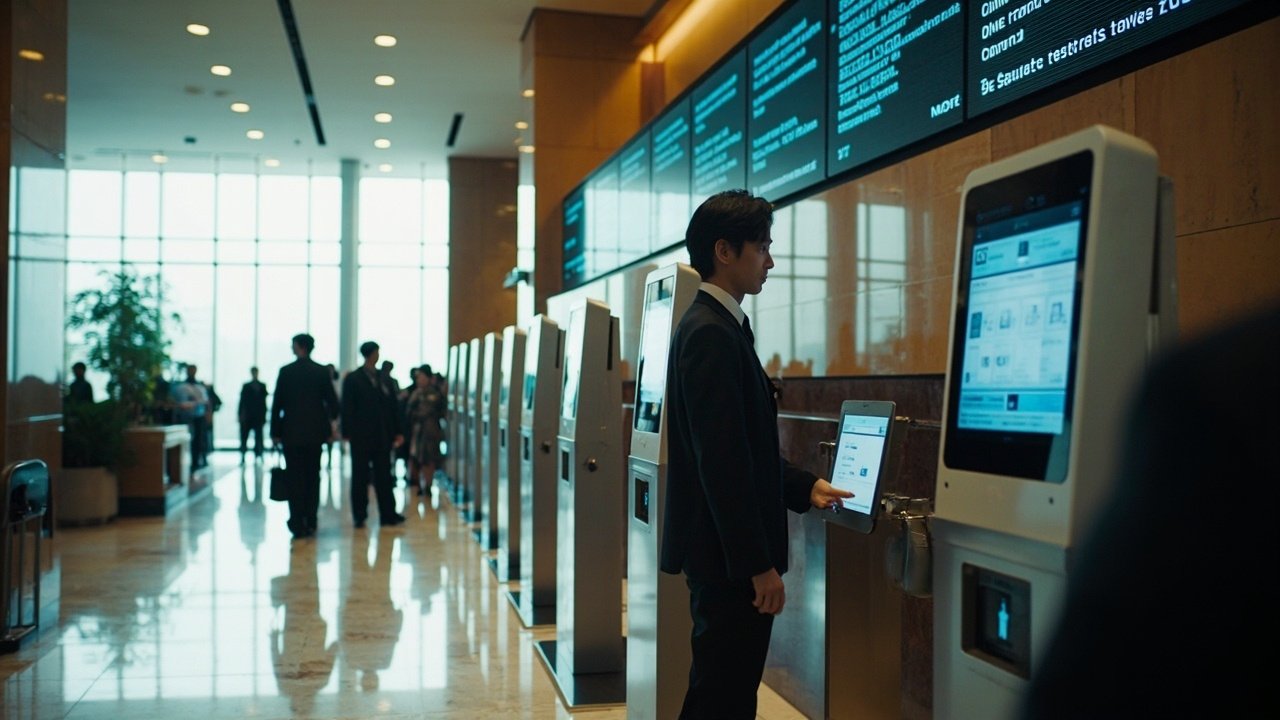
The moment a guest steps into a hotel lobby, expectations shift. The polished marble floors, ambient lighting, and welcoming scent are no longer enough. Today’s traveler—whether leisure or business—anticipates a seamless, tech-enabled arrival. The image of a modern lobby with sleek lobby kiosks, interactive signage, and connected concierge stations captures precisely this new reality. This is not a futuristic concept; it is the current frontier of hospitality technology, where digital transformation meets guest journey design.
The shift toward a digital lobby is driven by a convergence of guest demand for speed, operational efficiency, and personalized service. Hotel owners and operators—along with technology integrators—are recognizing that the arrival journey is the most critical moment in the guest lifecycle. It sets the tone for the entire stay. In this article, we examine how self-service check-in, digitized concierge, and connected lobby ecosystems are redefining hospitality standards, what implementation looks like, why this modernization is commercially essential, and how to measure success.
Lobbies have traditionally been a stage for human interaction: the front desk team, the bellman, the concierge. But labor shortages, rising guest expectations, and the need for operational agility have accelerated a reimagining. The digital lobby is not about removing human touch—it’s about augmenting it. Self-service kiosks allow guests to check in and out in under 60 seconds. Digital signage provides wayfinding, event information, and local recommendations. Connected concierge solutions, accessible via kiosks or mobile, offer booking services, dining reservations, and city guides without queuing.
For hospitality technology providers, the digital lobby represents a convergence of hardware (kiosks, screens, sensors) and software (property management system integration, analytics, guest-facing platforms). The goal is to create a frictionless flow from arrival to room, and beyond. Industry leaders note that early adopters of self-service check-in have reported reduced front desk wait times by up to 40%, increased guest satisfaction scores, and lower labor costs. The lobby becomes a flexible space that can adapt to different volumes, events, and guest profiles. In addition, digital signage not only provides information but also can display dynamic content such as weather updates, social media feeds, or promotional offers targeted to the time of day or guest demographics.
Hotel self check in is no longer a niche offering. From budget to luxury segments, properties are deploying kiosks that allow guests to complete registration, select room preferences, make payments, and receive digital keys. These kiosks are often integrated with the hotel’s PMS and CRM, enabling personalized greetings, upsell offers, and loyalty recognition. For example, a returning guest might be welcomed by name on the screen, offered their preferred room type, and prompted to earn bonus points—all without front desk interaction. Advanced kiosks also support multiple languages, accessibility features for guests with disabilities, and contactless payment options including mobile wallets.
Implementation considerations include hardware durability, user interface design (intuitive and multilingual), and integration with existing systems. Data security is paramount—kiosks must comply with PCI standards for payment processing and GDPR for guest data. Operators should also plan for staff training so that team members can assist when needed, transforming their role from transaction handlers to guest experience enhancers. A common pitfall is underestimating the need for ongoing technical support and software updates. Hotels should negotiate service-level agreements with vendors to ensure uptime and rapid resolution of issues.
The digital concierge hotel concept takes the traditional concierge capabilities and makes them available 24/7 via kiosks, in-room tablets, or mobile apps. Services include restaurant reservations, activity bookings, transportation arrangements, and local attraction information. Some advanced systems incorporate AI chatbots that handle simple requests, freeing human concierges for complex or high-touch interactions. For instance, a guest can ask the digital concierge for dinner recommendations and instantly receive curated options with the ability to book a table—all without speaking to a staff member.
From an operational standpoint, digital concierge platforms can reduce phone call volume, decrease guest wait times, and increase ancillary revenue through targeted upsells. Analytics from these systems provide valuable insights into guest preferences, popular services, and peak request times, informing staffing and marketing strategies. Moreover, integration with the property management system allows seamless charging of services to the guest folio, eliminating manual entry errors. Hotels can also partner with local businesses—restaurants, tour operators, transport services—to offer exclusive deals through the concierge platform, generating commission income while enhancing the guest experience.
Adopting a digital lobby is not merely an upgrade—it’s a strategic shift. Owners must evaluate the business case against their property’s profile. A 200-room business hotel with high turnover may benefit significantly from self-service kiosks that reduce check-in queues during peak hours. A boutique resort might focus on digital concierge to enhance personalized recommendations. Integrators should advise on modular solutions that can scale as the property evolves. Additionally, the choice between purchasing hardware outright versus a subscription model (SaaS) can impact cash flow and total cost of ownership. Many vendors now offer flexible pricing based on transaction volume or monthly fees.
Key metrics to track include average check-in time, guest satisfaction scores (Net Promoter Score or similar), labor hours saved, and ancillary revenue generated through upsells. The services offered by technology providers should include not only the hardware and software but also ongoing support, analytics dashboards, and integration with existing PMS, POS, and CRM systems. It is wise to request case studies from the vendor showing results in properties of similar size and segment. Piloting the technology in a limited area (e.g., a few kiosks in the lobby) before full deployment can mitigate risks and allow for fine-tuning.
Deploying a smart hotel lobby requires careful planning. Here are the critical factors:
The physical placement of kiosks, signage, and concierge terminals must align with natural guest movement. Avoid bottlenecks at entry points. Provide clear visual cues—digital signs directing guests to self-service areas or staffed desks. Consider universal design for accessibility. Kiosks should be positioned at a height suitable for wheelchair users and equipped with privacy shields for screen viewing. Adequate lighting and sound dampening also improve usability.
The magic of a connected lobby happens when kiosks, signage, and backend systems talk to each other. Real-time synchronization with PMS ensures that check-in, room status, charges, and guest profiles are instantly updated. APIs are the backbone; choose providers with open, documented APIs. Legacy systems may require middleware or custom connectors—factor this into the project timeline and budget. Ideally, the technology should integrate with the hotel’s existing loyalty program, revenue management system, and housekeeping dashboard to create a unified operational picture.
Technology should not alienate staff. Train teams to use the digital tools to enhance guest interactions. For instance, when a guest completes self-service check-in, a staff member can be alerted to greet them personally and offer luggage assistance. The human touch remains vital. Redefine job roles: front desk agents become “guest experience ambassadors” who roam the lobby, provide personalized recommendations, and handle exceptions. Continuous training and feedback loops help staff embrace the new tools.
Guest data is sacrosanct. All digital touchpoints must comply with relevant regulations (PCI, GDPR, CCPA). Use encrypted connections, regular security audits, and transparent privacy policies. Kiosks should have privacy screens to prevent shoulder surfing during credit card entry. Data retention policies should be clearly defined, and guests should be able to access or delete their information upon request. Cybersecurity insurance coverage should be reviewed to cover potential breaches.
To justify the investment in a digital lobby, owners and operators must define clear KPIs and track them over time. The most impactful metrics include:
Benchmarking these KPIs before and after implementation provides evidence of value. Many hotels achieve payback within 12–18 months, but properties with high guest volume and labor costs may see faster returns. Regularly reviewing analytics dashboards helps identify underperforming features that need adjustment. For example, if few guests use the digital concierge for restaurant reservations, the menu structure or promotion may need optimization.
To illustrate practical impact, consider a 150-room midscale hotel that deployed three self-service kiosks and a digital concierge touchscreen in the lobby. Before implementation, average check-in time was 5.2 minutes with a staff of three at peak hours. After 90 days, check-in time dropped to 1.8 minutes, allowing the hotel to reduce front desk staffing by one person during peak periods—saving approximately $35,000 annually in labor costs. Guest satisfaction scores for arrival increased by 12 points. Additionally, the digital concierge generated $8,000 in commission revenue from local tour and restaurant bookings in the first quarter. The total hardware and software investment of $60,000 was recovered in less than 18 months.
The digital lobby is part of a broader guest journey digitization. Pre-arrival, guests can use mobile check-in and receive digital keys. On arrival, they bypass the front desk and proceed to a kiosk or directly to their room. During the stay, digital concierge offers recommendations and service requests. At departure, self-checkout kiosks generate folios and send receipts via email. This end-to-end digital journey reduces friction and empowers guests with control. Hotels can even integrate with smart room technology (voice assistants, smart thermostats) to create a cohesive experience.
Data collected throughout this journey can be anonymized and analyzed to identify patterns: popular amenities, peak check-in times, guest demographics. Operators can then adjust staffing, pricing, and marketing. The lobby becomes a living laboratory for operational intelligence. For example, if data shows that weekday business travelers frequently use the digital concierge for express breakfast orders, the hotel can pre-stock grab-and-go options near the lobby.
Not entirely. They augment the team, allowing staff to focus on high-value interactions, problem resolution, and personalized services. Many hotels maintain a small staffed desk for complex requests or guests who prefer human assistance. The optimal ratio depends on property type and guest demographics.
Surveys indicate growing acceptance, especially among Gen X and Millennials. Older demographics may need more guidance, but intuitive interfaces and staff support ease the transition. Offering choice—kiosk or staffed desk—ensures inclusivity. Remarkably, even luxury hotels have successfully introduced kiosks with a “concierge-assisted” option that retains a high-touch feel.
ROI varies by property size, labor costs, and guest volume. Operators often see payback within 12-18 months through labor savings, increased upsell conversion, and higher guest satisfaction leading to repeat bookings. Additional revenue from digital concierge commissions can shorten the payback period.
Yes. Many platforms allow partnerships with local restaurants, tour operators, and transport providers. These integrations can generate commission revenue for the hotel while enhancing guest experience. Some systems also support dynamic pricing or last-minute offers to maximize yield.
Three frequent issues are: (1) poor system integration leading to data sync errors, (2) insufficient staff training causing resistance or misuse, and (3) underestimating ongoing maintenance costs. Mitigation strategies include thorough vendor vetting, pilot testing, and dedicating a project manager for the rollout.
When executed well, it reinforces a modern, efficient, and guest-centric brand image. However, if technology is unreliable or confusing, it can harm brand trust. Consistency across touchpoints (lobby, mobile, in-room) and clear communication about self-service options are key.
The modernization of the hotel arrival journey is not a passing trend—it is a fundamental shift in how hospitality is delivered and consumed. Guests increasingly expect self-service options, instant information, and personalized recommendations. Hotel operators who invest in a digital lobby—including self-service check-in, digital concierge, and connected signage—position themselves for higher operational efficiency, stronger guest loyalty, and a competitive edge in a crowded market. As technology evolves, we will see deeper integration with artificial intelligence, predictive analytics, and biometric identification, further streamlining the arrival experience.
For technology integrators and providers, the opportunity lies in delivering solutions that are seamless, secure, and scalable. The lobby is no longer just a room; it is a dynamic interface between the guest and the hotel ecosystem. To learn more about how to build a smart hotel lobby tailored to your property, contact our team or about our approach to hospitality technology. The future of arrival is connected—and it starts in the lobby.
A Hotel Lobby with Modern Self-Service: The Connected Arrival Journey connects directly with the broader solution stack and current hospitality industry guidance.

 Superadmin ZHANG
May 04, 2025
 Superadmin ZHANG
May 04, 2025


By clicking the button, you are agreeing with our Term & Conditions


