
Service robots have evolved from gimmicks to core infrastructure. This feature explores strategic integration of robot butlers into hospitality operations, covering delivery workflows and contactless service.

Imagine checking into a hotel and being greeted not just by a front desk agent, but also by a sleek, autonomous robot that glides over to offer you a welcome drink and escort you to your room. This is no longer a scene from a futuristic exhibition; it is happening today in leading properties around the world. The image of a robot butler in a hotel lobby, perfectly poised with a tray, has become a powerful symbol of the ongoing hotel digital transformation. For many years, such robots were seen as little more than marketing novelties — attention-grabbing stunts designed to generate social media buzz. However, the hospitality industry is now witnessing a definitive shift: service robots are moving from the fringes of innovation to the very core of operational infrastructure.
This transformation is driven by a convergence of factors: rising guest expectations for contactless service, persistent labor shortages, and the maturity of smart hotel automation technologies. Today’s robot butlers are not just delivering a single amenity; they are part of a complex, integrated ecosystem that handles everything from in-room dining deliveries and luggage transport to housekeeping supply runs and concierge tasks. In this feature, we explore how hotel robots are being reimagined as essential pieces of the operational puzzle, the strategic considerations for hotel owners and operators, and what the future holds for autonomous hospitality workflows.
The concept of a service robot for hotel environments is not entirely new. For over a decade, pioneering properties have experimented with robotic concierges and delivery bots. Early adopters like the Yotel in New York and the Henn-na Hotel in Japan captured headlines with robotic front desk agents and luggage handlers. However, those implementations were often isolated, custom-built, and expensive. The technology was promising but not yet ready for mainstream adoption at scale.
Fast forward to the present, and the landscape looks radically different. Advances in autonomous navigation, sensor technology, and cloud-based fleet management have made hotel robots more reliable, affordable, and easier to integrate with existing Property Management Systems (PMS). The pandemic served as a powerful catalyst, accelerating the demand for contactless service. Guests began to appreciate the ability to order a toothbrush or a bottle of water via an app and have it delivered to their door by a robot, without any human-to-human interaction. Hotels quickly realized that robots could fill critical gaps in service delivery, especially during off-peak hours when staffing is minimal.
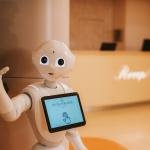
Today, the smart hotel automation ecosystem includes a variety of robotic form factors: from cube-shaped delivery bots that navigate hallways and call elevators, to humanoid assistants that can provide directions and information. The common thread is that these robots are no longer standalone gadgets; they are networked endpoints in a broader digital operations platform.
To understand the shift from novelty to infrastructure, consider the economics of a typical full-service hotel. Running room service, for example, is notoriously labor-intensive. A single delivery can tie up a staff member for fifteen to twenty minutes, from taking the order to walking through corridors, knocking on doors, and returning to the service area. Multiply that by hundreds of requests per day, and the operational overhead is significant. Now picture a fleet of robot butlers handling the majority of these deliveries autonomously. The staff member is freed to focus on higher-value interactions — personalizing guest experiences, resolving complex issues, and creating memorable moments that a robot simply cannot replicate.
This is the core value proposition of the modern hospitality technology stack: augmenting human labor, not replacing it. The robot becomes a lever for efficiency, enabling the same or even higher levels of service with a leaner workforce. For hotel owners and operators, this translates directly to improved margins and scalability. In an industry where labor costs are often the largest expense, any technology that can reliably handle repetitive tasks offers a compelling return on investment.
Moreover, the novelty factor has evolved. Early adopters used robots as a differentiator, but today’s guests expect a certain level of tech-enabled convenience. A hotel that lacks smart hotel automation may soon be seen as outdated, especially by younger, tech-savvy travelers. The robot butler is becoming a baseline expectation, much like free Wi-Fi or mobile check-in.
Implementing a service robot for hotel use cases requires careful mapping of workflows. The most common and successful deployments today revolve around four primary areas:
This is the low-hanging fruit of hotel robotics. When a guest requests an extra towel, a pillow, or a minibar restock, the request is logged in the PMS or a dedicated app. A dispatch system then assigns the task to the nearest available robot. The robot autonomously travels to the supply station, picks up the item (often loaded by a staff member), navigates through corridors, rides the elevator (using IoT integration), and arrives at the guest's door. It then sends a notification: “Your delivery has arrived. Please open the door to retrieve your item.” The guest unlocks the door, takes the item, and the robot returns to its charging station or next assignment. This entire process can be completed in under ten minutes, with minimal human intervention.
Large, ruggedized robots are being used to transport luggage from the lobby to guest rooms and vice versa. These robots can handle multiple bags simultaneously, reducing the physical strain on bell staff and speeding up check-in and check-out flows. Some properties have integrated luggage robots with mobile check-in, allowing guests to send their bags directly to their rooms without ever stopping at the front desk.
While robots are not yet capable of making beds or cleaning bathrooms, they can play a vital support role. Housekeeping teams can call a robot to deliver fresh linens, toiletries, or cleaning supplies to a floor. The robot acts as a mobile supply cache, reducing the number of trips to the central storage room. This optimization can increase the productivity of each housekeeper by covering more rooms per shift.
Some hotel robots are equipped with conversational AI and touchscreens, allowing them to answer questions about hotel amenities, local attractions, or events. They can guide guests to meeting rooms, restaurants, or the spa. In busy lobbies, a robot can provide a friendly, interactive wayfinding experience, freeing up human concierges to handle more complex requests.
For decision-makers evaluating hotel digital transformation, the business case for service robots has become much clearer. The key metrics are operational efficiency, guest satisfaction scores (especially regarding response time), and labor cost optimization. However, the decision is not purely financial; there is also a brand and marketing element. A forward-thinking hotel that embraces hospitality technology sends a signal that it is innovative, attentive to detail, and respectful of guests’ time.
Costs for commercial-grade service robots have fallen significantly in recent years. A typical delivery robot ranges from $10,000 to $30,000, with monthly software and maintenance fees. For a large property, deploying a fleet of four to six robots can achieve a payback period of 18 to 24 months through labor savings and increased capacity. After that, the robots continue to deliver value with relatively low incremental costs.
Moreover, the data generated by robot operations is invaluable. Hotel operators gain insights into traffic patterns, peak request times, and service bottlenecks. This data can be fed back into the PMS to optimize staffing schedules, menu planning for room service, and even layout of public spaces. The robot becomes not just a tool, but a source of intelligence for continuous improvement.
Transitioning from a human-only service model to a hybrid workforce requires careful planning. Here are key considerations for hotel owners, operators, and technology integrators:
Robots need a navigable environment. This means ensuring hallways are wide enough, there are no unexpected obstacles, and floor surfaces are suitable for robot wheels. More critically, robots must be able to operate elevators and automatic doors. This often requires IoT integration with the building management system. Hotels built in the last decade are generally easier to retrofit, while older properties may need targeted upgrades. It is essential to work with a technology partner who understands these physical requirements.
The robot management platform must integrate seamlessly with the hotel’s PMS and mobile app. Guest requests initiated through the app should automatically trigger robot dispatch. The system should also be able to prioritize requests based on urgency — for example, a forgotten key card might be escalated over a spare pillow. Integration with the hotel’s key card system is also important so that robots can be granted temporary access to guest floors.
Employees may initially view robots as a threat. It is critical to communicate that the goal is to make their jobs easier, not obsolete. Involve staff in the deployment process, let them name the robots, and train them on how to collaborate with the machines. Many hotels report that once staff see how robots handle tedious tasks, they become enthusiastic advocates.
Robots require periodic software updates, battery swaps, and occasional troubleshooting. Hotels should designate a “robot wrangler” on each shift — often a concierge or bell captain — who is responsible for monitoring the fleet and handling technical issues. Many vendors offer remote monitoring and support, but on-site familiarity is valuable.
It is important to set guest expectations about robot interactions. Some guests may be hesitant or curious. Clear in-room signage and app notifications explaining how to interact with the robot — “Enter your room number, and the robot will come to your door” — can ease adoption. For guests with accessibility needs, ensure there is always a human alternative available.
Operating costs are generally low. Robots consume minimal electricity and require only periodic maintenance. The primary cost is the initial capital expenditure, which is increasingly offset by labor savings within 18–24 months. Many vendors offer leasing options to reduce upfront investment.
Yes, overwhelmingly so. Surveys show that most guests find robot deliveries convenient and even fun. The novelty factor quickly turns into a positive brand association, especially when the robot is reliable. Negative feedback typically occurs only when robots malfunction or cause delays.
Not entirely, nor should they. The most successful deployments use robots to handle repetitive, low-touch tasks, freeing human staff to focus on high-touch, personalized service. Hospitality is ultimately about human connection; robots are tools to enhance that connection, not replace it.
Most modern service robots are equipped to call elevators via wireless integration. They communicate with the elevator control system to request a specific floor, wait for the door to open, and navigate inside. This technology is now well-established and reliable, though it requires integration with the building’s elevator API.
Fleet management software typically includes diagnostic alerts. If a robot encounters an error, it can self-diagnose and either attempt a recovery or summon human assistance. Most systems also have fail-safes: if a robot is stuck or low on battery, it can automatically return to its dock. Hotels always have backup human staff to take over deliveries if needed.
The era of the robot butler as a novelty is over. Service robots have proven their value as reliable, cost-effective components of modern smart hotel automation infrastructure. For hotel owners and operators, the question is no longer whether to adopt hospitality technology like robots, but how quickly and strategically to integrate them.
The hotels that will thrive in the coming decade are those that embrace a holistic approach to hotel digital transformation — one that includes not only robots, but also integrated platforms for booking, check-in, housekeeping, and guest communications. The robot butler is a visible, tangible symbol of that transformation, but its real power lies in the data and efficiency it brings to the entire operation.
Whether you are a boutique property looking to enhance guest experience or a large chain aiming to optimize labor costs, the time to explore service robot for hotel solutions is now. Start by assessing your property’s infrastructure, engage with trusted vendors, and pilot a small fleet to build internal expertise. The autonomous hotel is not a distant dream; it is a practical, achievable future.
To learn more about how to integrate robots into your existing operations, explore our comprehensive services tailored for hospitality properties. For a personalized consultation, contact our team of smart hotel specialists.
A Robot Butler in a Modern Hotel: From Novelty to Operational Infrastructure connects directly with the broader solution stack and current hospitality industry guidance.
 Superadmin ZHANG
May 04, 2025
 Superadmin ZHANG
May 04, 2025


By clicking the button, you are agreeing with our Term & Conditions


