
The hotel lobby evolves into a smart hub. This article examines self-service check-in, digital concierge, and the strategic benefits of hospitality technology for modern arrival journeys.
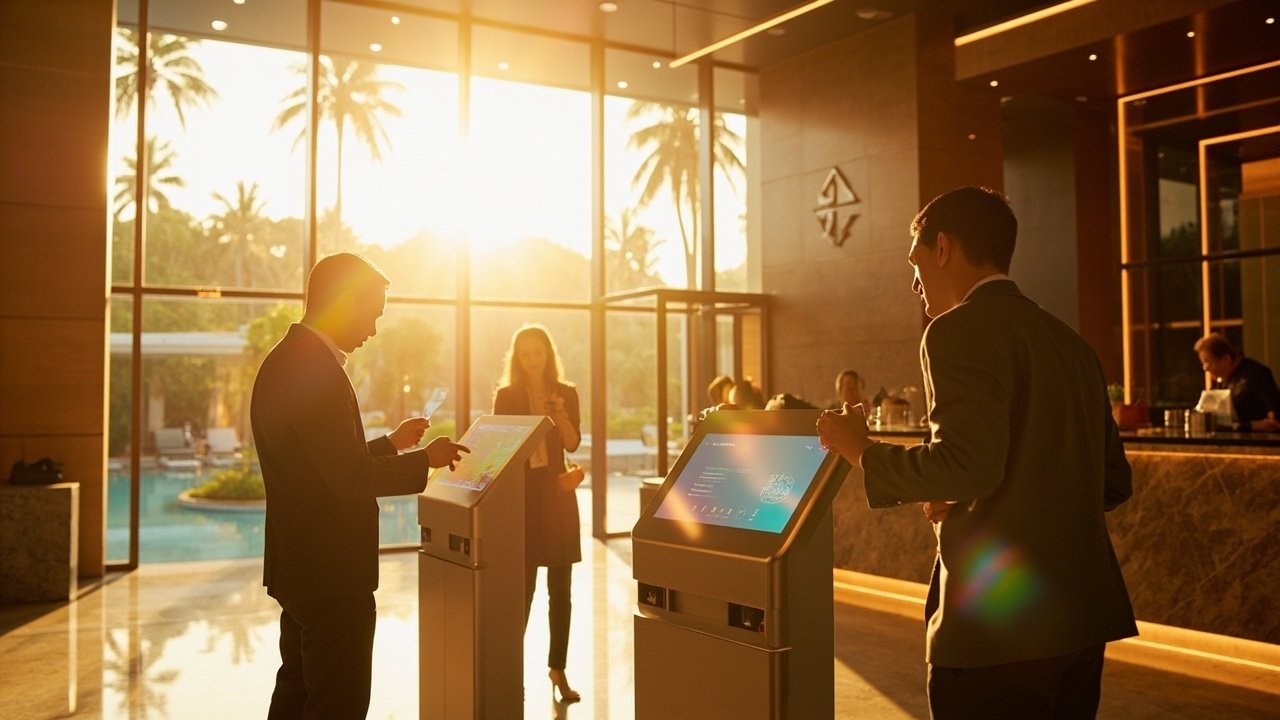
The moment a guest steps through the revolving door of a modern hotel, their journey begins—not at a traditional front desk, but in a fluid, connected environment where kiosks, digital signage, and intelligent concierge services anticipate their needs. This scene, captured in a contemporary lobby photograph, epitomizes the shift from static reception areas to dynamic digital hubs. For hotel owners, operators, and technology integrators, understanding how to design and deploy these smart lobbies is no longer optional; it is a competitive necessity.
The hotel lobby has long been the heart of the property—a place for arrival, departure, and casual interaction. Yet today’s guests expect speed, personalization, and control. The traditional queue at the front desk feels antiquated when consumers can check in for a flight or order groceries from their phone. Hospitality technology now enables a seamless, contactless arrival that satisfies both the efficiency-driven business traveler and the leisure guest seeking a stress-free start to their stay.
Hotel digital transformation is not merely about installing a few kiosks. It is a strategic reimagining of the guest journey. By digitizing check-in, concierge services, and wayfinding, hotels can reduce labor costs, collect valuable data, and free up staff to deliver higher-touch experiences. The lobby becomes a flexible space that can host pop-up events, social gatherings, or quiet work zones—all while technology operates in the background. Data from these systems can be analyzed to optimize floor plans, staffing levels, and even marketing campaigns.
Research consistently shows that millennials and Gen Z travelers prefer self-service options, but the trend cuts across demographics. The pandemic accelerated contactless preferences, and they are here to stay. A smart hotel lobby addresses these expectations by offering options: a guest can use a mobile app, a lobby kiosk, or interact with a digital concierge screen to check in, order room service, or book local experiences. The key is to provide choice without compulsion—some guests still desire human interaction, and a well-designed lobby accommodates both.
Hotel self check in technology has matured significantly. Today’s kiosks are not simply ticket machines; they integrate with property management systems, process payments, assign rooms, and even issue key cards or mobile credentials. The best systems provide a branded experience that mirrors the hotel’s aesthetic and tone. Additionally, modern kiosks can handle group bookings, early arrivals, and late departures, reducing the need for front desk intervention.
For operators, self-service kiosks reduce front desk bottlenecks during peak hours. They also enable upselling: a guest can be offered a room upgrade, late checkout, or a spa package during the check-in flow. Data collected at the kiosk can be fed into CRM systems to personalize future stays. Moreover, digital check-in reduces labor costs and allows staff to focus on concierge-level service rather than transactional tasks. A typical mid-scale hotel can redirect one or two front desk agents to guest relations, increasing overall service quality.
Deploying self-service check-in requires careful planning. Hardware must be durable, intuitive, and ADA-compliant. Software must integrate with existing PMS and key card systems. Staff training is critical—employees need to assist guests who struggle with the technology, and they must monitor the kiosks to ensure a smooth experience. Pilot testing in a controlled area of the lobby can help iron out issues before full rollout. Also, consider cybersecurity: kiosks should use encrypted connections and comply with PCI DSS standards to protect guest payment data.
The digital concierge hotel concept extends the capabilities of the lobby. Instead of a physical concierge desk, properties deploy interactive touchscreens, voice-activated assistants, or mobile chatbots that provide recommendations, book reservations, and offer real-time information about the hotel and destination. These tools are available 24/7, speaking multiple languages and reducing the workload on human concierges. Some advanced digital concierges can even integrate with smart room devices, allowing guests to control lighting or temperature from the lobby before they reach their room.
Digital concierge platforms can leverage guest profiles to suggest tailored activities. A returning guest who previously enjoyed spa services might be greeted with a promotion for a new treatment. The technology can also push push notifications about local events or weather, enhancing the guest experience without intrusive staff interaction. By analyzing usage patterns, hotels can identify which amenities are most popular and adjust their offerings accordingly.
For a true connected arrival, the digital concierge should be integrated with the check-in system. After a guest completes self-service check-in, the kiosk can display a map of the hotel or offer a QR code to access the concierge on their phone. This creates a seamless handoff from arrival to exploration. Integration with the hotel's mobile app further extends this journey: guests can start their concierge interactions before arrival and continue them throughout their stay.
Investing in a smart hotel lobby is a capital decision that requires understanding ROI, guest demographics, and long-term technology roadmaps. The benefits extend beyond guest satisfaction.
By automating check-in, check-out, and common guest requests, hotels can reallocate labor to areas that directly impact revenue, such as housekeeping management, food and beverage, or guest retention programs. Reduced front desk staffing can lower payroll costs while maintaining or improving service levels. In a 200-room hotel, automating check-in can save up to 15 hours of front desk labor per day.
Every interaction at a kiosk or digital concierge generates data. Hotels can analyze check-in patterns, popular amenities, and guest preferences to refine marketing and operations. For example, if a majority of guests book spa appointments through the digital concierge, the spa manager can adjust staffing accordingly. Aggregated data can also inform capital improvements—if wayfinding data shows guests frequently get lost near the elevators, digital signage can be placed strategically.
In a crowded market, a modern lobby with advanced technology can be a deciding factor for guests comparing properties. It signals innovation, cleanliness (through contactless interactions), and attention to detail. Owners of boutique hotels often find that a well-designed digital lobby becomes a photo-worthy space that guests share on social media, providing free marketing. Chain hotels can use a consistent digital lobby design to strengthen brand identity across properties.
Rolling out a digital lobby is not a one-size-fits-all project. Several factors must be evaluated.
Key considerations include compatibility with existing PMS, scalability for peak seasons, and user experience design. Hardware must be robust enough to withstand high traffic, yet aesthetically pleasing to match the interior design. Software should be cloud-based for easy updates and remote monitoring. Hotels should also evaluate the vendor's track record in the hospitality sector and request references from similar-sized properties.
Employees must understand the technology to confidently assist guests. Training should cover troubleshooting, guest flow management, and how to leverage the data collected. Change management is critical—some staff may feel threatened by automation. Framing technology as a tool that enhances their role (rather than replaces it) fosters buy-in. Regular refresher sessions and a dedicated internal champion can smooth the transition.
Not all guests are tech-savvy. Provide clear instructions, both on-screen and via signage. Offer a hybrid model where a staff member is nearby to assist. Ensure kiosks and digital screens are accessible to guests with disabilities, including voice guidance and adjustable heights. Multilingual support is also essential for international hotel chains.
Start with a small deployment in one area of the lobby. Monitor usage, gather feedback, and refine the flow before expanding. This approach minimizes disruption and allows hotels to tailor the experience to their specific guest profile. Use A/B testing to compare different user interface designs or upsell prompts.
A mid-sized business hotel in Chicago recently revamped its lobby by installing four self-service kiosks and two digital concierge screens. Within the first six months, check-in time dropped from an average of 7 minutes to under 2 minutes. Upsell revenue increased by 12% as guests accepted room upgrades and breakfast packages during the kiosk flow. Guest satisfaction scores for arrival experience rose by 18 points. The hotel also reported a 20% reduction in front desk labor costs, allowing staff to focus on personalized welcome services for loyalty members. This case illustrates the tangible returns of a well-planned digital lobby.
Modern guests expect a seamless transition from online engagement to in-person experience. The journey begins long before they enter the lobby: they may have completed mobile check-in, received a digital key, and chosen their room from an app. Upon arrival, they simply walk past the front desk to their room, or they stop at a kiosk to confirm their preferences. Digital signage in the lobby can then direct them to the elevator or amenities, creating a frictionless path. This connected journey reduces stress and builds brand loyalty.
Digital signage plays a crucial role in guiding guests. Interactive maps, directional arrows, and event schedules displayed on large screens reduce confusion and eliminate the need to ask for directions. This is particularly valuable in large convention hotels or resorts with multiple wings. Our services include tailored signage solutions that integrate with your property’s brand and can be updated in real time for special events or emergencies.
With guest data from the PMS, digital signage can display personalized welcome messages upon arrival. A returning VIP guest might see their name on a lobby screen along with a note from the general manager. This small touch elevates the experience without requiring staff intervention. Some properties even use facial recognition (with opt-in consent) to trigger personalized messages, but privacy must be handled transparently.
A digital hotel lobby integrates self-service kiosks, digital signage, and smart concierge tools to streamline arrival, enhance guest experience, and optimize operations. It replaces or supplements the traditional front desk with automated touchpoints.
Guests use a kiosk or mobile app to enter reservation details, verify identity, select room preferences, and receive a key card or digital key. The system connects to the hotel’s property management system in real time.
No, digital concierges complement human staff by handling routine requests and providing 24/7 information. This allows human concierges to focus on high-value interactions like arranging bespoke experiences or solving complex issues.
Benefits include reduced labor costs, increased operational efficiency, enhanced guest satisfaction, data collection for personalization, and competitive differentiation. The lobby also becomes a flexible revenue-generating space.
Assess your property’s size, guest demographics, existing tech stack, and budget. Partner with vendors that offer scalable, integrated solutions. Contact us for a consultation tailored to your needs.
Kiosks must use encrypted connections, comply with PCI DSS for payment processing, and have tamper-resistant hardware. Regular software updates and penetration testing are recommended to protect against vulnerabilities.
Planning and piloting can take 3-6 months, with full rollout requiring another 1-3 months depending on the property size and complexity. Phased deployments reduce disruption and allow for iterative improvement.
Absolutely. Even a single kiosk and a digital concierge screen can improve efficiency and guest experience. Many boutique hotels use digital lobbies to free up staff for personalized service, which is their core differentiator.
The modern hotel lobby is not just a room with a desk—it is a platform for guest engagement, operational optimization, and brand differentiation. As hospitality technology continues to evolve, the lines between physical and digital will blur further. Owners and operators who embrace this transformation now will be better positioned to meet the rising expectations of travelers and achieve sustainable growth.
To learn more about how smart hotel solutions can upgrade your property’s arrival experience, explore our range of digital lobby products and learn about our mission to redefine hospitality through innovation. The future of arrival is here, and it starts with a well-designed, connected lobby.
The Modern Hotel Lobby: Redefining Arrival with Smart Self-Service and Digital Concierge connects directly with the broader solution stack and current hospitality industry guidance.

 Superadmin ZHANG
May 04, 2025
 Superadmin ZHANG
May 04, 2025


By clicking the button, you are agreeing with our Term & Conditions


