
Discover how guest room automation and connected in-room technology are transforming hotel revenue and guest experience. This analysis covers smart controls, voice activation, and the ROI of digital room intelligence.
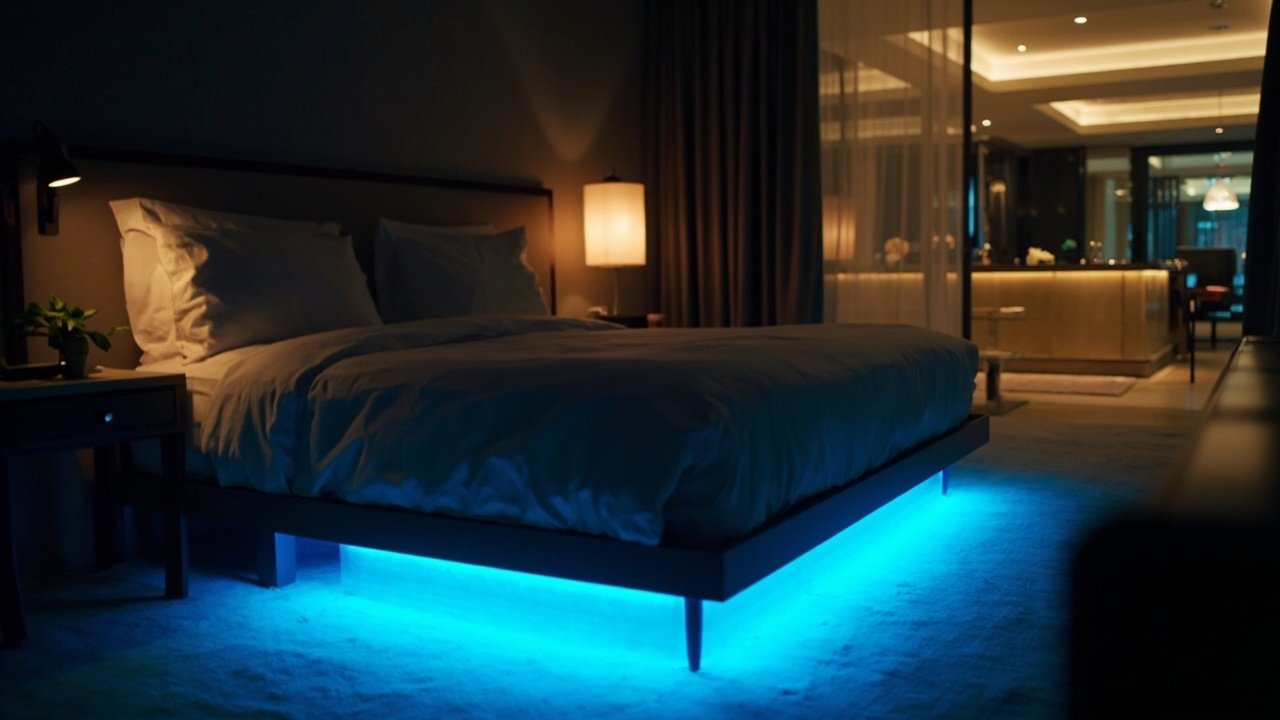
Picture this: a weary business traveler walks into her hotel room after a long flight. She taps the bedside tablet, and the curtains draw, the temperature adjusts to her preferred 22°C, and soft ambient lighting sets the mood. She asks the voice assistant to order room service and book a spa appointment for the morning. No phone calls, no waiting, no friction. This is not a futuristic fantasy — it is the reality of today's smart hotel room.
For decades, the guest room was a relatively static product – a place to sleep and shower. But the hospitality industry is now in the midst of a profound hotel digital transformation, and the guest room is emerging as the centerpiece of a connected, intelligent ecosystem. Industry stakeholders — from owners and operators to technology vendors and integrators — are recognizing that guest room automation is no longer just a nice-to-have amenity; it is a strategic lever that can drive both revenue and guest experience simultaneously.
In this industry analysis, we will examine how connected guest rooms are evolving from convenience features into revenue-generating assets. We will explore the technology that powers voice control and room intelligence, discuss implementation considerations for hotel operators, and provide a practical roadmap for leveraging automation to boost both the top and bottom lines.
The most exciting development in hospitality technology is not simply that a guest can adjust the thermostat from a smartphone — it is that the same infrastructure unlocks new revenue streams. A well-designed hotel room control system integrates directly with the property management system (PMS), the guest room automation solutions platform, and the in-room entertainment systems to enable targeted upsells and cross-sells.
Consider the following revenue opportunities:
Importantly, the revenue generated from a connected room is not limited to direct sales. Operational efficiencies — such as energy savings from automated climate control, reduced staff time spent on manual requests, and lower check-out friction — all contribute to improved profitability. A smart hotel that integrates these systems intelligently can report a measurable ROI within the first year of deployment.
Hotels leveraging room intelligence can collect anonymized data on guest preferences, room usage patterns, and response to promotions. This data informs dynamic pricing for room upgrades, allows for predictive maintenance (reducing downtime), and helps design more effective marketing campaigns. The connected room becomes a listening post for the hotel, delivering insights that were previously unavailable.
Voice control has matured significantly in recent years. Today’s hotel-grade voice assistants — built on platforms like Amazon Alexa for Hospitality, Google Nest Hub, or custom solutions — can handle requests ranging from lights and thermostats to concierge services. But the real value lies in the integration layer. When voice control is tied to the hotel’s core systems, a guest simply saying “I’m cold” can trigger the thermostat, close the blinds, and send an alert to housekeeping for an extra blanket — all without human intervention.
Moreover, voice technology can be programmed to recognize different guest profiles. A repeat guest who frequently asks for extra towels can have that preference stored and automatically enacted upon check-in. This level of personalization builds loyalty and differentiates the property in a competitive market.
Room intelligence goes beyond voice. Sensors embedded in the room can detect occupancy, light levels, and even air quality. Combined with machine learning algorithms, the room can anticipate guest needs. For example, if a guest usually dims the lights at 10 PM and sets the alarm for 6 AM, the system can learn this pattern and offer a “good night” scene that automates the entire routine. This not only enhances comfort but also reinforces the perception of a hotel that “just gets” its guests.
Deploying a connected guest room is not as simple as installing a few tablets. Successful implementation requires careful planning across several dimensions:
At the heart of any smart room is a robust hotel room control system that communicates with lighting, HVAC, blinds, audiovisual equipment, and locks. This typically involves a combination of wired and wireless protocols (e.g., BACnet, Zigbee, Z-Wave, or proprietary IoT networks). The control system must also integrate with the PMS, the channel manager, and the in-room entertainment platform. A poorly integrated system leads to frustration for both guests and hotel staff. Prioritize vendors that offer open APIs and a track record of interoperability.
With great data comes great responsibility. Hotels must ensure that guest data — especially voice recordings, room occupancy patterns, and personal preferences — are stored securely and used only with explicit consent. Compliance with regulations such as GDPR, CCPA, and local data protection laws is mandatory. Transparency with guests about what data is collected and how it is used is critical to building trust. Many leading hotels now offer a privacy mode that disables sensors and microphones when activated.
The guest-facing interface — whether a tablet, smartphone app, or voice assistant — must be intuitive, responsive, and accessible. Most guests are not technical experts; they expect a hotel room to function like their home electronics but without the learning curve. Use large fonts, clear icons, and minimal steps for common actions. Multilingual support is essential for international clientele. And always include a “help” or “contact front desk” option on every screen.
Technology alone cannot deliver a great experience — the human element remains vital. Staff must be trained to understand the smart room capabilities so they can assist guests, troubleshoot issues, and leverage the system to offer personalized service. For instance, a front desk agent might use the smart room’s occupancy data to know exactly when maintenance should enter, or a concierge might see a pattern of missed wake-up calls and proactively offer a voice reminder.
Perhaps the most critical integration point is between the guest room automation system and the PMS. When a guest checks in, the PMS should trigger the room to pre-set the temperature, lighting, and even the welcome message on the TV. When the guest checks out, the system should revert to an unoccupied, energy-saving state and clean the room’s digital slate for the next arrival.
Beyond basic room state management, tight PMS integration enables dynamic pricing for room upgrades and ancillary purchases. For example, if the PMS shows that a suite upgrade is available, the in-room tablet can display a tailored offer with a discount for the current stay. The transaction is processed seamlessly, and revenue is captured without any back-office friction.
One of the most frequently cited barriers to adoption of smart hotel room technology is guest concern about privacy. Stories of hacked cameras or voice recordings being misused can deter even tech-savvy travelers. Hotels must address this head-on.
Best practices include:
When guests feel in control of their data, they are more likely to embrace the convenience of a connected room.
To justify the investment in guest room automation, hotel operators need a clear framework for measuring return on investment. Key metrics include:
A dashboard that consolidates these metrics allows hoteliers to demonstrate the business case to stakeholders and identify areas for optimization. Many technology vendors provide reporting tools as part of their downloadable resources.
Rather than a full-scale rollout, we recommend a phased approach. Start with a pilot of 5–10 rooms, ideally in a high-traffic category such as executive suites or premium rooms. Select a mix of guest profiles to test the technology across different demographics. Run the pilot for 3–6 months, collect data, and conduct post-stay interviews. Use the insights to refine the interface, adjust pricing for upsells, and address any technical issues before expanding to additional rooms or the entire property.
The next frontier for hospitality technology is artificial intelligence that not only reacts but also predicts. Imagine a smart room that knows a guest typically orders a fruit basket upon arrival (because they have done so on three previous stays) and has it waiting without being asked. Or a room that adjusts lighting based on the guest’s bio-rhythms using wearable device data. These scenarios are already being piloted in flagship properties.
However, predictive personalization must be handled with care. Over-automation can feel creepy or intrusive. The goal is to enhance, not replace, human touch. The most successful implementations use AI as a recommendation engine, giving guests the option to accept or decline suggestions.
A smart hotel room uses connected devices and automation systems — such as voice assistants, tablets, sensors, and control systems — to allow guests to manage their environment (lighting, temperature, entertainment) and access services (room service, booking, concierge) through a unified interface. It is a key component of hotel digital transformation.
Guest room automation drives revenue through direct upsells (e.g., in-room dining, spa bookings, room upgrades), operational savings (energy efficiency, reduced labor), and enhanced guest satisfaction that leads to repeat bookings and positive reviews. Systems that integrate with the PMS can present personalized offers based on guest profile and behavior.
Essential components include a central hotel room control system, touchscreen tablets or in-wall panels, voice assistants, IoT sensors (motion, temperature, light), smart thermostats, motorized blinds, smart locks, and integration software connecting these to the PMS and in-room entertainment. A robust network infrastructure (wired and Wi-Fi 6) is also required.
Hotels should install physical privacy switches for microphones and cameras, use on-device processing where possible, provide clear opt-in data controls, perform regular security audits, and display a transparent privacy policy. They must also comply with all applicable data protection laws.
Most hotels that implement a well-integrated guest room automation system see positive ROI within 12 to 18 months. Factors influencing the timeline include the scale of deployment, the effectiveness of upsell strategies, and energy savings. Pilot programs often provide enough data to refine the model and accelerate payback in subsequent phases.
Smart room technology is scalable and can be tailored for luxury, upscale, select-service, and even economy segments. The key is to match the level of automation to the brand promise and guest expectations. For example, a budget hotel may use a simple in-room tablet for basic controls and information, while a luxury property deploys full voice and sensor integration.
The evidence is clear: smart hotel rooms are no longer an experiment — they are a proven way to differentiate properties, delight guests, and unlock new revenue streams. However, success requires more than purchasing hardware. It demands a strategic approach that includes stakeholder buy-in, careful vendor selection, robust integration, staff training, and a relentless focus on guest privacy.
We recommend starting with a pilot program in a small subset of rooms. Measure the impact on guest satisfaction scores, average daily rate (ADR), ancillary revenue, and operational costs. Use the data to refine the offering before expanding. Look for vendors who offer not just technology but also ongoing support and downloadable resources to help your team stay updated.
The connected guest room is here to stay, and its potential has only begun to be tapped. For hoteliers ready to take the next step in hotel digital transformation, now is the time to invest. To explore how our guest room automation solutions can be tailored to your property, contact our team for a personalized consultation.
A Hotel Room with a Smart Edge: How Connected Guest Rooms Become Revenue and Experience Levers connects directly with the broader solution stack and current hospitality industry guidance.
 Superadmin ZHANG
May 04, 2025
 Superadmin ZHANG
May 04, 2025


By clicking the button, you are agreeing with our Term & Conditions


