
Business travelers expect seamless digital interactions from booking to checkout. Learn how smart hotel solutions—mobile keys, in-room automation, and integrated service design—boost satisfaction and operations.
Business travelers demand efficiency, personalization, and reliability from every hotel touchpoint. For hotel owners and operators, meeting these expectations requires more than upgrading hardware—it demands a rethinking of the entire guest journey through digital transformation. By mapping technology investments to each phase of the stay, properties can reduce friction, increase revenue, and build loyalty among the most valuable guest segment.
The journey begins long before the guest steps through the lobby. Corporate travelers often book through global distribution systems or direct channels, and they expect the booking process to mirror the simplicity of consumer platforms. A mobile‑optimized booking engine that integrates with the property management system (PMS) ensures availability, rates, and room preferences sync in real time. Pre‑arrival communication via email or app can capture guest preferences—floor level, pillow type, room temperature—and feed them into the housekeeping and engineering systems. This advance data allows hotels to prepare rooms exactly to the guest's specifications, reducing check‑in time and surprise requests.
For properties with high business traveler volume, consider implementing a self‑check‑in kiosk at the entrance. Our hotel self‑check‑in kiosk solution enables guests to bypass the front desk entirely, using a QR code or booking reference to receive a digital key. This is especially valuable for late arrivals or loyalty program members who value speed over face‑to‑face interaction.
Once the guest arrives, the goal is to eliminate queues and provide a warm, friction‑free welcome. Mobile check‑in should already be complete, with a digital room key delivered to the guest's smartphone via Bluetooth or NFC. The front desk team can then focus on proactive engagement rather than administrative tasks. If the guest does approach the desk, staff should have a tablet that displays the guest's profile—showing past stay history, preferences, and any special requests—so the interaction feels personal and informed.
Smart hotel lobbies are evolving into multi‑functional spaces. Digital signage can greet guests by name, show wayfinding to meeting rooms, and suggest ancillary services such as car rental or dining reservations. For business travelers who arrive tired and focused on work, the ability to go directly to the room without waiting is a significant competitive advantage.
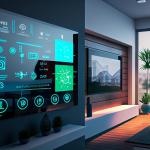
The in‑room experience is where smart hotel technology delivers the most tangible impact. Business travelers treat the hotel room as a temporary office, so the environment must support productivity and rest equally. A smart room control system—encompassing lighting, temperature, curtains, and entertainment—can be managed via an in‑room tablet or the guest's own device. Our smart hotel room control system integrates with the PMS to pre‑set the room to the guest's preferred temperature and lighting based on check‑in time, then automatically adjusts for energy savings when the room is unoccupied.
Connectivity remains the top priority. High‑speed Wi‑Fi with dedicated bandwidth for video conferencing is non‑negotiable. Smart TVs should support screen mirroring and casting, allowing guests to present from their laptop or phone. For extended stays, an IPTV/VOD system that provides access to news, business channels, and on‑demand content adds value without requiring the guest to log into personal streaming accounts. Explore our smart hotel IPTV/VOD system for a revenue‑generating entertainment platform.
Service design extends to housekeeping and maintenance. Smart sensors can detect when a guest has left the room and trigger a cleaning alert, or monitor minibar consumption to restock only when needed. For business travelers who value privacy, a do‑not‑disturb status can be set digitally, and automatic alerts can notify staff to bypass the room. These small efficiencies improve the guest experience while reducing labor costs.
The real power of a smart hotel lies in connecting isolated systems. A CRM that links booking data, in‑room preferences, and post‑stay feedback enables the hotel to anticipate needs. For example, a guest who consistently orders a specific breakfast item can find it waiting in the room on arrival. Integration between the PMS, point‑of‑sale, and loyalty program allows for seamless billing and reward accrual. This level of personalization requires a robust middleware layer and a commitment to data hygiene, but the payoff is stronger guest retention and higher average spend.
The end of the stay should be as smooth as the beginning. Express check‑out via the mobile app or in‑room tablet allows guests to review their bill, submit payment, and receive a receipt without visiting the front desk. Automated email follow‑ups can include a survey, a thank‑you message, and an offer for the next booking. For corporate accounts, billing integration with the guest's company travel system simplifies expense reporting—a feature that procurement managers value highly.
Post‑stay data analytics help hotels understand journey pain points. If multiple guests report long wait times during breakfast, the property can adjust staffing or offer a grab‑and‑go option. If the mobile check‑in step has a high drop‑off rate, the UX needs simplification. Continuous iteration based on real guest behavior, not assumptions, is the hallmark of successful digital transformation.
Investing in a connected guest journey yields measurable returns. Hotels that implement mobile check‑in and smart room controls report higher guest satisfaction scores (often measured by Net Promoter Score), increased direct bookings, and reduced front desk workload. Energy savings from automated room controls can cut utility costs by 15–20%, while efficient housekeeping routing decreases labor hours. For business‑focused properties, the ability to offer a seamless experience justifies premium room rates and attracts corporate contracts.
However, technology alone is not a solution. Staff training, change management, and vendor partnerships are equally critical. Systems must be reliable—business travelers have zero tolerance for malfunctioning devices or slow Wi‑Fi. Choose vendors that offer 24/7 support and a proven track record in hospitality.
Digital transformation in the hotel industry is not a one‑time project but an ongoing journey. For business travelers, each touchpoint—from the booking site to the smart thermostat—is an opportunity to build trust and loyalty. By focusing on the phases that matter most to corporate guests and investing in integrated, user‑friendly technology, hotel operators can create a competitive advantage that translates directly to revenue growth and operational efficiency.
 Superadmin ZHANG
May 04, 2025
 Superadmin ZHANG
May 04, 2025


By clicking the button, you are agreeing with our Term & Conditions


