
Smart hotel solutions transform guest arrival with contactless key technology and digital check-in. This article explores how these innovations boost efficiency and personalization for hotel owners.
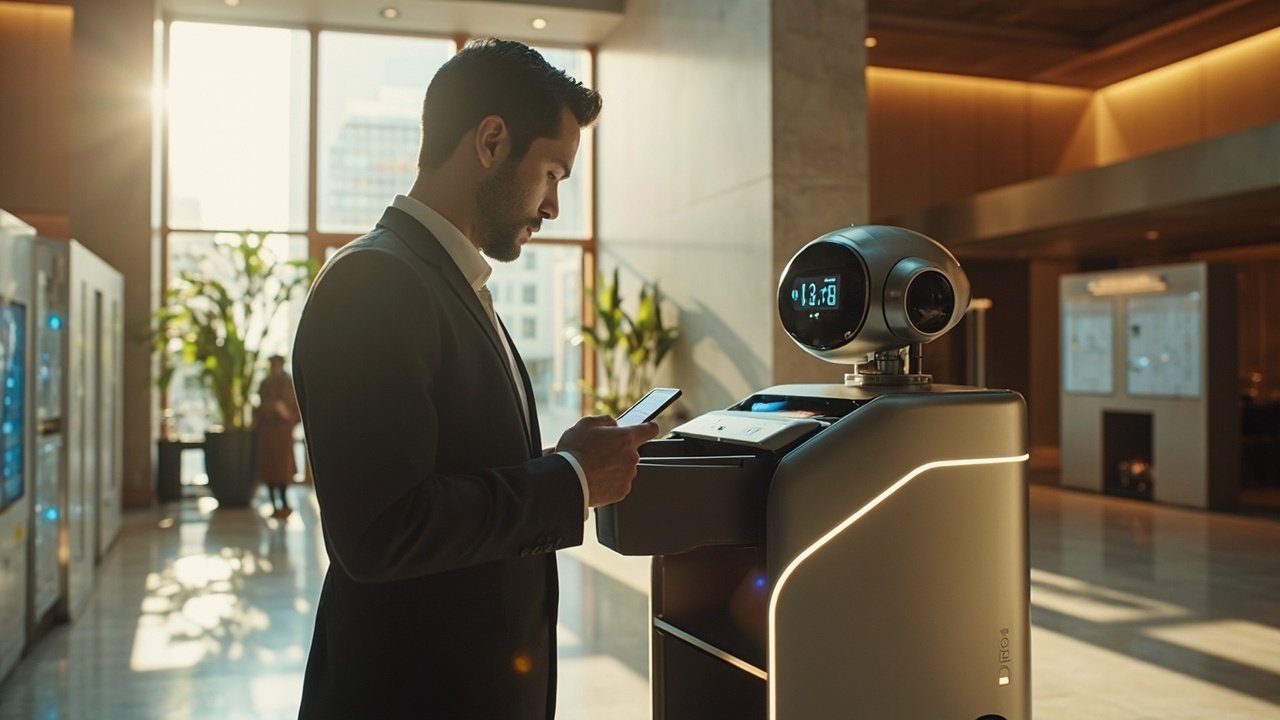
In the image that anchors this feature, a guest receives a digital room key on their smartphone from a hotel staff member using a handheld tablet. This moment—seemingly simple—represents a fundamental shift in how hotels approach the arrival experience. It is no longer just about handing over a plastic card; it is about initiating a relationship through seamless, personalized technology. For hotel owners, operators, and technology integrators, this scene captures the essence of hospitality digital transformation: the convergence of operational efficiency, guest satisfaction, and data intelligence.
The global hotel industry is rapidly embracing smart hospitality technologies. From mobile check-in and mobile keys to in-room voice assistants and predictive maintenance, the guest journey is being digitized at every point. The arrival, traditionally a bottleneck of queuing and paperwork, has become a showcase for innovation. Contactless check-in systems, digital concierge services, and integrated property management platforms are becoming table stakes for properties aiming to meet modern traveler expectations. This article examines the trends driving this transformation, the strategic benefits for hoteliers, and the practical steps to implement smart hotel solutions effectively.
Hotel owners and operators are increasingly recognizing that technology investment is not optional but essential. The post-pandemic traveler values contactless interactions, speed, and personalization. Smart hotel solutions deliver on all three fronts. By digitizing check-in and key delivery, properties reduce front desk congestion and free up staff for higher-value interactions. A guest receiving a mobile key on arrival is not just saving time; they are experiencing a brand that understands their needs. This positive first impression can drive loyalty and repeat bookings.
Beyond guest satisfaction, smart hotel technology provides rich data streams. Every interaction—from the moment a guest books through to checkout—generates insights. Hotels can use this data to tailor offers, anticipate preferences, and optimize operations. For example, a property can predict peak arrival times and adjust staffing accordingly. The result is a more efficient operation that also feels more personal to guests. Our approach to this integration is detailed on our services page, where we outline how we help properties build a connected technology ecosystem.
The traditional front desk is undergoing a profound transformation. Once the command center for check-ins, key distribution, and guest inquiries, it is evolving into a concierge hub focused on enhanced guest engagement. With mobile check-in and digital keys handling routine arrivals, front desk staff can dedicate more time to personalized greetings, special requests, and problem resolution. This shift not only improves the guest experience but also elevates staff satisfaction by removing repetitive tasks.
Hotels are redesigning lobbies to reflect this new paradigm. Instead of long counters, many properties are introducing podiums, lounge-style seating, and roving greeters equipped with tablets. These design changes complement the technology and signal a commitment to innovation. For owners, the redesigned front desk can become a revenue-generating asset, as staff use freed-up time to upsell room upgrades, spa appointments, and dining experiences.
The most visible trend is the adoption of mobile keys that allow guests to bypass the front desk entirely. But the technology goes deeper: it integrates with property management systems, locks, and guest apps to create a seamless flow. Guests can check in from their phone, receive a digital key, and proceed directly to their room. For hotels, this reduces the need for expensive hardware, minimizes friction, and provides a wealth of data on arrival patterns.
Leading smart hotel solutions now support multiple key distribution methods, including Bluetooth, NFC, and QR codes. These standards ensure compatibility across devices and manufacturers. As the ecosystem matures, interoperability becomes smoother, making implementation easier for hotels of all sizes. The latest industry standards, such as those from the Hospitality Technology Next Generation (HTNG) consortium, are further driving adoption by providing robust security and interoperability frameworks. For more details, refer to HTNG resources and industry best practices.
Once a guest is checked in, digital concierge platforms can offer recommendations, upsell room upgrades, or provide local information. These systems learn from guest behavior and can tailor suggestions in real time. For example, a business traveler might receive an offer for a late checkout, while a family might see suggestions for nearby kid-friendly attractions. This level of personalization was once limited to luxury properties, but smart hotel solutions make it accessible to all segments.
Integration with the property management system allows these offers to be presented at optimal moments—during check-in, after a late arrival, or before breakfast. The result is higher conversion rates and increased ancillary revenue. Hotels can also use this channel to gather feedback and improve service delivery. Advanced platforms now incorporate machine learning algorithms that analyze historical data to predict guest preferences with increasing accuracy over time.
Behind the scenes, digital transformation involves connecting property management systems with IoT devices such as smart locks, thermostats, and lighting. This integration allows for automated room readiness, energy savings, and proactive maintenance. When a guest checks in digitally, the system can automatically adjust the room temperature and turn on lights, creating a welcoming environment. This kind of intelligence is the foundation of modern hotel operations.
IoT integration also supports preventive maintenance. Sensors can detect equipment anomalies and alert engineering staff before a guest is inconvenienced. Over time, these systems reduce operational costs and extend asset life. For owners, the combination of guest-facing technology and back-end efficiency represents the full promise of hospitality digital transformation. Many hotels are also leveraging IoT data to optimize housekeeping schedules and reduce energy consumption, directly impacting the bottom line.
Adopting smart hotel solutions requires careful planning. Operators must evaluate their current technology stack, assess guest demographics, and choose solutions that integrate smoothly. A phased rollout is often advisable: start with mobile check-in and key delivery, then add subsequent layers of personalization and automation. It is also important to consider the property's physical layout and existing infrastructure—for example, whether doors are already compatible with digital locks or if retrofitting is needed.
Staff training is equally critical. Front desk agents and concierge staff need to understand how to support guests using the new technology, including troubleshooting common issues. Change management should address any resistance and emphasize the benefits of reduced routine tasks. When staff are empowered by technology, they can focus on delivering memorable experiences rather than administrative work. Role-playing scenarios and hands-on workshops can accelerate adoption among team members.
Guest adoption also requires attention. Some travelers may be hesitant to use mobile keys or share data. Clear communication about the benefits—speed, convenience, security—can increase uptake. Offering incentives, such as a welcome drink for using the app, can encourage first-time use. Over time, as familiarity grows, adoption becomes natural. Hotels should also provide alternative check-in options for those who prefer traditional methods, ensuring no guest feels alienated.
Security and privacy are paramount. Hotels must ensure that their smart hotel solutions comply with data protection regulations such as GDPR or CCPA, and that guest data is encrypted both in transit and at rest. Working with reputable technology partners and conducting regular audits can mitigate risks. Our about page describes our commitment to secure and scalable implementations. Additionally, following standards from the American Hotel and Lodging Association (AHLA) can help operators stay ahead of compliance requirements. Consult the AHLA Technology Standards for guidance.
Despite the clear benefits, some hoteliers face challenges. One common pitfall is selecting technology without a clear strategy. Solutions should align with the property's brand promise and guest profile. Another mistake is underestimating the need for ongoing support and updates. Technology evolves quickly, and hotels must plan for regular upgrades. A third pitfall is neglecting the guest experience design: technology should enhance, not complicate, the journey. User interface testing with real guests during pilot phases can reveal usability issues before full rollout.
Integration complexity can also slow adoption. Choose vendors that offer open APIs and proven compatibility with your existing systems. Don't hesitate to request references and proof-of-concept trials. A successful implementation is a partnership between property and provider, with clear milestones and accountability. It is also wise to negotiate service-level agreements that cover response times and system uptime, especially for critical functions like electronic locks.
Budget overruns are another risk. Hotels should factor in not only initial software costs but also hardware upgrades, training, and ongoing subscription fees. A detailed total cost of ownership analysis helps avoid surprises. Finally, avoid the temptation to implement every feature at once; prioritize solutions that deliver the greatest ROI first—often mobile check-in and key delivery pay for themselves quickly through labor savings and guest satisfaction gains.
The return on investment from smart hotel solutions can be measured in multiple ways. Customer satisfaction scores (CSAT), Net Promoter Scores (NPS), and online reviews often improve after digitizing the arrival process. Operational metrics such as check-in time per guest, front desk transaction volume, and staff productivity also provide clear indicators. Moreover, data-driven personalization can drive ancillary revenue through targeted upsells and promotions. A guest receiving a mobile key who later accepts an upgrade offer is a direct example of technology enabling revenue growth.
Hotels should track these metrics before and after implementation to quantify benefits. Many operators report reduced labor costs, higher guest satisfaction, and increased repeat business. For instance, a mid-scale property that implemented contactless check-in saw a 20% reduction in front desk staffing needs during peak hours and a 15% increase in guest satisfaction scores within six months. The long-term strategic value is a more agile operation that can adapt to future trends, such as biometric identification or AI-powered predictive service.
A: Begin with a technology audit of your property's current systems. Identify bottlenecks in the guest journey, especially at arrival. Then, prioritize solutions that address those pain points. A common starting point is mobile check-in and key delivery, which has immediate guest-facing impact. Also, assess your existing lock hardware and Wi-Fi infrastructure to ensure compatibility.
A: Rather than replacing staff, technology typically shifts their focus from transactional tasks to service-oriented roles. Staff can be redeployed to welcome guests, offer local insights, and resolve issues. Proper training and change management help teams embrace these new responsibilities. In many cases, job satisfaction improves as employees engage in more meaningful interactions.
A: Security is a core consideration. Reputable solutions use encryption, tokenization, and compliance with standards like PCI DSS. Hotels should vet vendors thoroughly and implement regular security checks. When done correctly, digital systems can be more secure than traditional methods—for example, mobile keys can be remotely deactivated if a device is lost, unlike physical key cards.
A: Yes. Many smart hotel solutions are modular and scalable, making them accessible to properties of all sizes. Cloud-based platforms reduce upfront costs, and the operational savings often offset the investment. Even a simple mobile check-in solution can deliver a significant return by reducing paper waste, cutting key card costs, and freeing staff for revenue-generating activities.
A: Timelines vary depending on the complexity of the integration and the size of the property. A basic mobile check-in and key solution can be deployed in a matter of weeks if the property already has compatible locks. More comprehensive smart hotel projects involving full IoT integration may take several months. Planning, vendor collaboration, and stakeholder buy-in are key to staying on schedule. Pilot programs in a limited number of rooms can also help accelerate the learning curve.
A: The most frequent challenges are legacy system incompatibility, network reliability, and data synchronization across platforms. Hotels often need to replace older property management systems or add middleware to bridge gaps. Choosing vendors with open APIs and strong support teams minimizes these issues. Also, ensure that your Wi-Fi network can handle the increased device load from smart locks and guest apps.
A: Pre-arrival email and SMS communication should highlight the convenience of mobile check-in—no waiting in line, immediate room access. Offering a small incentive, such as a welcome credit or late checkout, can boost adoption. Additionally, make the process intuitive and test it thoroughly. Consider a dedicated in-lobby kiosk where staff can assist first-time users.
The image of a guest receiving a contactless key is more than a snapshot; it is a sign of where the hospitality industry is headed. Hoteliers who delay digital transformation risk falling behind competitors who offer faster, more personalized experiences. The technology is mature, the guest expectations are clear, and the business case is strong. By investing in smart hotel solutions, properties can improve operational efficiency, enhance guest satisfaction, and unlock new revenue opportunities.
Moreover, the data generated by these systems provides a long-term competitive advantage. Hotels that understand their guests' preferences and behaviors can create truly personalized stays, fostering loyalty and positive reviews. As the industry continues to evolve, early adopters of smart hotel technology will be best positioned to adapt to emerging trends such as voice-controlled rooms, automated luggage handling, and AI-driven housekeeping.
To discuss how your property can embark on a digital transformation journey, reach out to our team through our contact page. The future of hospitality is smart, and the time to act is now.
A Guest Receiving a Seamless Welcome: Smart Hotel Solutions Redefine the Arrival Experience connects directly with the broader solution stack and current hospitality industry guidance.

 Superadmin ZHANG
May 04, 2025
 Superadmin ZHANG
May 04, 2025


By clicking the button, you are agreeing with our Term & Conditions


