
Smart hotel solutions transform wellness areas and the entire guest journey. This feature explores connected pool experiences and offers practical insights for hoteliers investing in hospitality technology trends.
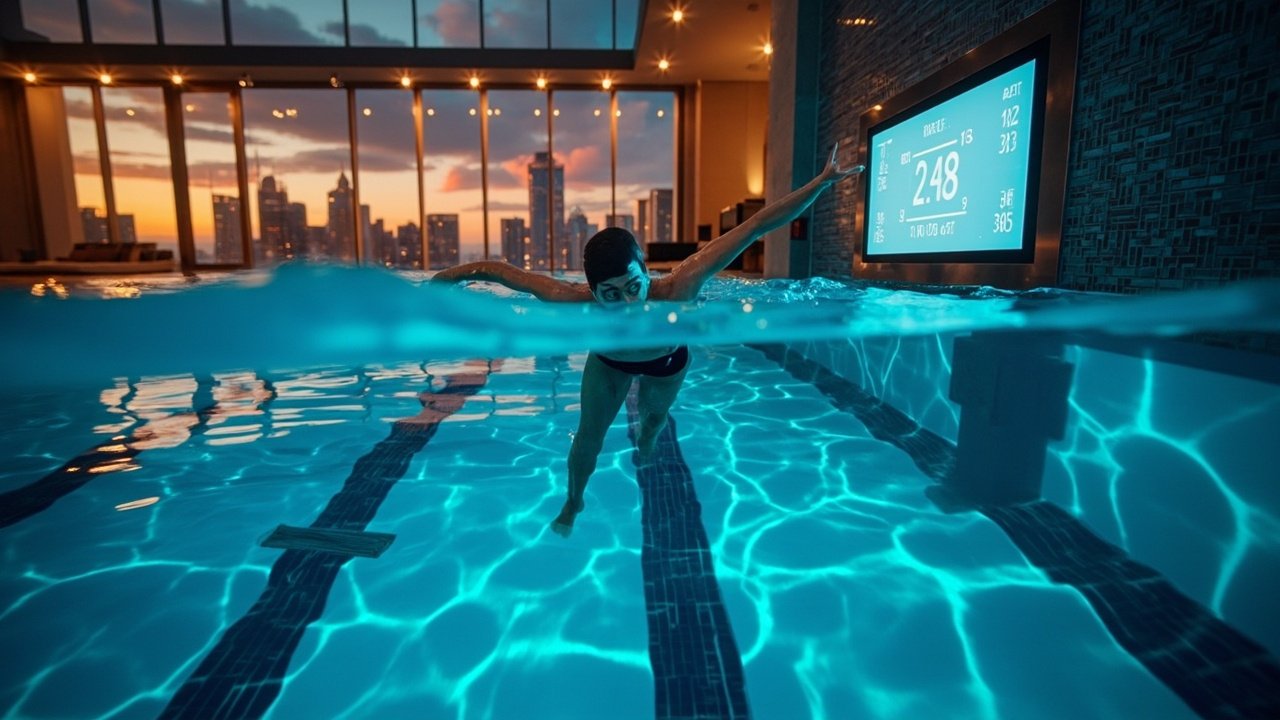
Picture this: a guest gliding through cool turquoise water, each lap measured not by a stopwatch or mental count, but by an invisible network of sensors and smart devices. The pool area is silent except for the rhythmic splash of arms and the soft hum of intelligent climate control. When the guest finishes twenty laps, a notification appears on their smartphone with their time, heart rate estimate, and a suggestion for a post-swim recovery smoothie available at the poolside bar—ordered and paid for with a single tap. This is no distant vision of the future. It is the reality of the modern smart hotel, where even a simple swimming lap becomes a touchpoint in a seamless, personalized, and data-enriched guest journey.
The hospitality industry is undergoing a profound transformation. Hotel digital transformation has moved beyond the back office and the front desk, reaching into every corner of the property—from the guest room to the fitness center, and increasingly, into wellness and recreation areas. For hotel owners, operators, and technology integrators, understanding how to weave hospitality technology into the entire guest lifecycle is no longer a competitive advantage; it is a baseline expectation. In this feature, we explore the trends, technologies, and strategic considerations driving the next wave of smart hotel solutions, using the guest swimming lap as a lens to examine the broader implications for service design, operational efficiency, and revenue generation.
The hotel pool has historically been a static amenity—a rectangular body of chlorinated water surrounded by sun loungers. Guests might swim for exercise or relaxation, but the experience was largely disconnected from the rest of their stay. Today, hospitality technology trends are turning that amenity into an integrated experience. Smart pools now feature automated water quality monitoring, dynamic temperature control, and even underwater audio systems that adapt to guest preferences. But the real revolution lies in connectivity.
When a guest checks in via a mobile app, their profile can automatically synchronize with the pool area systems. Upon approach, the poolside gate unlocks using NFC or Bluetooth. The ambient lighting adjusts to their preferred mood. A smartwatch or wearable from the hotel’s fitness center can track laps, estimate calories burned, and sync the data to the guest’s wellness dashboard. This is not science fiction; several luxury and lifestyle brands have already piloted such integrations. Smart hotel services now encompass end-to-end wellness ecosystems that connect the guest’s morning swim to their in-room spa booking, dinner menu recommendations, and even their post-stay travel feedback.
Central to this transformation is data. Every interaction generates signals that, when aggregated and analyzed, provide deep insights into guest preferences. A guest who consistently swims at 7 am, for example, might appreciate a pre-set room temperature and a “good morning” message with weather updates. A family that spends extra time in the pool’s shallow area may be more receptive to children’s activities or family dining packages. By collecting anonymized usage patterns, hoteliers can design personalized offers without being intrusive.
However, the data layer must be built with privacy and security in mind. Today’s travelers are increasingly aware of how their information is used. Hospitality technology solutions must offer transparent opt-in mechanisms and robust encryption. Leading smart hotel platforms now process data at the edge, ensuring that sensitive biometric or location information never leaves the property network unless explicitly authorized. This balance between personalization and privacy is the hallmark of mature smart hotel implementations.
The swimming lap is but one moment in a complex journey that begins long before arrival and continues after departure. Hotel digital transformation requires a holistic view of that journey. Consider the following touchpoints where hospitality technology is making an impact:
The guest journey now starts at the booking engine. Smart hotels use customer relationship management (CRM) systems to capture preferences even before a reservation is made. When a guest books a room for a fitness-focused weekend, the hotel can pre-populate the itinerary with pool hours, fitness class schedules, and healthy dining options. Mobile check-in and digital key issuance reduce front desk friction, allowing guests to proceed directly to their room—or to the pool.
Upon arrival, the guest’s face becomes their key. Facial recognition at check-in, at the pool entrance, and at the restaurant expedites access. Voice assistants in the room can answer questions about pool hours or reserve a lane. Internet of Things (IoT) sensors in the pool area monitor occupancy and adjust ventilation and heating for energy efficiency. Staff equipped with handheld devices receive real-time updates about guest requests, enabling proactive service. For instance, if a guest has been swimming for thirty minutes, the concierge might prepare a towel warmer and a chilled bottle of water without being asked.
The journey does not end at checkout. Smart hotel platforms can send a post-stay survey that includes the guest’s pool activity summary (with their consent), along with a discount for a future booking during their preferred season. This creates a virtuous cycle of engagement. The data collected during the stay feeds into the guest’s profile, ensuring that the next visit is even more personalized. Over time, this builds loyalty and increases lifetime value.
Deploying smart hotel solutions is not a one-size-fits-all endeavor. Owners and operators must evaluate their property’s unique characteristics, guest demographics, and financial goals. Here are key factors to consider:
Before adding smart features to the pool or any area, assess the existing network infrastructure. A robust Wi-Fi or IoT mesh network is essential. Many properties built before the digital age require retrofitting, which can be costly. Prioritize solutions that use low-power protocols like Zigbee or Bluetooth Low Energy to minimize wiring. Integration with the property management system (PMS) is critical; the pool system should share data with the PMS to enable personalized alerts, automated billing, and staff workflow triggers.
Technology is only as effective as the people who use it. Hotel staff need to understand how to interpret data and respond appropriately. A pool attendant should be trained to recognize smart notifications—for example, when a guest’s heart rate indicates fatigue. Equally important is cultural change: empower frontline employees to use data to enhance, not replace, human interaction. The best smart hotels blend digital efficiency with genuine hospitality.
Smart investments must deliver measurable returns. Beyond guest satisfaction, connectivity in wellness areas can drive incremental revenue. For example, a poolside smart kiosk can promote upgraded cabanas, massage packages, or branded swimwear. Dynamic pricing for lane reservations during peak hours can optimize utilization. The cost of implementation should be weighted against projected increases in average daily rate (ADR), ancillary spending, and repeat bookings. Many operators find that early adopters of smart hotel solutions report higher guest scores and fewer operational hiccups.
Service design is the art and science of orchestrating touchpoints to create a coherent, delightful experience. In the context of hotel digital transformation, service design ensures that technology serves the guest narrative rather than hindering it. The swimming lap example illustrates this principle: the technology should be invisible or intuitive. A guest should not have to fiddle with a complex panel to start a swim; the system should recognize them and adapt automatically.
We can map the emotional arc of a guest using the pool: anticipation (walking toward the pool), immersion (the swim), and transition (drying off and moving to the next activity). At each stage, technology can enhance the emotional state. Anticipation is heightened by personalized notifications about pool conditions. Immersion is deepened by adaptive lighting and temperature. Transition is smoothed by automated towel warming and locker availability alerts. Service design thinking helps hoteliers identify pain points—like waiting for a locker key or struggling with a pool gate—and eliminate them with smart solutions.
While automation improves efficiency, hospitality remains a people business. The smart pool should not feel sterile. A genuine smile from a pool attendant, a recommendation from a concierge, or a handwritten note about favorite swim times can complement digital interactions. The optimal approach is a hybrid model: technology handles routine tasks and data collection, freeing staff to focus on high-value, empathetic interactions. This is especially important in luxury segments where personal attention is a core value proposition.
The pace of innovation shows no signs of slowing. We anticipate several developments that will further integrate the swimming lap—and the entire hotel experience—into a connected ecosystem.
Artificial intelligence will enable hyper-personalization without explicit guest input. Machine learning algorithms will predict what a guest might want based on past behaviors, local events, and even weather data. The pool temperature could adjust automatically for a guest who prefers cooler water, and the poolside menu could highlight items that align with their dietary preferences. These recommendations will become so accurate that guests feel the hotel anticipates their needs effortlessly.
Environmental concerns are driving hotel digital transformation forward. Smart pools can reduce water and energy consumption through intelligent filtration cycles and heat pumps that operate only when needed. Sensors that detect occupancy can dim lighting and reduce HVAC output in unoccupied areas. These measures not only lower operational costs but also appeal to eco-conscious travelers. The smart hotel approach inherently aligns with sustainability goals, as efficient resource use is a natural byproduct of connected systems.
We are moving toward a world where payment is automatic and invisible. A guest who uses the pool three times during a stay may be charged a flat wellness fee without requiring a separate transaction. Subscription models, common in urban fitness clubs, may find their way into hotels. Guests could pay a monthly membership that includes access to a network of smart pools at partner hotels. This would generate recurring revenue and encourage brand loyalty.
Costs vary widely based on property size, existing infrastructure, and desired features. Basic retrofits (sensors, smart gate locks, mobile integration) can start around $20,000 to $50,000 for a standard pool area. Full-scale custom installations with AI analytics, wearable integration, and automated climate control can exceed $200,000. Many vendors offer modular solutions that allow phased investment.
When designed with opt-in controls and clear privacy policies, most guests appreciate the convenience. A 2023 survey by a major hospitality consulting group found that 72% of luxury travelers are willing to share health and wellness data in exchange for personalized amenities. However, it is essential to allow guests to disable tracking without penalty.
Small hotels can adopt low-cost solutions such as voice assistants in rooms, mobile key entry, and simple pool sensors that monitor temperature and pH levels. Cloud-based property management systems make it easier to integrate new features without heavy IT investment. The key is to start with one or two high-impact touchpoints and expand from there.
Overcomplicating the guest interface, neglecting staff training, and failing to integrate with existing systems are frequent mistakes. Hotels should pilot new technology with a subset of guests, gather feedback, and iterate before full rollout. Partnering with an experienced smart hotel technology provider can mitigate risks.
The guest swimming lap, once a simple act of recreation, has become a microcosm of the broader shift in hospitality. Every moment of the guest journey can be elevated by thoughtful technology. The smart hotel is not about replacing human warmth with cold screens; it is about using data and automation to create space for genuine connection, personalization, and operational excellence. For hotel owners and operators, the message is clear: the future belongs to those who embrace hospitality technology trends not as a cost, but as a strategic investment in guest loyalty and revenue growth.
As you consider your own property’s journey, ask yourself: what would it mean if every lap, every interaction, and every stay contributed to a deeper understanding of your guests? The tools are available. The time to transform is now. Reach out to our team to discuss how smart hotel solutions can redefine your guest experience.
A Guest Swimming Lap: How Smart Hotel Technology Is Redefining Wellness and the Entire Guest Journey connects directly with the broader solution stack and current hospitality industry guidance.
 Superadmin ZHANG
May 04, 2025
 Superadmin ZHANG
May 04, 2025


By clicking the button, you are agreeing with our Term & Conditions


