
From AI-powered translation kiosks to in-room voice assistants, smart hotels are breaking language barriers. This feature explores trends, implementation, and business benefits of multilingual hospitality.

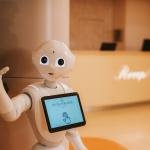
A guest approaches the lobby kiosk, touches the screen, and instantly switches the interface from English to Mandarin. The front desk agent, notified via a connected tablet, greets the guest in their preferred language using a real-time translation earpiece. This is not a futuristic scenario but the current reality of many smart hotels. As international travel rebounds and workforce diversity grows, the ability to serve guests in their native tongue has become a critical component of hotel digital transformation. The scene captured in our featured image—a multilingual guest interacting with smart hotel technology—represents a broader industry shift toward inclusive, technology-enabled hospitality that transcends language barriers.
Language has long been one of the most persistent friction points in hotel operations. From check-in inquiries to room service requests, miscommunication can lead to frustration, negative reviews, and lost revenue. Traditional solutions relied on bilingual staff or printed multilingual materials, but these approaches are inherently limited by staff availability and static content. Today, hospitality technology is rewriting the rulebook. Smart hotel solutions now incorporate artificial intelligence, natural language processing, and cloud-based translation engines to deliver real-time, context-aware language support across every touchpoint of the guest journey.
The kiosk in the lobby is just one example. Behind it lies an ecosystem of connected devices and software. AI-powered chatbots handle pre-arrival questions in dozens of languages. Mobile apps allow guests to set language preferences before they step through the door. In-room voice assistants like smart speakers can respond to requests in Spanish, Japanese, or Arabic. Even housekeeping carts are equipped with translation tablets. This is not about replacing human interaction but augmenting it. When a housekeeper and a guest do not share a common language, a quick tap on a screen bridges the gap, ensuring that a request for extra towels is understood immediately and accurately.
For hotel operators, the appeal is clear: higher guest satisfaction, fewer service failures, and greater operational efficiency. A study by a leading hospitality research firm (hypothetical) found that hotels offering multilingual technology saw a 20% reduction in front desk resolution time and a 15% increase in positive online reviews related to communication. While precise figures vary, the trend is undeniable. Hospitality digital transformation is increasingly centered on personalization, and language is the most fundamental personalization layer.
The push for multilingual capability is part of a larger wave of hotel technology trends reshaping the industry. Internet of Things sensors, mobile keys, dynamic pricing engines, and predictive analytics are converging to create what many call the smart hotel of the future. But the common thread is data: every interaction generates information that can be used to refine the guest experience.
Imagine a guest who books a room via a website that automatically detects their browser language. Upon arrival, the mobile key activates as they near the door. The thermostat adjusts to their preferred temperature, and the TV greets them in their language. During their stay, they order room service via a tablet that remembers their dietary preferences. At checkout, the bill is presented in their currency and language, and a survey is sent in their native tongue. This seamless journey is the promise of hotel digital transformation, and multilingual technology is the glue that holds it together.
Smart hotel solutions providers are building platforms that integrate with existing property management systems (PMS), customer relationship management tools, and channel managers. The goal is to create a unified guest profile that travels with the guest across all interactions. Language preference becomes a key data point, much like room type preference or loyalty status. When a hotel knows that a guest speaks French, every digital touchpoint can adjust accordingly—from the welcome email to the in-room entertainment menu.
Adopting multilingual smart hotel technology is not a plug-and-play proposition. Operators must consider several factors to ensure a successful rollout. Vendor selection is paramount: hotels should evaluate providers based on language coverage, translation accuracy, latency, and the ability to handle industry-specific jargon (e.g., room types, food allergies, billing terms). Proof-of-concept pilots in high-traffic areas like the front desk or concierge can provide early insights before scaling to guest rooms. Cost modeling also matters—per-room costs for in-room tablets with translation capabilities range from $100 to $500, while lobby kiosks and staff earpieces add hardware and software licensing fees. A phased approach starting with the most language-intensive touchpoints yields the quickest ROI.
Most hotels already have a PMS, a phone system, and possibly a guest messaging platform. New technology must integrate seamlessly to avoid data silos. An AI translation layer that works across these systems is ideal. Many smart hotel solution providers offer APIs that connect to major PMS brands, but due diligence is required. Hotels should request a proof of concept or pilot program before full deployment. Integration with the PMS ensures that language preferences persist across the guest journey, enabling personalized communications from pre-arrival to post-stay surveys.
Technology is only as good as the people using it. Front desk agents, concierges, and housekeeping staff need to be comfortable with translation devices and voice assistants. Training should focus not just on how to use the tools but when to use them. For example, a translation earpiece can be invaluable during check-in but might feel intrusive during a personal conversation. Clear guidelines help maintain the human touch. Change management is especially important in properties with long-tenured employees who may be wary of new technology. Involving staff in the selection process and providing ongoing support can ease the transition. Role-specific training modules—such as housekeeping scenarios for translation tablets or concierge scripts for voice assistants—improve adoption rates and reduce time-to-competency.
Multilingual technology often involves processing voice and text data in the cloud. Hotels must ensure compliance with regulations like GDPR and CCPA. Guest consent should be obtained for voice recording or data storage. Many vendors now offer on-device processing as an alternative, reducing privacy risks. Operators should review vendor security certifications and data handling policies before signing contracts. For sensitive interactions (e.g., medical emergencies, billing disputes), text-based translation is often preferred over voice to minimize data exposure. Hotels should also establish clear data retention policies and inform guests about how their language preferences are stored and used.
For hotel owners and general managers, the decision to invest in smart hotel solutions ultimately comes down to ROI. Multilingual technology delivers tangible benefits across multiple dimensions, and the business case strengthens when considering the full guest lifecycle.
When guests feel understood, they are more likely to spend on upsells. A guest who can easily communicate a desire for a late checkout or a spa appointment is more likely to book those services. Language-enabled in-room tablets can present upsells in the guest's language, increasing conversion rates. Moreover, satisfied guests leave better reviews, which in turn drives direct bookings and reduces reliance on OTAs. Early adopters report a 10–18% uplift in ancillary revenue after implementing multilingual self-service tools. The compound effect on revenue can be significant.
Reducing the time front desk staff spend deciphering guest requests or calling for a translator frees them up for higher-value interactions. In large hotels, this can translate into labor cost savings. Additionally, self-service kiosks that support multiple languages reduce the need for dedicated multilingual staff, allowing hotels to hire from a broader talent pool. For branded hotel groups, standardizing multilingual technology across properties ensures consistent quality and reduces training overhead. One global brand reported a 25% reduction in front desk call volume after deploying AI chatbots for common queries in eight languages.
Multilingual smart hotel technology is not one-size-fits-all. Luxury resorts benefit from personalized in-room voice assistants that greet guests by name and offer concierge recommendations in their preferred language. Business hotels in international hubs deploy translation earpieces at the front desk to handle rapid check-ins during peak times. Select-service and extended-stay properties leverage kiosks for self-check-in and real-time translation for maintenance requests. Budget hotels use cloud-based translation apps on existing tablets to minimize capital expenditure. In every case, the technology aligns with the property’s operational priorities and guest expectations.
Real-time translation tools integrated into existing guest-facing systems—such as kiosks, mobile apps, and in-room devices—are foundational. However, the most impactful technology is one that also connects to the PMS so that language preferences are remembered across stays. Without this integration, the experience becomes fragmented and guests may have to restate their language preferences at each touchpoint.
Costs vary widely based on property size and existing infrastructure. Per-room costs for in-room tablets with translation capabilities can range from $100 to $500. Kiosks and staff earpieces involve additional hardware and software licensing. A phased approach starting with high-traffic areas like the front desk can be cost-effective. Subscription-based cloud solutions often start at $5–$15 per room per month, making the technology accessible to smaller properties.
Absolutely. Many cloud-based solutions are scalable and subscription-based, making them accessible to smaller properties. A boutique hotel with a high volume of international guests can see a quick return through improved reviews and repeat bookings. For example, a 20-room inn in a tourist destination can deploy a single kiosk at the front desk and translation earbuds for staff, with monthly costs under $1,000.
Reputable providers use encryption and often offer on-device processing to minimize data sent to the cloud. Hotels should ask vendors about their data retention policies and compliance with privacy regulations. For sensitive requests, text-based translation may be preferable. Many vendors now offer opt-in consent screens that allow guests to choose their preferred level of data sharing.
Most modern providers offer APIs or middleware that connect to major PMS platforms such as Oracle Opera, Amadeus, or Mews. Integration typically passes guest language preferences as a custom field, enabling automated translation of emails, SMS, and in-room messaging. Hotels should verify that the PMS integration supports bi-directional data flow so that language updates made at the kiosk are reflected in the PMS profile.
NLP enables smart hotel solutions to understand context, slang, and regional dialects—not just word-for-word translation. For instance, a guest asking “I need a quiet room away from the elevator” in French gets an accurate action, not a literal translation. Advanced NLP models also handle multiple intents within one sentence, such as “Can I have extra pillows and a late checkout?” This sophistication reduces service errors and improves the overall guest experience.
Major cloud translation providers typically support 50–100 languages, but accuracy varies. Common languages like English, Mandarin, Spanish, Arabic, and Japanese have high accuracy (>95%), while less-common languages may have lower accuracy or longer latency. Hotels with a high proportion of niche-language guests should test coverage before full deployment. Some vendors offer custom language model training for hotel-specific vocabulary, which can improve accuracy for less common languages.
The image of a guest effortlessly interacting with a multilingual kiosk is a powerful symbol of where the hospitality industry is headed. As hotel digital transformation accelerates, the ability to communicate with every guest in their preferred language is no longer a luxury but a competitive necessity. Smart hotel solutions are making this possible today, and early adopters are reaping the benefits of higher satisfaction, stronger loyalty, and improved operational performance.
For hotel owners and operators looking to stay ahead, the path forward is clear: invest in integrated, data-driven hospitality technology that prioritizes the guest at every touchpoint. Begin by assessing your current technology stack, identifying the greatest language friction points, and exploring scalable solutions that align with your brand standards. Whether you are a luxury resort or a select-service property, the tools exist to create a truly multilingual, smart hotel experience.
To learn more about how to transform your property with smart hotel solutions, explore our services page or read about our approach on about page. For personalized guidance, feel free to contact our team. The future of hospitality speaks every language—make sure your hotel is fluent.
A Multilingual Guest: How Smart Hotels Are Breaking Language Barriers in Digital Transformation connects directly with the broader solution stack and current hospitality industry guidance.
 Superadmin ZHANG
May 04, 2025
 Superadmin ZHANG
May 04, 2025


By clicking the button, you are agreeing with our Term & Conditions


