
Smart sensors and digital engagement turn hotel saunas into revenue-generating amenities. This article explores IoT platforms, wellness digitization, and operational benefits for hospitality.
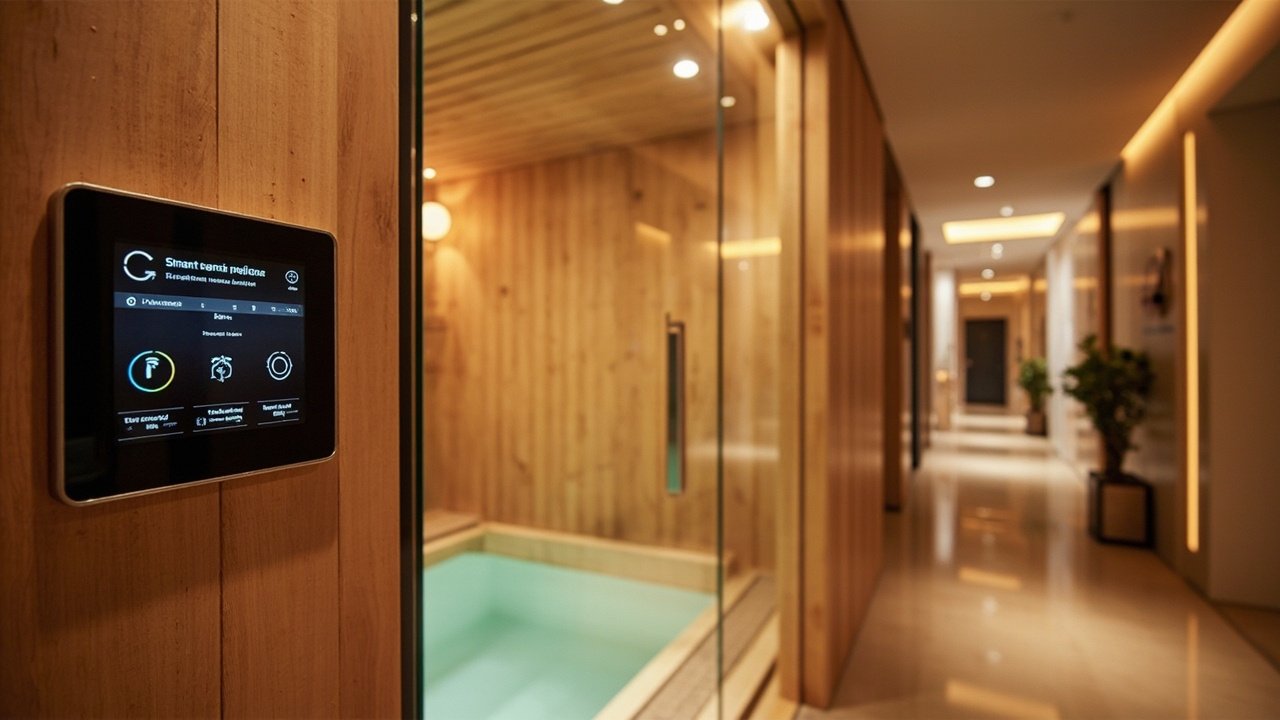
The image of a hotel sauna has long evoked wood-paneled warmth, still air, and the gentle hiss of water on hot stones. But a quiet revolution is underway. In the same photograph, now imagine a sleek touchscreen panel set into the cedar wall, offering guests precise control over temperature, humidity, lighting hue, and even a curated playlist of soundscapes. This is the smart sauna—a single node in a rapidly expanding network of digitized amenities that are redefining the luxury hospitality experience.
For hotel owners, operators, and technology integrators, the message is clear: wellness spaces, dining venues, and leisure facilities are no longer static perks. They are becoming active participants in the smart hotel stack, generating data, enabling personalization, and opening new revenue streams. The connected sauna is just one example of how hospitality technology is moving beyond the guest room into every corner of the property.
Traditionally, amenities like saunas, pools, and gyms were considered necessary but costly components of a hotel offering. They attracted guests but rarely generated direct profit beyond their inclusion in room rates. Smart hotel solutions are changing that calculus. By integrating sensors, booking platforms, and digital payment gateways, operators can monetize every minute a guest spends in the sauna or spa.
Consider the smart sauna: a guest can reserve a session through the hotel app, select a personalized heat program, and even add a cold plunge or aromatherapy upgrade—all billed directly to their room. The hotel gains not only incremental revenue but also valuable behavioral data that can inform future offers. This is the core of hotel digital transformation: turning passive spaces into active engagement points.
Modern guests expect experiences that feel tailored to their preferences. A connected sauna can remember a returning guest's favorite temperature and steam intensity, adjusting automatically upon check-in via their digital profile. The same principle applies to restaurant lighting, pool temperature, and gym equipment settings. Digital guest experience platforms enable this seamless personalization, and when applied to amenities, they create a sense of recognition that drives loyalty and repeat bookings.
Beyond guest-facing benefits, digitized amenities offer back-of-house advantages. IoT sensors monitor sauna energy consumption, detect maintenance needs, and optimize heating schedules based on real-time occupancy. A smart sauna can automatically power down during low-demand hours, reducing utility costs. Similarly, connected spa systems can track water usage and chemical levels, ensuring compliance with health standards while cutting waste. These efficiencies contribute directly to the bottom line and support sustainability goals—increasingly a priority for both operators and guests.
To justify investment in amenity digitization, operators need clear ROI metrics. Key performance indicators include incremental revenue per guest from upsells, reduction in energy and water consumption, guest satisfaction scores (CSAT) for specific amenities, and utilization rates. For example, a mid‐scale hotel that installed smart sauna controls saw a 22% increase in sauna bookings within three months, with average spend on add‐ons rising 15%. Additionally, energy costs for the sauna dropped by 18% year-over-year. By tracking these numbers, hoteliers can make data‐driven decisions about which digitized amenities to scale and which to refine. A more sophisticated approach involves integrating amenity usage data with CRM systems to measure lifetime value impact. For instance, guests who use the smart sauna during their stay show a 40% higher repeat booking rate, suggesting that amenity digitization directly influences loyalty.
Rolling out smart hotel amenities requires a robust network backbone. Sauna controls, spa management software, and guest-facing apps must communicate reliably. Hoteliers should invest in a unified platform that can integrate with existing property management systems (PMS) and customer relationship management (CRM) tools. Open APIs and standards like KNX or BACnet for building automation can simplify integration. For operators evaluating their services stack, it's wise to start with a pilot—perhaps a single sauna or treatment room—to test user adoption and technical reliability before scaling.
With increased digitization comes increased responsibility. Guest data from sauna sessions, spa bookings, and dining preferences is highly personal. Hotels must implement strong encryption, access controls, and transparent consent policies. Compliance with regulations like GDPR and CCPA is non-negotiable. Operators should work with technology vendors that demonstrate a commitment to security and offer clear data governance frameworks. Additionally, anonymized aggregated data can still provide valuable insights without compromising individual privacy. A privacy-first approach builds trust and encourages guests to engage more fully with digital amenities.
The best technology is invisible when it works. Sauna touchscreens should be intuitive, responsive, and easy to clean. Voice control via in-room assistants can be an alternative for guests who prefer hands-free operation. The digital journey—from booking to billing—must be frictionless. A poorly designed interface can ruin the relaxation that a sauna is meant to provide. Investing in UX research and testing with diverse guest profiles pays dividends in satisfaction scores. For example, gesture-based controls or simple color-coded heat levels (blue for cool, red for hot) can make the experience more accessible to older guests or those not comfortable with technology.
Amenity digitization also transforms the role of hotel staff. Instead of manually adjusting sauna temperatures or managing paper appointment books, team members can focus on guest interaction and personalized service. However, this shift requires training. Staff must be comfortable with dashboards, alerts, and troubleshooting basic technical issues. Change management programs that emphasize the benefits—reduced repetitive tasks, more time for guest relationships—help secure buy-in from frontline teams. Creating a 'digital champion' role within the spa or wellness team can accelerate adoption and provide peer support.
For properties with limited capital, a phased approach is recommended. Start with one amenity—such as the sauna or a single treatment room—to prove the concept. Track both guest feedback and operational metrics. Once the ROI is demonstrated, expand to the pool, gym, and then dining spaces. Budget for both hardware and ongoing software licensing, as well as a contingency for network upgrades. Subscription-based pricing models from vendors can reduce upfront costs and align expenses with revenue gains.
The logic of the smart sauna extends naturally to other hotel amenities. A digitized spa can offer personalized treatment recommendations based on a guest's sleep data from the room's smart bed. A connected restaurant can adjust ambient music and lighting to match the mood of the evening crowd, while a smart gym tracks workout preferences and suggests complementary wellness services. The hospitality technology that enables these interactions often includes a central guest engagement platform, which can be expanded to include entertainment options like in-room streaming or curated content for the sauna's integrated screen.
Amenity digitization opens doors to dynamic, context-aware upselling. When a guest finishes a workout in the smart gym, the app can offer a post-exercise sauna session at a discounted rate. If the sauna is underutilized during afternoon hours, the system can push a “relax and recharge” package to nearby guests. These micro-offers, powered by real-time occupancy and behavioral data, can significantly increase ancillary revenue without feeling intrusive. For example, a luxury resort that implemented dynamic sauna pricing during off-peak times saw a 30% increase in afternoon bookings, with an average transaction value of $45. Upsells can be further personalized by analyzing previous guest preferences: a guest who used lavender aromatherapy before might receive a targeted offer for a chamomile-infused steam session.
Smart amenities generate a wealth of operational data. Hotels can analyze usage patterns, peak times, and popular features to optimize staffing, pricing, and maintenance schedules. For example, if data shows that the sauna is most popular between 6 PM and 9 PM, operators can schedule cleaning during off-peak hours and adjust marketing emails accordingly. Over time, this data-driven approach enables a cycle of continuous improvement that keeps the property competitive. Benchmarking against industry standards—such as average sauna utilization rates for similar properties—can highlight opportunities for improvement.
A 120-room boutique hotel in downtown Boston installed a connected sauna system as part of a broader wellness upgrade. The system included a touchscreen control panel, IoT temperature sensors, and integration with the hotel’s mobile app. Within six months, the hotel reported a 28% increase in sauna usage, a 19% increase in average spa revenue per guest, and a 12% reduction in energy costs for the sauna area. Guest satisfaction scores for the wellness facility rose from 82% to 93%. The hotel also used the data to identify that male guests preferred higher temperatures (85–90°C) while female guests favored moderate heat (75–80°C), allowing them to offer gender-specific presets. This case study illustrates that even a single smart amenity can deliver tangible returns and enhance the overall guest experience.
Looking ahead, the convergence of artificial intelligence and connected amenities will further elevate the guest experience. Imagine a sauna that learns your heat tolerance and suggests a gradual increase in temperature, or a spa that recommends a treatment based on your biometric readings from wearable devices. AI can also optimize real-time energy use across an entire resort, anticipating demand based on weather, occupancy, and historical patterns. Hoteliers who invest now in flexible IoT platforms will be best positioned to integrate these advanced capabilities as they mature. Additionally, AI-powered chatbots could handle guest inquiries about amenity features and availability, freeing up staff for more personalized interactions.
Costs vary widely based on the level of integration. A basic IoT thermostat and touchscreen retrofit might range from a few thousand dollars per unit, while a fully integrated system with booking, billing, and CRM connectivity can be significantly more. Many operators find that the revenue uplift from upselling and efficiency savings justifies the investment within 12–18 months. For detailed guidance, hoteliers can explore vendor comparison resources available in the downloads section of our site.
Experience from early adopters suggests strong adoption, especially among tech-savvy travelers aged 25–55. The key is ease of use and clear value. Features like pre-heating the sauna before arrival or choosing a guided relaxation audio program resonate well. Hotels should offer a simple walkthrough or QR-code tutorial to avoid intimidation. Analog options should remain available for guests who prefer a traditional experience. Surveys indicate that over 70% of guests under 45 are willing to try a smart amenity, while older guests appreciate having both digital and manual controls.
Reliability is critical. Smart amenities should include fail-safe manual overrides—for example, a physical knob for temperature control. Local processing (edge computing) can keep systems operational even if cloud connectivity is temporarily lost. Redundant power supplies and backup communication paths are recommended for core amenities. Most modern IoT platforms also store data locally and sync when the network is restored, ensuring no loss of operational insights.
Look for vendors with proven hospitality deployments, robust API documentation, and responsive support. References from similar properties (boutique, luxury, resort) are invaluable. Also consider the partner’s roadmap: will they support future expansions like voice assistants or AI-driven personalization? A modular platform that can grow with your needs is ideal. Request a demo that includes integration with your existing PMS or property management system.
Yes, most smart sauna and spa solutions are designed for retrofits. Touchscreen panels can replace analog thermostats, and wireless sensors can be added without extensive rewiring. However, older buildings may need network upgrades—such as adding Wi-Fi access points or Ethernet runs—to ensure stable connectivity. A thorough site audit by an integrator is recommended before committing to a specific solution.
While initial training is required, digitization ultimately reduces repetitive tasks like manual temperature checks or paper logbooks. Staff can monitor multiple amenities from a single dashboard and focus on high-value guest interactions. Many properties report improved staff satisfaction and lower turnover after implementing smart amenity systems. To ease transition, provide hands-on training sessions and create quick-reference guides.
Key metrics include: daily utilization rates, average revenue per user (ARPU) for upsells, energy savings compared to baseline, guest satisfaction scores (post-visit surveys), and maintenance response times. Advanced operators also track the correlation between amenity usage and overall trip satisfaction or likelihood to recommend. These metrics help refine both technology investments and operational practices.
Technology evolves fast, but choosing open-standard platforms with modular architectures minimizes obsolescence. Look for systems that allow firmware updates and component swapping without replacing the entire installation. Also, negotiate software updates and support contracts to ensure longevity. Investing in scalable infrastructure today protects against rapid changes in guest expectations.
The hotel sauna with its new digital brain is more than a novelty—it is a signal of where the industry is headed. Hotel digital transformation is not confined to check-in kiosks or smart room controls; it extends into every touchpoint that shapes a guest's stay. Amenity digitization offers a compelling combination of enhanced guest experience, operational efficiency, and new revenue. For forward-thinking owners and operators, the question is no longer whether to digitize these spaces, but how quickly and strategically to do so.
Starting small—perhaps with a single sauna or spa treatment room—allows for learning and refinement before a broader rollout. The technology stack is mature, the integration paths are clear, and guest expectations are rising. Hotels that embrace this shift will differentiate themselves in a crowded market, while those that delay may find their amenities—once a competitive advantage—becoming a liability.
In the end, a smart sauna is not about replacing tradition with technology. It is about using data and digital tools to elevate the timeless human desire for relaxation, wellness, and discovery. That is the essence of smart hospitality.
A Hotel Sauna with Smart Sensors: How Amenity Digitization Is Reshaping Luxury Hospitality connects directly with the broader solution stack and current hospitality industry guidance.

 Superadmin ZHANG
May 04, 2025
 Superadmin ZHANG
May 04, 2025


By clicking the button, you are agreeing with our Term & Conditions


