
Hotel yoga studios are being reimagined with digital services. Learn how hospitality technology transforms wellness spaces into revenue-generating, experience-led amenities.
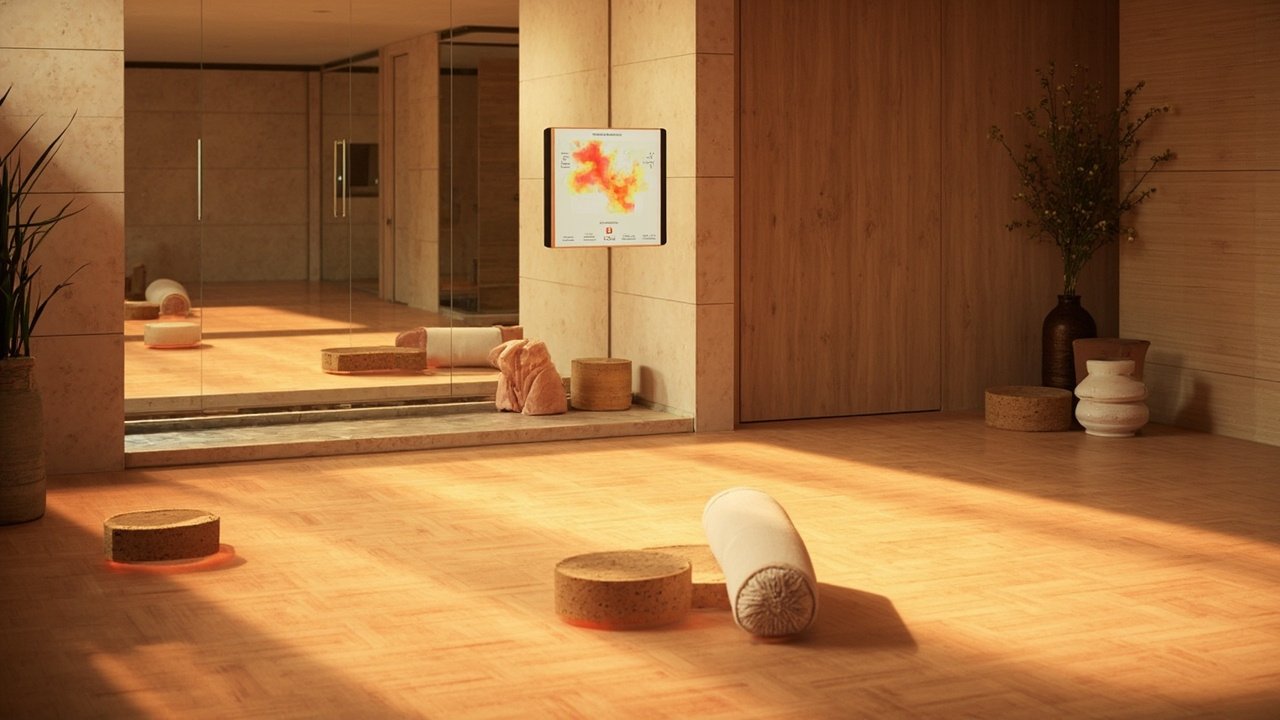
Step into the light-drenched yoga studio of a modern luxury hotel. The scent of cedar and eucalyptus mingles with the soft hum of a smart ventilation system. Guests unroll mats not onto a generic floor but onto a surface embedded with pressure sensors that track alignment and posture. A wall-mounted mirror doubles as an interactive display, streaming both live instructor-led sessions and on-demand classes, while a small tablet near the entrance manages bookings, locker assignments, and post-workout smoothie orders. This is no longer a future concept—it is the current reality of a smart hotel amenity.
The yoga studio, once an afterthought corner with a few mats and a DVD player, has become a sophisticated digital touchpoint within the hospitality ecosystem. And it is just one example of how wellness, dining, and leisure spaces are joining the broader smart hotel stack. For hotel owners, operators, and technology integrators, the transformation of amenities like the yoga studio represents both a strategic imperative and a revenue opportunity. This article explores the forces driving amenity digitization, the operational and financial implications, and how hotels can implement these systems to enhance guest engagement and drive measurable returns.
Wellness travel has been one of the fastest-growing segments in hospitality, even before the pandemic reset expectations around health and safety. According to the Global Wellness Institute, wellness tourism was expected to grow at twice the rate of general tourism. Hotels have responded by carving out dedicated spaces—spas, fitness centers, meditation rooms, and yoga studios—but the challenge has always been maximizing utilization and personalization. A physical room with a schedule of classes is static; a smart yoga studio is dynamic.
Digitization transforms the yoga studio from a cost center into a platform for guest engagement. By integrating booking systems, wearable device connectivity, content on demand, and environmental controls, hotels can offer a tailored experience that adapts to each guest's preferences. For example, a guest who prefers hot yoga can pre-select the room temperature via the hotel app. The room's smart thermostat and humidifier adjust as soon as the booking is confirmed. After the session, the same system can trigger a notification inviting the guest to a post-workout meal at the hotel's farm-to-table restaurant—an upsell opportunity that would have been unthinkable with analog operations.
The key to successful amenity digitization is not deploying technology in isolation but weaving it into the hotel's broader digital ecosystem. The yoga studio should be a node within a network that includes the services layer (property management, guest profile, billing), the entertainment platform (in-room streaming and content), and guest-facing apps. When a guest books a yoga class via the hotel's mobile app, the action should update the property management system (PMS) for billing, sync with the room's entertainment system to provide a pre-class breathing exercise video, and log the activity in the guest's profile for future personalization.
Let's break down the specific digital components that can be implemented in a smart hotel yoga studio:
For owners and general managers, the decision to digitize amenities like the yoga studio should be driven by clear business objectives. The primary levers are revenue generation, operational efficiency, and guest loyalty.
A smart yoga studio creates multiple revenue streams beyond room charges. Premium classes (e.g., private instruction with a renowned guru via hologram), retail sales (branded yoga mats, apparel), and package deals (yoga sessions combined with spa treatments or dining credits) are all possible when the digital infrastructure supports dynamic pricing and cross-departmental offers. A guest who completes a morning yoga class might receive a push notification for a discounted detox juice at the juice bar—a micro-upsell that can be automated and personalized based on their profile and past behavior.
Digitization reduces manual labor. Class check-ins, payments, and scheduling can be fully automated. Staff previously needed to manage bookings and payments can be redeployed to higher-value guest interactions, such as offering personalized wellness consultations. IoT sensors can monitor equipment usage and automatically flag broken mats or low towel inventory for restocking. The result is a leaner operation with higher margins.
The guest who practices yoga is likely to be a high-value customer—someone who values wellness and is willing to pay a premium for experiences. By capturing their preferences (favorite class style, preferred time, instructor rating), the hotel can craft a customized itinerary for their stay. This goes beyond the yoga studio: recommend a spa treatment that complements their practice, suggest a healthy dinner option, or offer a late checkout after a Saturday morning class. The digital guest experience becomes a continuum, not a series of disconnected transactions.
Rolling out digital amenities requires careful planning. Here are the key factors hospitality technology integrators and operators must address:
The yoga studio's digital components must integrate with existing PMS, CRM, and in-room entertainment systems. Proprietary silos are the enemy of a seamless guest journey. Choose technology partners that offer open APIs and support standard protocols like OTA (Open Travel Alliance) for data exchange. The services page on SmartHotel.com outlines integration-ready solutions that reduce deployment friction.
Collecting health and biometric data from guests—even with consent—carries regulatory and reputational risks. Hotels must implement robust data encryption, anonymization where possible, and clear opt-in/opt-out mechanisms. GDPR, CCPA, and local regulations must be respected. Transparency is critical: guests should know exactly what data is collected and how it will be used to enhance their experience. For example, a smart mirror that records video for form analysis should store data locally and delete it after the session unless the guest explicitly opts in to share for research or personal history.
Staff must be trained not only on the technology but also on how to upsell and engage guests around the digital tools. A smart yoga studio that confuses guests or requires constant staff intervention defeats its purpose. Consider piloting the studio in one property before scaling, and gather feedback from both guests and associates. Create a simple troubleshooting guide and assign a digital concierge for the first month of operation.
Define key performance indicators before deployment. Track metrics such as studio utilization rate, average revenue per class (including add-ons), guest satisfaction scores (Net Promoter Score for the yoga experience), and operational cost savings. Compare these against a control period or a similar property without digitization. Over time, the data will justify further investment. A useful framework is to calculate the incremental net profit per digitized amenity and compare it to the initial Capex and ongoing Opex. Many hoteliers find payback periods of 12–18 months when combining revenue lift with labor savings.
Looking ahead, the smart hotel yoga studio will evolve into a broader wellness platform. Imagine a studio that uses AI to suggest a sequence of poses based on a guest's sleep quality (as measured by their bed's embedded sensors the night before). Or a studio that hosts live-streamed classes from celebrity instructors, with the hotel taking a share of the ticket price. Virtual reality yoga retreats might allow guests to practice atop a Balinese temple while physically in a New York hotel. These innovations are not far off; the underlying digital foundation is already in place.
Furthermore, the studio can serve as a social hub. Integrate with the hotel's community features: allow guests to create a profile, share class photos, and connect with fellow travelers who have similar wellness interests. This fosters a sense of belonging that drives repeat bookings and positive reviews. The studio could even host wellness challenges with leaderboards, rewarding top participants with spa credits or room upgrades.
A smart hotel yoga studio integrates digital technologies such as smart mirrors, IoT sensors, wearable sync, and automated booking systems to create a personalized, efficient, and engaging wellness experience for guests. It is part of the broader trend of smart hotel amenities that leverage hospitality technology to enhance guest satisfaction and operational performance.
Revenue comes from premium class upsells, retail sales, package deals with other amenities (spa, dining), and data-driven offers. The digital system enables dynamic pricing and cross-departmental promotions that increase average spend per guest. Additionally, the ability to sell class recordings or on-demand subscriptions provides passive income.
Integration with existing hotel systems, data privacy compliance, staff training, and initial capital investment. Choosing an integrated platform like those offered through SmartHotel's entertainment solutions can simplify deployment. The biggest hidden challenge is change management—staff must embrace new workflows, and guests may need gentle guidance on using the technology.
Track utilization rates, revenue per class, guest satisfaction (NPS), and operational cost savings. Compare with pre-digitization benchmarks or control properties. Downloadable templates for ROI calculation are available on our website. Also monitor social media mentions and guest reviews specifically about the wellness experience.
Yes, when implemented thoughtfully. Guests value personalization and convenience. Technology that enhances—rather than disrupts—the experience is welcomed. Smart mirrors that correct form, for example, are seen as a valuable training tool. However, offer an analog option for purists; allow booking a class that uses no digital aids except the booking system.
Costs vary widely based on the level of sophistication. A basic setup with a booking kiosk, smart mirror, and environmental sensors can start around $15,000–$25,000 per studio. A full high-end integration with wearable sync, advanced AI analytics, and custom content can exceed $100,000. Most hotels see ROI within 18–24 months through increased usage and ancillary revenue.
Seamless integration is key. Guests should be able to book classes, sync wearables, and view schedules from the hotel's existing app. The app can also send reminders, post-class surveys, and upsell complementary services. SmartHotel's platform provides APIs to link the studio's backend with any mobile app.
The hotel yoga studio is a microcosm of the larger shift toward experience-led, technology-enabled hospitality. For owners and operators, the message is clear: digitizing amenities is no longer optional for those who want to remain competitive. The upfront investment is real, but the return—in guest loyalty, operational savings, and incremental revenue—is compelling. Start with a single amenity, such as the yoga studio, and use it as a proof of concept. Learn from the data, refine the experience, and then expand across your property's spa, pool, restaurant, and rooftop spaces.
Smart Hotel offers the infrastructure and expertise to guide this transformation. To begin your digital journey, contact our team for a consultation tailored to your property's unique needs. The future of hospitality is not just about where guests sleep—it is about how they live, move, and relax while they are with you. And that future is already unfolding, one smart yoga studio at a time.
A Hotel Yoga Studio: The New Frontier in Smart Hotel Amenities connects directly with the broader solution stack and current hospitality industry guidance.

 Superadmin ZHANG
May 04, 2025
 Superadmin ZHANG
May 04, 2025


By clicking the button, you are agreeing with our Term & Conditions


