
The moment a guest opens a hotel room with a smartphone represents the convergence of smart hotel solutions, IoT infrastructure, and service design reshaping hospitality.
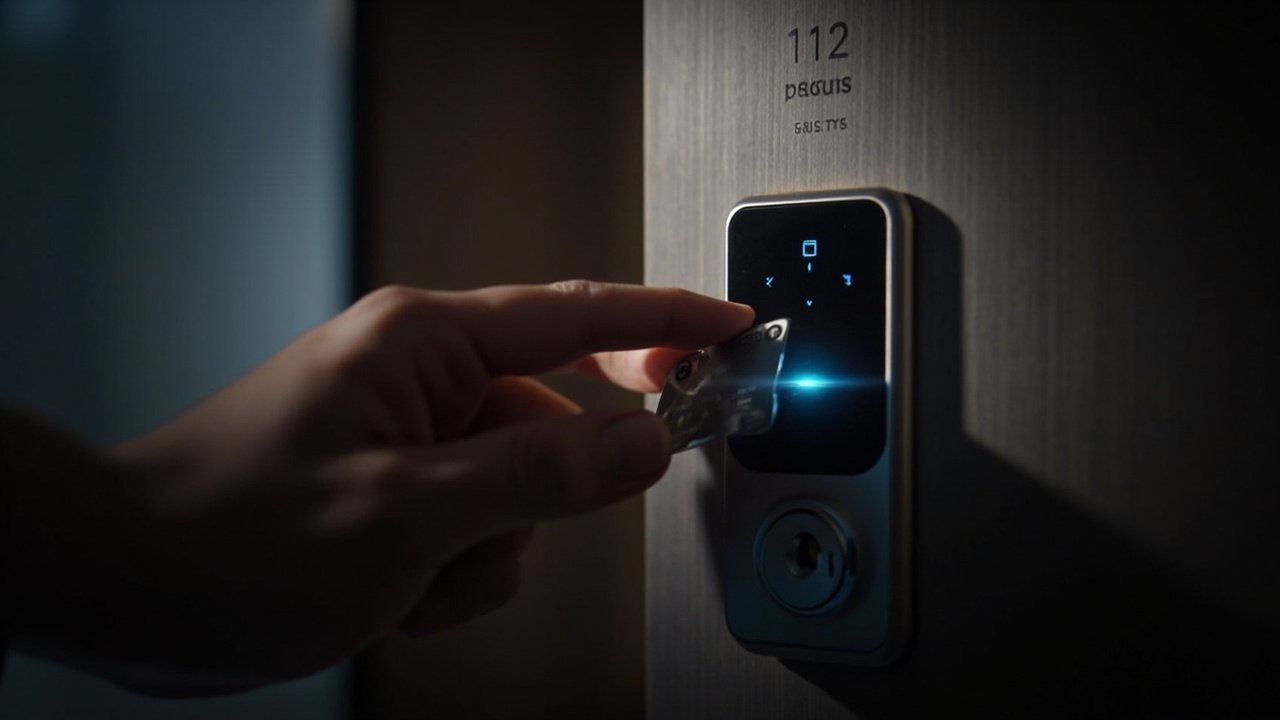
The scene is deceptively simple: a guest lifts a smartphone to the door handle of a hotel room. There is no fumbling for a key card, no queuing at the front desk, no paper registration form. In that single gesture, the entire paradigm of hotel hospitality is rewritten. The image captures a moment of frictionless access—a digital key unlocking not just a room, but a new era of smart hotel operations.
For hotel owners, operators, and technology integrators, that image is worth more than the proverbial thousand words. It represents the culmination of years of investment in hospitality technology, the integration of IoT devices, and a fundamental rethinking of service design. The guest's action is the visible tip of an iceberg that includes cloud-based property management systems, real-time data analytics, mobile app ecosystems, and staff training programs that empower rather than intimidate.
This is not a futuristic vision. It is happening now across the global hospitality landscape. According to recent industry surveys, nearly 70% of hotels have accelerated their digital transformation roadmaps since the pandemic, with mobile key adoption rising by over 40% in the past two years. The guest opening the door with a smartphone is one of the most tangible symbols of this shift—a moment where technology and hospitality meet seamlessly.
The act of opening a hotel room door with a mobile device is a microcosm of the broader hotel digital transformation underway. It signals to the guest that the property values their time, understands their preferences, and has invested in infrastructure that respects their comfort. But the implications go far beyond convenience.
Plastic key cards, a staple of hotel security for decades, are now being phased out in favor of smart hotel solutions that integrate with the guest's own device. This shift reduces operational costs—no more re-encoding cards or replacing lost ones—and provides a wealth of data. Every time a guest unlocks their door, the hotel can capture a timestamp that helps optimize housekeeping schedules, energy management, and even personalized upsell offers. The door becomes a data point in a larger network.
But the true value lies in the ecosystem that supports that digital key. Behind the scenes, the hotel's property management system (PMS) communicates with a mobile app, a door lock controller, and often a guest experience platform. This integration requires careful planning and robust APIs. For hoteliers considering this path, the key is not the technology itself but the orchestration of systems into a coherent experience.
For owners and operators evaluating hospitality digital transformation, the question is no longer whether to invest, but how to invest wisely. The landscape of hotel technology trends in 2025 is crowded with promises: AI concierges, robotic assistants, voice-controlled rooms, and predictive maintenance. However, the most successful implementations focus on the guest journey as a whole—not on isolated gadgets.
The smart hotel moment captured in the image is only valuable if it enhances the guest's overall experience. Does the digital key integrate with the check-in process? Can the guest still speak to a human staff member if they encounter a problem? Are there redundancies for battery failures or network issues? These are the operational questions that determine whether a technology becomes a delight or a frustration.
Service design must lead the technology choice. Hotels that simply bolt a mobile key onto an existing system without rethinking the front desk experience will miss the point. The best implementations allow guests to bypass the front desk entirely, but also give them the option to engage with staff when desired. The staff, in turn, are equipped with tablets that surface guest preferences and history, enabling personalized interactions that build loyalty.
Rolling out smart hotel solutions at scale requires a structured approach. Based on conversations with industry practitioners, here are the critical factors to consider:
Digital keys depend on reliable Wi-Fi and Bluetooth connectivity. Hotels must audit their network coverage in every corridor and guest room. Older buildings may need signal repeaters or edge computing nodes. Additionally, door locks must be compatible with the chosen mobile credential platform. Many newer electronic locks support Bluetooth low energy (BLE) and near-field communication (NFC), but legacy hardware may require replacement.
The mobile key should not be an island. It must be integrated with the PMS, the guest app, and ideally the housekeeping and maintenance systems. For example, when a guest checks out digitally, the lock should automatically update to allow housekeeping access while blocking the previous guest's credentials. This integration reduces manual work and errors.
Technology is only as effective as the people who use it. Staff must be trained not only on the operational aspects but also on how to explain the technology to guests who may be less tech-savvy. Front desk agents should be ready to issue a traditional key card if the guest prefers, without making the guest feel inadequate. Hospitality technology should expand choices, not limit them.
Mobile keys generate data about guest movements. Hotels must have clear data governance policies, ensure encryption of credentials, and comply with privacy regulations such as GDPR or CCPA. Guests should be informed about what data is collected and given control over their preferences. Trust is the foundation of hospitality, and digital transformation must reinforce it.
The digital key is just one touchpoint. Leading hotels are extending the smart hotel concept throughout the entire stay. Consider the following stages of the guest journey:
Using data from previous stays and integrated CRM, hotels can offer room selection based on guest preferences—floor level, proximity to elevator, view orientation. Some properties allow guests to set room temperature and lighting hours before arrival, so the room feels personalized from the moment they walk in (or open the door).
Beyond the digital key, many hotels now offer mobile check-in, digital registration, and even luggage drop-off with RFID tagging. The guest can go directly to their room, bypassing the lobby entirely. This reduces congestion at peak times and allows staff to focus on guests who need assistance.
IoT sensors in the room can adjust lighting, temperature, and even scent based on guest preferences learned over time. Smart mirrors display weather and news. Voice assistants allow hands-free requests. But the key is that these systems must work intuitively. A room that requires a PhD in domotics to operate will frustrate guests. Simplicity is paramount.
Using the hotel's mobile app, guests can request housekeeping, order room service, book the spa, or chat with a concierge. AI-powered chatbots handle common queries, while complex requests are escalated to human staff. The smart hotel solutions platform tracks these interactions, enabling the hotel to anticipate needs—for example, offering a late checkout if the guest's flight departure is delayed.
Digital checkout allows guests to review and pay the bill from the app, receive a receipt via email, and leave without stopping at the front desk. The digital key automatically expires. Feedback prompts capture the guest's sentiment immediately. This loop of data collection and action is central to continuous improvement.
Investing in hotel digital transformation is not inexpensive. The upfront costs for IoT devices, software integration, and staff training can be significant. However, the return on investment is increasingly clear. Properties that implement smart hotel technologies report higher guest satisfaction scores, increased direct bookings (bypassing OTAs with their commissions), and reduced operational costs through automation.
Energy savings alone can offset part of the investment. Smart thermostats and occupancy sensors reduce HVAC usage when rooms are unoccupied—often by 20-30%. Mobile keys eliminate the need for card replacement and reduce plastic waste. Predictive maintenance tools notify engineers before equipment fails, preventing guest complaints and emergency repair costs.
Furthermore, the data generated by these systems provides insights that drive revenue. By understanding guest preferences and behaviors, hotels can offer targeted upsells—a room upgrade, a spa package, a dinner reservation—at the moment when the guest is most receptive. The result is a higher average spend per stay, improved customer lifetime value, and stronger brand loyalty.
For hoteliers ready to take the leap, a phased approach is recommended. Rushing into a full-scale overhaul can lead to operational chaos. Instead, consider the following sequence:
Throughout this journey, partnering with experienced technology providers is crucial. Companies that specialize in smart hotel solutions can offer not only hardware and software but also guidance on change management. Hoteliers should seek providers who understand the nuances of hospitality operations, not just technology vendors looking to deploy a generic platform.
For more information on how to evaluate technology partners, visit our services page where we outline the key capabilities to look for in hospitality technology solutions.
Most modern electronic locks and mobile credential platforms have a lifespan of 5–7 years, though software updates can extend functionality. It is important to choose systems with backward compatibility and regular firmware support.
Hotels should always have a fallback option—traditional key cards or physical keys. Staff can also issue temporary codes via phone or text. The key is to ensure no guest is left unable to access their room. Well-trained front desk agents can handle these exceptions smoothly.
As with any connected device, smart locks can be vulnerable to hacking if not properly secured. Hotels should use locks that support encryption (AES-128 or higher), require secure authentication, and receive regular security updates. Network segmentation and periodic penetration testing are recommended best practices.
No. The goal of hospitality digital transformation is to free staff from repetitive tasks so they can focus on high-value interactions. Technology handles the routine; people deliver the warmth and empathy that define true hospitality. The most successful implementations are those that augment staff, not replace them.
ROI timelines vary based on the scope of investment and property type. Many hotels see operational cost savings within 12–18 months, while revenue gains from improved guest satisfaction and direct bookings often materialize in the second year. A realistic payback period is 2–4 years for comprehensive implementations.
The image of a guest opening a hotel room door with a smartphone is more than a snapshot of convenience—it is a symbol of an industry in transformation. Hospitality has always been about anticipating needs and creating memorable experiences. Today, technology enables that mission at a scale and precision previously unimaginable.
For hotel owners and operators, the path forward requires balancing innovation with operational excellence. The smart hotel is not built overnight. It requires investment, strategic planning, and a commitment to service design that places the guest at the center. But the rewards are substantial: higher efficiency, stronger loyalty, and a competitive edge in a crowded market.
As you consider the next steps for your property or portfolio, remember that transformation is a journey, not a destination. Start small, learn fast, and stay focused on the experience. The guest who opens that door with a tap is voting for a new kind of hospitality—one that is seamless, personalized, and truly smart.
To discuss how smart hotel solutions can be tailored to your property, contact our team through the contact page. You can also learn more about our approach to hospitality technology by reading about our mission and team. Together, we can unlock the full potential of digital transformation in hospitality.
A Hotel Guest Opening the Door to Digital Transformation: Smart Hospitality in Action connects directly with the broader solution stack and current hospitality industry guidance.
 Superadmin ZHANG
May 04, 2025
 Superadmin ZHANG
May 04, 2025


By clicking the button, you are agreeing with our Term & Conditions


