
The connected guest room is no longer a luxury add-on. As hotel digital transformation accelerates, guest room automation emerges as both an experience differentiator and a revenue lever. This analysis explores the
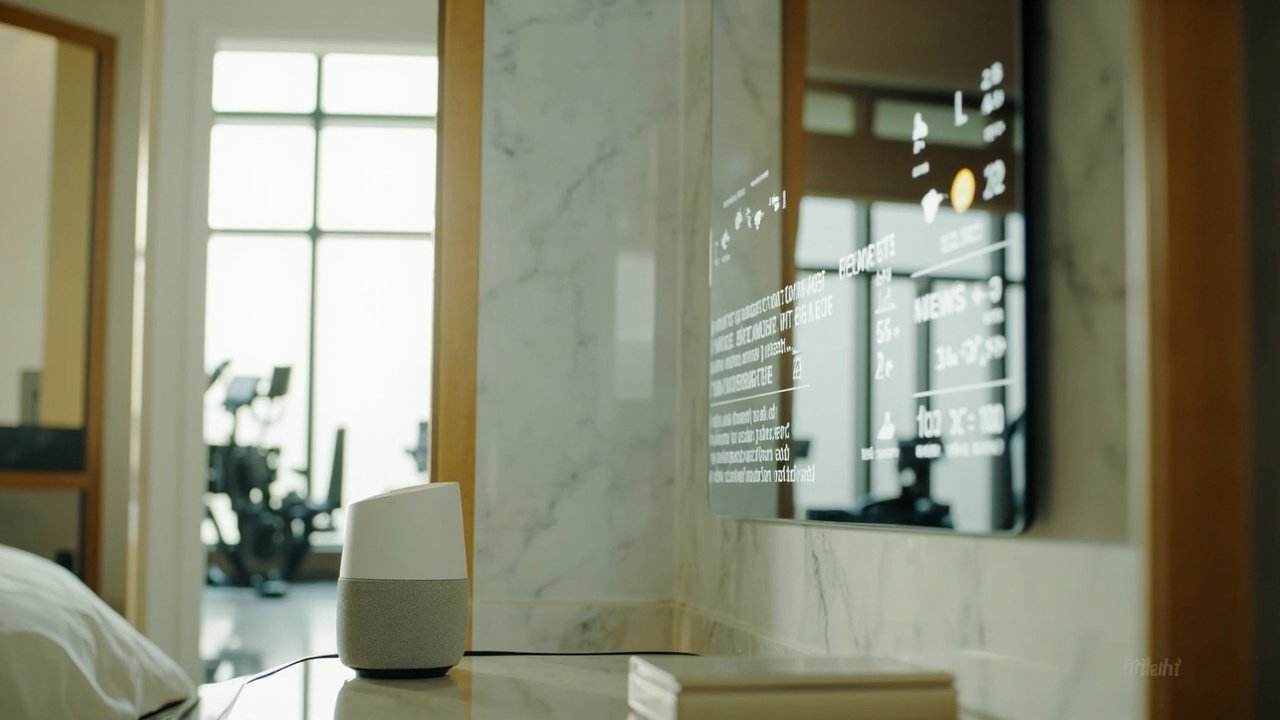
Picture this: a hotel room where the lights dim as you enter, the curtains close at your voice command, and the thermostat adjusts to your preferred temperature before you've even unpacked. This is not a scene from a futuristic movie; it is the reality of today's connected guest room. For years, guest room automation was viewed as a novelty—a way to impress early adopters but rarely a core business strategy. That perception is shifting rapidly. As hotel digital transformation accelerates across the industry, the smart hotel room is emerging as both a powerful experience differentiator and—more importantly—a tangible revenue lever.
To understand how a connected guest room drives revenue, we must first define what constitutes a modern smart hotel room. At its simplest, a smart hotel guest room automation system encompasses in-room control of lighting, climate, shades, and entertainment. But the true value lies in the integration layer—the ability to aggregate data from these subsystems and turn them into actionable insights. When a guest sets the temperature to 68°F at 10 PM across three consecutive stays, the system learns that preference. On the fourth reservation, the room preconditions accordingly. That seamless personalization builds loyalty and willingness to pay a premium.
Modern connected rooms are equipped with IoT sensors that capture occupancy, energy usage, and guest interaction patterns. This data, when fed into a centralized analytics platform, reveals hidden revenue opportunities. For example, if a hotel detects that 70% of guests adjust the thermostat to cooler settings after 9 PM, the operator can offer a "nighttime comfort package" featuring a premium duvet and hot beverage service. Such contextual offers convert at rates 3–4 times higher than generic upsells. Hotels that master this data-driven approach report incremental RevPAR improvements of 3–6% within the first year.
Historically, hoteliers deployed automation to reduce energy costs and maintenance overhead. These remain valid, but the conversation has evolved. Today, connected rooms enable dynamic pricing of in-room services, targeted upselling, and curated ancillary offers. Consider a guest who repeatedly orders a specific pillow type or requests late checkout. The room intelligence system flags that profile, prompting the app to offer a premium wellness bundle. This creates incremental revenue without adding staff or inventory. Operators have seen ancillary revenue grow by 12–18% in properties with fully deployed room automation.
Voice control has become the most visible interface of the smart hotel room. Voice assistants integrated with the in-room entertainment system allow guests to request room service, order extra amenities, or extend their stay without lifting a finger. Voice commerce reduces friction—a guest who might hesitate to call the front desk can simply say, 'Book a spa appointment at 3 PM.' The conversion rate for such spontaneous purchases is significantly higher. Hoteliers report that voice-enabled upselling campaigns can contribute up to 15% of ancillary revenue. Additionally, voice analytics provide insight into guest preferences, informing menu planning and staffing.
For hospitality owners, the decision to invest in guest room automation should no longer be solely about guest satisfaction scores. The business case now includes direct and indirect revenue streams. Direct streams include in-room retail, premium channel upgrades, and dynamic mini-bar pricing. Indirect streams encompass energy savings, reduced labor costs, and higher ADR driven by enhanced guest perception. Operators who view the room as a connected platform rather than a static asset will capture the greatest value.
A comprehensive ROI model for smart hotel rooms typically includes four pillars: energy savings (15–30% reduction), labor efficiency (automated checklists, reduced maintenance calls), guest satisfaction (NPS increase of 8–12 points), and direct revenue (ancillary and ADR uplift). For a 200-room upscale hotel, a full deployment of in-room automation can cost between $2,000 and $4,000 per room, with payback periods ranging from 18 to 36 months. Early adopters in the luxury segment have reported breaking even in under 24 months due to higher ADR premiums. It is essential to work with vendors that provide transparent pricing and integration guarantees with existing PMS and CRM systems.
One of the most promising developments is real-time personalization. When a loyalty member checks in, the room control system can display a welcome message on the TV, adjust lighting to their preferred scene, and pre-load their favorite music streaming account. This level of attention commands a premium. Many luxury hotels have begun offering 'connected experience' tiers, where guests pay an upgrade fee for full voice and automation access. Over the past 18 months, early adopters have seen ADR increases of 5–8% on rooms marketed as 'smart-enabled.' These upgrades are often bundled with higher-speed Wi-Fi, premium content, and dedicated support.
The connected guest room generates a data trail invaluable for targeted marketing. Anonymized usage patterns reveal peak times for dining, entertainment preferences, and popular room temperatures. Hoteliers can adjust restaurant hours, curate in-room content bundles, and tailor push notifications. The key is transparency and opt-in consent. Those that do it well often see a 20–30% improvement in ancillary spend per guest stay. Implementation of a guest-facing app that integrates with room controls further amplifies these opportunities by enabling real-time offers based on in-room behavior.
Several leading hotel groups have demonstrated the commercial viability of connected guest rooms. A major international luxury brand retrofitted 500 rooms across five properties with voice-controlled automation and integrated in-room tablets. Within six months, they recorded a 7% increase in ADR for smart rooms compared to traditional rooms, alongside a 22% reduction in energy costs. Guest satisfaction scores rose by 14 points, and the property-level ancillary revenue per occupied room increased by 18%. Another mid-scale chain deployed a simplified system focusing on automated climate control and smart lighting. Their ROI analysis showed an 8% improvement in RevPAR driven by lower operational costs and higher online ratings, which directly boosted direct bookings.
These examples underscore that the connected room is not just a luxury play. With the right technology partner and a clear revenue roadmap, operators across segments can achieve measurable returns. The key differentiator is the integration layer—solutions that operate in silos fail to capture the full value. A holistic approach connecting room controls with the hotel's CRM, PMS, and revenue management system unlocks the true potential.
Deploying a hotel room control system at scale requires careful planning. The technology stack must be interoperable with existing PMS, housekeeping platforms, and energy management solutions. Integrators should prioritize open-API systems that allow future flexibility. Additionally, consider the guest journey: the most successful installations begin with a simple, intuitive interface—often a bedside tablet or voice command—and gradually layer in more complex features as guests become comfortable.
A robust network is the backbone. Wi-Fi 6 or higher is recommended to support streaming, IoT sensors, and voice commands without degradation. Security is critical. Guest room automation systems must comply with PCI DSS if handling payment data, and GDPR or equivalent for privacy. Operators should work with vendors offering end-to-end encryption and regular firmware updates. Network segmentation to isolate IoT devices from guest Wi-Fi and back-office systems reduces attack surfaces.
The technology is only as effective as the people who support it. Housekeeping teams need to reset systems between guests. Front desk staff should explain voice commands and troubleshoot. Management must champion digital transformation, reinforcing that the connected room is an enhancement, not a replacement. Hotels that invest in comprehensive training report higher guest satisfaction and lower IT support tickets. Appointing a 'smart room champion' on each shift helps handle escalations and gather feedback.
Seamless integration with the hotel's PMS is critical for delivering personalized experiences. The room control system should receive guest preferences from the CRM and push status updates back to the housekeeping module. When a guest checks out, the system should automatically reset to energy-saving mode and flag maintenance issues. Many vendors now offer pre-built connectors for major PMS platforms, reducing implementation time. For legacy systems, a middleware layer can bridge the gap, though it adds complexity. Prioritize vendors with a proven integration track record in your market segment.
A connected guest room typically includes a central control unit (tablet or panel), smart lighting and thermostats, motorized curtains, a voice assistant, an integrated entertainment system, and sensors for occupancy and energy management. Some systems also include smart locks, leak detectors, and smart minibars with automated billing. These components work together to enhance comfort and drive ancillary revenue.
ROI is measured across multiple dimensions: energy savings (15–30%), labor efficiency (automated triggers, fewer service calls), guest satisfaction (NPS increase), and direct ancillary revenue from upsells. Benchmark against similar properties. Payback periods of 18–36 months are common. Many vendors provide dashboards that track these metrics in real time, enabling data-driven decisions.
Modern voice assistants in hotels are designed with privacy-first features: a physical mute button, visual indicator lights, and no local storage of recordings. Guest data is anonymized and aggregated. Operators should communicate these measures clearly. Some systems offer a 'privacy mode' that disables microphones until activated. Compliance with local regulations is mandatory and builds guest trust.
Retrofitting requires a phased approach. Start with a pilot in 5–10 rooms to test integration with PMS and network capacity. Choose solutions that work over existing cabling or use wireless protocols like Zigbee to minimize construction. Prioritize high-value areas like suites for initial rollout. Many vendors offer turnkey retrofit kits. Conduct a network assessment beforehand to identify bandwidth or coverage gaps.
Yes. Connected rooms automatically reduce energy consumption when unoccupied, curbing HVAC and lighting waste by up to 30%. Hotels can display real-time energy savings on in-room TVs, inviting guest participation. This lowers operational costs and appeals to eco-conscious travelers. Some properties use sustainability achievements in marketing to improve brand image and potentially command green premiums.
All smart room features should have manual overrides. Voice assistants can be muted, tablets set aside, and physical switches remain functional. Orientation materials help guests understand their options. The goal is choice—even self-identified 'non-tech' guests quickly adopt simple voice controls. The majority appreciate the flexibility.
As hotel digital transformation matures, the connected guest room will evolve into an adaptive environment. Artificial intelligence will enable rooms to predict guest needs before they are expressed—adjusting lighting based on time of day, offering restaurant recommendations based on previous dining patterns, and adjusting check-out times for loyalty members. The next frontier is interoperability beyond the room: connecting in-room systems with CRM, loyalty platform, and concierge services to create a seamless end-to-end journey. This level of integration eliminates friction and deepens loyalty.
Forward-thinking operators are exploring how room intelligence can extend into other revenue centers. For example, a guest who sleeps later based on sensor data might receive a 'late breakfast' offer from the restaurant. A guest who adjusts temperature to a high setting could be offered a cooling spa package the next day. These context-aware interactions blur the line between service and sales. When executed respectfully, they enhance the stay while contributing to the bottom line. Data aggregated from room automation can also feed into revenue management systems to optimize pricing and package bundling across the property.
Sustainability-minded travelers increasingly choose hotels that demonstrate environmental responsibility. Connected rooms that automatically reduce energy consumption not only save costs but serve as a marketing differentiator. Hotels can display real-time energy savings via the TV interface, inviting guests to participate. Some properties integrate gamification—guests who achieve low energy usage earn loyalty points or a discount. Such initiatives strengthen the business case for connected rooms.
The connected guest room is no longer a futuristic concept. It is a proven platform for improving guest satisfaction, operational efficiency, and revenue. For hospitality owners and operators, the path forward is clear: integrate smart hotel technologies that offer both experience enhancement and commercial return. Start with a clear strategy, choose interoperable systems, prioritize guest privacy, and measure success across multiple KPIs. To begin your journey, download our comprehensive guide on implementing guest room automation in your property. The hotel room where technology meets revenue is here—and it is ready for your guests. The time to act is now, as early movers are already capturing market share and setting new benchmarks for the industry.
A Hotel Room Where Technology and Revenue Converge: The New Era of Connected Guest Rooms connects directly with the broader solution stack and current hospitality industry guidance.

 Superadmin ZHANG
May 04, 2025
 Superadmin ZHANG
May 04, 2025


By clicking the button, you are agreeing with our Term & Conditions


