
Biometric wristbands and voice-activated remotes turn connected guest rooms into powerful revenue and loyalty engines. This analysis explores the strategic impact of wearable and in-room control technology for hotel
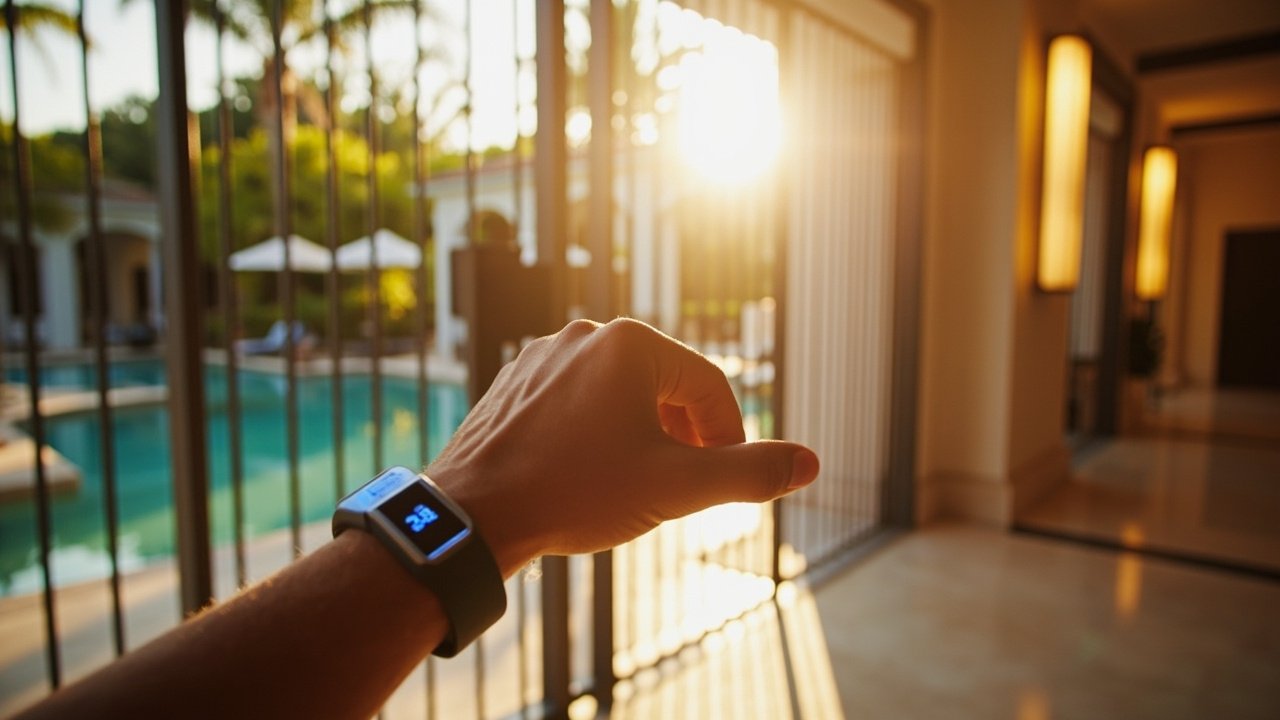
Picture this: A business traveler steps into her hotel room after a long flight. Instead of fumbling for the light switch or searching for the thermostat, she simply taps her smart wristband. The curtains glide shut, the lights dim to a warm welcome preset, and the room temperature adjusts to exactly 22°C—her preferred setting stored from a previous stay. She speaks a command, and the smart speaker responds: “Good evening, Ms. Chen. Your dinner reservation is confirmed for 7:30 PM, and a notification has been sent to your phone.”
This is not a futuristic fantasy. It is a rapidly emerging reality in smart hotel properties worldwide where guest room automation is moving beyond novelty to become a strategic revenue and loyalty tool. The wearable device—whether a wristband, a ring, or a voice-enabled earpiece—represents the latest frontier in hospitality technology integration, enabling frictionless personalization and operational efficiency.
For hotel owners, operators, and hospitality technology integrators, the question is no longer whether to adopt connected guest room technologies, but how to deploy them to maximize return on investment and guest satisfaction. This article provides an industry news analysis of how wearable-enabled room control and broader hotel room control system innovations are reshaping the business of hospitality.
For years, guest room technology was considered a cost center—lights, HVAC, locks—necessary but not strategic. The advent of smart hotel room ecosystems has flipped that equation. Today’s connected room is a platform for targeted upselling, dynamic pricing, and loyalty-building interactions. Wearables accelerate this shift by providing a persistent, personalized touchpoint that starts before check-in and continues throughout the stay.
When a guest enters the room and their wearable is recognized by the hotel room control system, the system can trigger a cascade of monetizable actions:
These capabilities transform the guest room from a passive accommodation into an active revenue-generating channel. For a 300-room hotel, even a modest 5% increase in ancillary revenue per occupied room can produce significant annual gains. Industry benchmarks suggest that hotels with fully deployed in-room personalization see ancillary revenue increases of 8–15% within the first year.
Wearables are data gateways. Each interaction—preference setting, room adjustment, service request—generates granular data that feeds into a hotel digital transformation strategy. Over time, this data enables predictive personalization: the hotel knows that Mr. Andersen prefers a cooler room and blackout curtains, while Ms. Rivera likes the television tuned to news channels and a humidifier in the winter.
The hospitality technology stack must integrate the wearable data with the guest room automation backend and the property management system. When done correctly, the guest’s next booking triggers a seamless pre-arrival configuration. The room knows them before they walk in. This is the holy grail of hospitality: a bespoke experience at scale, driving repeat visits and positive online reviews.
A key consideration is data hygiene. Hotels must ensure that preference data is updated in real time and synced across all touchpoints. For example, if a guest adjusts the thermostat via voice command, the wearable’s profile should reflect that change immediately. This synchronization requires a robust middleware layer that connects the in-room controller, the PMS, and the loyalty database.
Deploying a wearable-enabled smart hotel room requires a robust, standards-based infrastructure. Key components include:
Hoteliers should prioritize solutions that are open and interoperable, avoiding vendor lock-in. The hotel room control system should support multiple input methods—wearable, voice, touchscreen, and traditional switches—to accommodate diverse guest preferences. A phased rollout often works best: start with the top-floor executive suites or loyalty club rooms, then expand based on guest feedback and operational learnings.
Wearables collect biometric and behavioral data. Guests must trust that their information is handled securely. Implement end-to-end encryption, anonymize data where possible, and provide clear opt-in/opt-out mechanisms. Compliance with GDPR, CCPA, and other regional regulations is non-negotiable.
For the property management team, training is essential. Staff should understand how the system works, how to troubleshoot common issues, and how to assist guests who prefer a human touch. A seamless guest experience relies on both technology and service. Many hotels appoint a “digital concierge” role to serve as the bridge between guests and the connected room ecosystem.
Before investing in wearable technology, operators should model the expected return. Key factors include:
A typical ROI analysis might show payback within 12 to 24 months for a full property rollout. Pilot programs in a subset of rooms can validate assumptions before scaling. Additionally, hotels should factor in the brand differentiation value: a property that offers a truly smart, personalized stay can command a 10–15% premium on average daily rate in competitive markets.
Wearable control is powerful, but voice remains the most natural interface for many guests. A combined approach—tap for discrete actions, speak for requests—maximizes accessibility. The smart hotel room should accept commands such as “Turn off the lights” or “Schedule a wake-up call at 6 AM” equally well from a wearable’s voice pickup or a stationary smart speaker.
In-room entertainment systems also integrate with voice. Guests can say “Play jazz” or “Show me the room service menu” on the television. This convergence of control and content creates a sticky ecosystem that encourages guests to use the hotel’s branded interfaces rather than personal devices—keeping the hotel front-of-mind for upselling. Leading providers now offer unified platforms that manage both room controls and content streaming through a single voice or wearable interface.
The ultimate goal of guest room automation is proactive intelligence. The system learns patterns and anticipates needs. For example:
This level of intelligence transforms the room into a silent concierge, enhancing convenience and freeing staff to focus on high-value interactions. Machine learning algorithms improve over time, making recommendations more accurate—for instance, suggesting a spa appointment based on the guest’s history of booking massages during previous stays.
The COVID-19 pandemic accelerated demand for touchless technology. Wearables naturally support that trend: guests can unlock doors, control room amenities, and even check out without touching shared surfaces. While health concerns have receded, guest expectations for hygiene and control remain elevated. Many hotel chains now market “touchless stays” as a core differentiator, and wearable technology is a key enabler.
Beyond wristbands, we are seeing experiments with smart rings, wristwatch apps, and even temporary tattoos. The key is that the wearable must be secure, convenient, and optionally integrated with the guest’s own devices (Apple Watch, Fitbit) through a hotel app. However, issuing a dedicated hotel-branded wearable offers branding and loyalty currency opportunities that a guest’s own device cannot match. Some luxury properties have introduced limited-edition wearables as collectible souvenirs, further deepening brand engagement.
Early adopters of wearable guest room control include major chains like Marriott, Hilton, and Accor, which have deployed pilot programs in select properties. For example, Marriott’s “Connected Room” initiative in several North American hotels allows guests to control lighting, temperature, and entertainment via their smartphone or a wearable provided at check-in. These pilots have reported a 20% increase in guest satisfaction scores and a 10% reduction in energy costs. Accor’s “Accor Live Limitless” loyalty program integrates wearable data to offer personalized perks, such as a free drink at the bar when the wearable detects the guest is passing by.
Independent and boutique hotels are also jumping in. The Dolder Grand in Zurich offers guests an RFID wristband that serves as room key, payment device, and control interface. The hotel reports that repeat guests particularly appreciate the “memory” feature—the wristband stores their preferred room settings from previous visits. Such case studies demonstrate that the technology is not limited to big chains; any property can benefit if the deployment is tailored to its clientele.
Adoption varies by demographic, but early adopters—frequent business travelers, millennials, and Gen Z guests—have shown high satisfaction rates. Offering a choice between wearable, voice, and traditional controls ensures broad appeal. Pilots have found that usage increases significantly when the wearable is offered as an option at check-in and its benefits are clearly explained. Many hotels also provide a short tutorial video on the in-room TV to demonstrate features.
Costs depend on the size of the property and the existing infrastructure. A typical per-room cost for a full retrofit (sensors, controllers, cloud integration, and wearables) ranges from $800 to $2,500. Wearables themselves can be $20–$50 each. Many operators start with a premium floor or loyalty program rooms to test ROI before scaling. Ongoing costs include software updates and occasional hardware replacement.
Yes, most modern hospitality technology platforms provide open APIs for integration with major PMS vendors (Oracle Opera, Maestro, etc.). Integration is critical for seamless guest recognition, billing for incidental charges, and updating housekeeping status. Always verify compatibility before selecting a solution. Some vendors offer pre-built connectors for popular PMS systems to simplify deployment.
Hotels must be transparent about data collection. Best practices include offering opt-in consent, anonymizing data for analysis, and ensuring that guests can delete their data upon request. The benefits of personalization are only realized if trust is maintained. Compliance with local regulations is mandatory. Additionally, hotels should use secure storage and limit access to only essential staff.
Properly deployed, wearables reduce the burden on front desk and housekeeping staff by automating routine tasks and providing real-time data. For example, automatic check-in via wearable can free up front desk agents to handle more complex guest needs. However, initial training and ongoing technical support may require a dedicated IT specialist. Overall, most hotels find that the technology allows staff to focus on high-value interactions rather than repetitive chores.
The image of a guest using a wearable to control their smart hotel room is not merely a snapshot of convenience—it is a symbol of a fundamental shift in hospitality economics. Connected rooms, powered by guest room automation and enriched by hotel room control system intelligence, are becoming the primary interface through which hotels deliver value, build loyalty, and drive incremental revenue.
For forward-thinking operators, the path forward is clear: invest in a scalable, integrated platform that supports wearables, voice, and predictive analytics. Partner with experienced hospitality technology providers who understand the operational realities of hotel environments. And start with a focused pilot to demonstrate value before scaling across the entire portfolio.
The hotels that embrace this shift today will define the guest experience of tomorrow. Those that wait risk being left behind in an industry where personalization and control are no longer differentiators, but baseline expectations.
Ready to explore how connected guest room automation can transform your property? Discover our solutions for in-room entertainment and voice control, and download our ROI white paper to see the numbers behind the experience.
Beyond the Wrist: How Wearable Guest Room Control Is Reshaping Smart Hotel Revenue and Loyalty connects directly with the broader solution stack and current hospitality industry guidance.

 Superadmin ZHANG
May 04, 2025
 Superadmin ZHANG
May 04, 2025


By clicking the button, you are agreeing with our Term & Conditions


